Your immune system always seems to let you down at the worst possible moment. But immunity is not a fixed setting. What you eat every day has a meaningful impact on how well your body defends itself.
Key takeaways
- More than 70 percent of your immune cells are located in your gut — gut health is immune health.
- Vitamin C, vitamin D, zinc and selenium are the micronutrients with the strongest evidence for immune function.
- Garlic (allicin), ginger, probiotics and green tea are foods that may support immune defences.
- Sugar and heavily processed products can temporarily impair the immune response.
- Consistency beats superfoods: a varied daily pattern works better than occasional supplements.
How does your immune system work?
Your immune system is a complex network of cells, proteins and organs working together to protect you from pathogens. It operates in two broad layers: innate immunity and adaptive immunity.
Both layers need nutrients as fuel and raw material. A deficiency in vitamin C, vitamin D or zinc demonstrably impairs the speed and quality of your immune response, according to the European Food Safety Authority (EFSA).
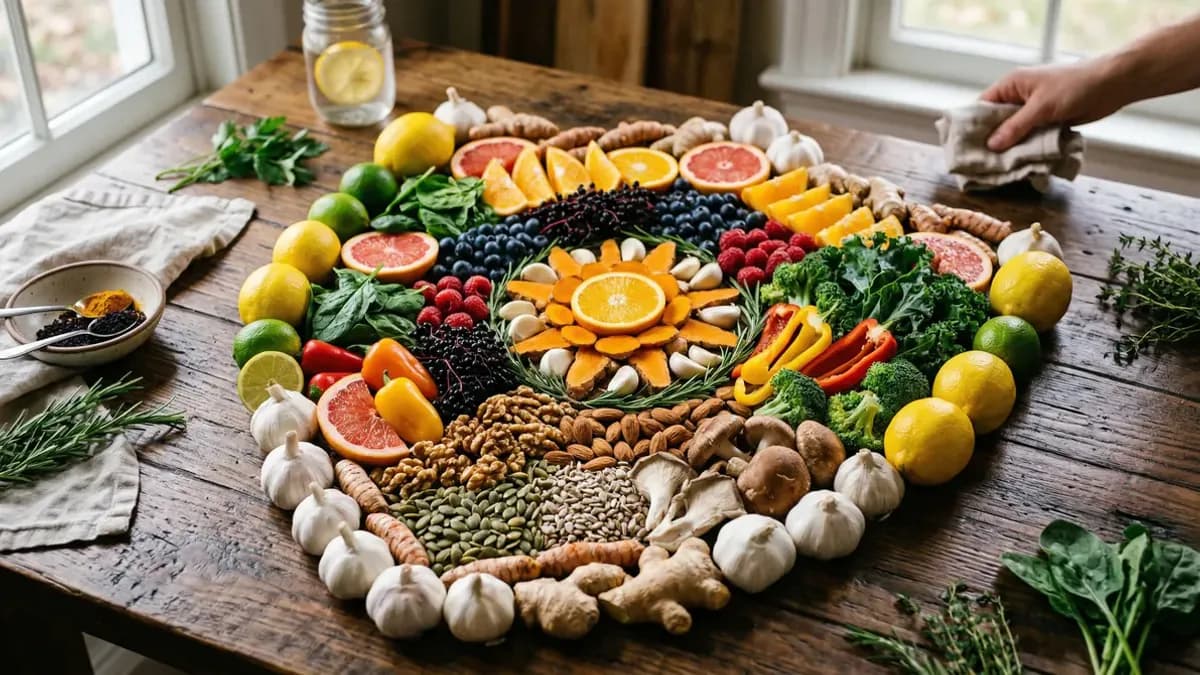
10 foods that may support your immune system
1. Citrus fruits for vitamin C
Oranges, grapefruit, clementines and kiwi are rich in vitamin C. This vitamin supports white blood cell production and strengthens the barrier function of your skin and mucous membranes. The recommended daily intake for adults is 75 mg for women and 90 mg for men. One orange provides around 50 to 70 mg.
2. Garlic for allicin
Garlic contains allicin, a sulphur compound released when a clove is crushed or chopped. Allicin may support the immune system and has prebiotic properties. For maximum effect, crush or chop garlic and let it rest for ten minutes before heating.
3. Ginger for gingerols
Ginger contains gingerols and shogaols — compounds with anti-inflammatory and antioxidant properties. A 2 to 3 cm piece of fresh ginger in tea is enough for a meaningful daily contribution.
4. Spinach for multiple micronutrients at once
Spinach contains vitamin C, beta-carotene, vitamin K and folate — all compounds that contribute to a healthy immune response. Lightly steamed is the optimal preparation for maximum absorption of iron and other micronutrients.
5. Yoghurt and fermented foods for probiotics
More than 70 percent of your immune cells are located in the gut wall. A healthy gut microbiome is directly linked to a stronger immune response. Yoghurt, kefir, kimchi, sauerkraut and miso contain live bacteria that may support your gut microbiome. Read more about probiotics for gut health and how prebiotics feed your gut bacteria.
6. Almonds for vitamin E
Vitamin E is a fat-soluble antioxidant that protects immune cells from oxidative damage. A handful of almonds (around 25g) covers a significant portion of your daily vitamin E requirement.
7. Turmeric for curcumin
Curcumin, the active compound in turmeric, has anti-inflammatory and immune-modulating properties. Always combine with black pepper for better absorption. Read more about turmeric and curcumin bioavailability.
8. Green tea for EGCG
Green tea contains epigallocatechin gallate (EGCG), a potent antioxidant that may support T-cell production. Two to three cups per day delivers a meaningful amount.
9. Kiwi for a double dose of vitamin C
One kiwi provides around 80 to 90 mg of vitamin C — more than the daily recommendation for adults in a single piece of fruit. Kiwi also contains vitamin K and folate.
10. Red bell pepper for extra vitamin C
Red bell peppers contain up to three times more vitamin C than oranges. Roasted or lightly sauteed, they retain most of their vitamin C content while also being rich in beta-carotene.
What weakens the immune system?
Food can undermine your immunity too. Excess sugar, alcohol abuse, severe caloric restriction and heavily processed foods all compromise immune function. Research suggests that 100g of sugar can impair the immune response for up to five hours after consumption.
Supplements: useful or unnecessary?
For people without a deficiency, vitamin C supplementation has not been proven to prevent colds. Vitamin D is an exception: most people in northern Europe have lower levels in autumn and winter, and the Dutch Health Council recommends 10 micrograms per day for adults.
With Moveno, you can track which micronutrients you are getting through food each day — so you know when you are genuinely missing something.
Start with more variety today
A strong immune system is not built in a day. Variety in your daily diet — more colour on your plate, more fermented foods, fewer processed products — lays the foundation.
Use Moveno to track how varied your diet really is. Photograph a meal and instantly see which immune-supporting nutrients you have already consumed that day.
Sources
- Voedingscentrum — Vitamin C — recommended daily intake of vitamin C for adults
- Gezondheidsraad — Vitamin D — supplementation advice for adults in the Netherlands
- EFSA — Dietary Reference Values — European standards for micronutrients and immune function
- PMC — Probiotics and immune function — role of the gut microbiome in immune response