
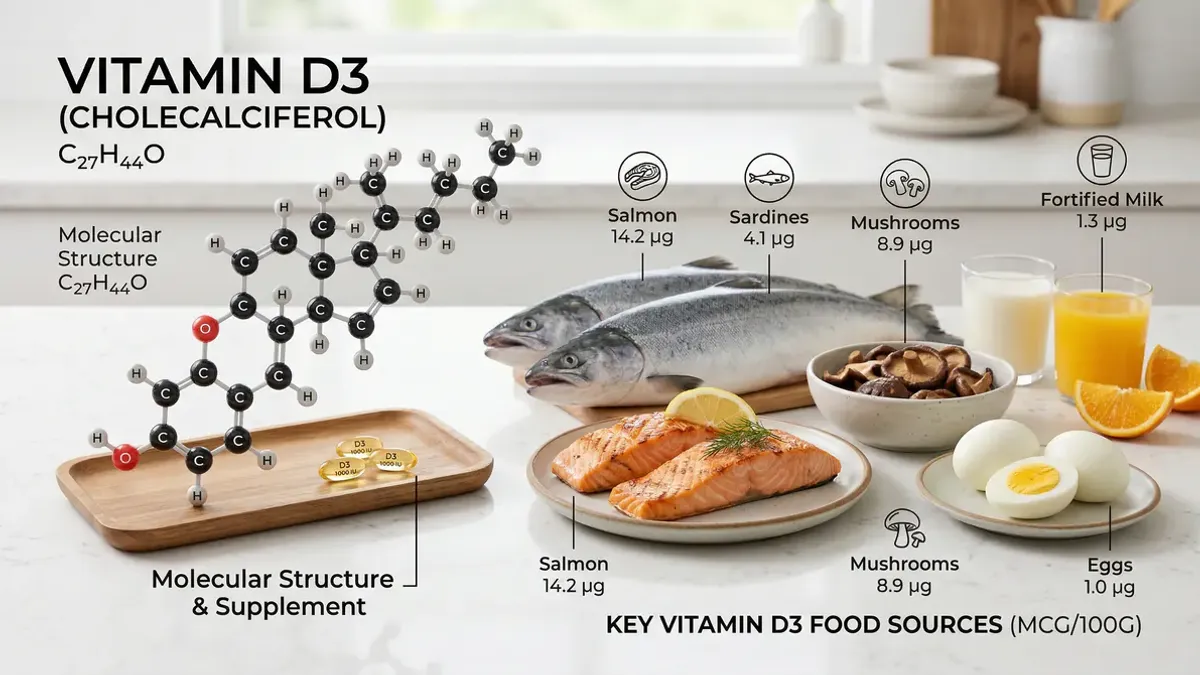
Vitamin D3 is one of the most extensively researched nutrients of recent decades. Despite this, an estimated 50% of the Dutch population has insufficient levels, particularly during winter months. Here is everything you need to know about the functions, sources, and recommended intake of vitamin D3.
Key takeaways
- Vitamin D3 is the most active and effective form of vitamin D
- Your body produces it naturally via sunlight on the skin
- In the Netherlands, sunlight is too weak from October to March for adequate production
- Recommended daily intake: 10 mcg for adults, 20 mcg for those over 70
- Supplementation is advisable for most Dutch residents during winter
What is vitamin D3?
Vitamin D exists in several forms, but vitamin D3 (cholecalciferol) is the form your body synthesises through the skin when exposed to UVB radiation. It is also the form found in most animal foods and dietary supplements. Compared with vitamin D2 (ergocalciferol, the plant-based variant), D3 has a stronger and longer-lasting effect in the body.
Once vitamin D3 is produced or consumed, the liver converts it to calcidiol (25-OH-D3), which the kidneys then convert to calcitriol — the biologically active form.
Functions in the body
Bone health
The best-known function is regulating calcium absorption from the gut. Without sufficient vitamin D3, the body absorbs only 10–15% of dietary calcium. With adequate levels, absorption rises to 30–40%. This makes vitamin D3 essential for building and maintaining strong bones and teeth. Prolonged deficiency can cause rickets in children and osteoporosis with increased fracture risk in adults.
Immune system
Vitamin D3 plays an important role in immune defence. It may help activate immune cells such as T-cells and macrophages. Studies suggest that people with sufficient vitamin D experience fewer respiratory infections — and it is precisely in winter, when deficiency is greatest, that respiratory infections peak.
Muscle function
Adequate vitamin D3 levels may help maintain muscle strength and coordination. In older adults, low vitamin D is associated with increased fall risk.
Mood and mental health
An association has been observed between vitamin D deficiency and depressive symptoms, though the causal relationship is still under investigation. Vitamin D receptors are present in brain regions involved in mood regulation and cognition.
Sources of vitamin D3
Sunlight
Your skin produces vitamin D3 when UVB rays reach it. In the Netherlands, the sun angle is high enough between April and September. Spending 15–30 minutes outdoors with uncovered hands and face between 11:00 and 15:00 can be sufficient in summer for lighter skin types. People with darker skin require longer exposure to produce the same amount.
Food
Foods naturally containing vitamin D3:
- Fatty fish: salmon (10–20 mcg per 100g), mackerel, herring, sardines
- Eggs: approximately 2 mcg per egg, mainly in the yolk
- Liver: a rich source, but limited intake is advised due to high vitamin A content
- Fortified foods: margarine, low-fat spreads, and plant-based drinks are legally fortified with vitamin D in the Netherlands
Supplements
For most Dutch residents, supplementation from October through March is advisable. The Netherlands Nutrition Centre specifically recommends this for:
- Children aged 0–4 years (daily, year-round)
- Women under 50 with darker skin or who spend little time outdoors
- All persons aged 50 and over
- Pregnant women
Recommended daily intake
| Group | Recommended amount |
|---|---|
| Adults up to 70 years | 10 mcg (400 IU) |
| Persons over 70 years | 20 mcg (800 IU) |
| Children 0–4 years | 10 mcg |
| Pregnant women | 10 mcg |
The safe upper limit is set at 100 mcg per day for adults. Prolonged intake above this level can lead to hypercalcaemia — excessively high blood calcium levels.
Who is at risk of deficiency?
A blood test at your GP measures the 25-OH-vitamin D level. Values below 30 nmol/L indicate severe deficiency; values between 30 and 50 nmol/L are considered insufficient. An optimal level falls between 50 and 125 nmol/L.
Groups at elevated risk:
- People who spend little time outdoors (office workers, those with mobility limitations)
- Older adults (skin produces vitamin D less efficiently with age)
- People with overweight (vitamin D is stored in adipose tissue)
- People with darker skin
- People with gastrointestinal conditions affecting fat absorption (IBD, coeliac disease)
- Pregnant women
Combining D3 with K2
A growing body of research suggests that vitamin D3 and K2 have a synergistic effect. Vitamin D3 promotes calcium absorption, while vitamin K2 ensures that calcium is directed to bones rather than depositing in arterial walls. For those taking higher doses of vitamin D3, combining with K2 may be beneficial. Consult a healthcare professional if in doubt.
Tracking your vitamin D3 intake
Want to know how much vitamin D3 you are getting through food? With Moveno, you can scan your meals and instantly see nutritional values including vitamin D. That way you have a clear picture of your intake and can judge whether supplementation makes sense.
Vitamin D3 and your overall nutrition
Vitamin D3 is one important piece of a healthy lifestyle. To build the full picture, read our beginner's guide to calorie tracking and learn how to monitor all your nutrients daily. If weight management is part of your goals, our guide to calculating a calorie deficit will help you set a sustainable target.