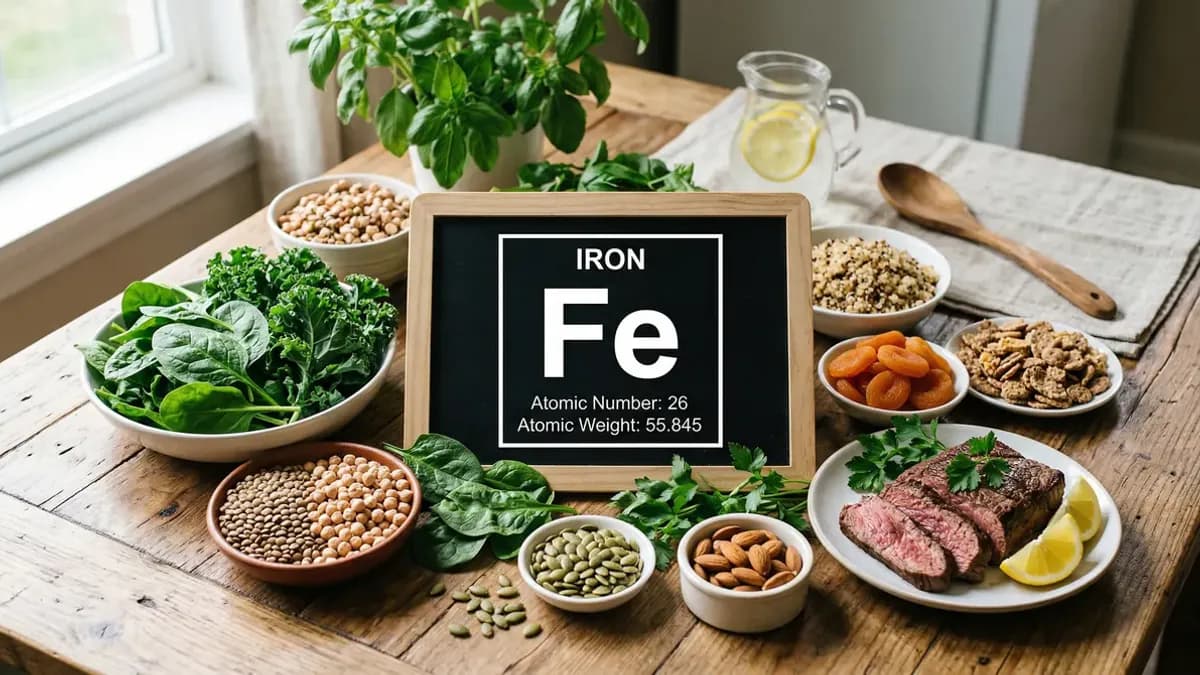
You feel tired, your concentration is poor, and you're always cold. Sound familiar? Iron deficiency is one of the most common nutritional deficiencies worldwide — and it often develops gradually. Yet many people don't know exactly how much iron they need each day, which foods are richest in iron, and why plant-based iron is absorbed differently from iron in meat.
Key takeaways
- Men need approximately 9 mg of iron per day; women of reproductive age need considerably more due to menstrual blood loss
- Iron comes in two forms: haem iron (from animal sources, better absorbed) and non-haem iron (from plant sources)
- Vitamin C from the same meal can substantially improve the absorption of plant-based iron
- Liver, red meat, legumes, and dark leafy greens are the richest iron sources
- Tea, coffee, and calcium-rich foods can inhibit iron absorption when consumed at the same time
What does iron do in your body?
Iron is a mineral your body cannot produce — it must come from food. It plays a critical role in oxygen transport through the blood. Iron is a component of haemoglobin, the protein in red blood cells that carries oxygen from the lungs to every organ in the body.
But iron does more than transport oxygen:
- Energy metabolism. Iron is involved in converting nutrients into energy within cells
- Immune function. A good iron status supports the immune system
- Cognitive function. Iron deficiency may negatively affect concentration and memory, particularly in children and adolescents
How much iron do you need per day?
The recommended daily intake of iron varies considerably by group. Women of reproductive age need more than men because they lose iron monthly through menstrual blood.
According to Voedingscentrum and the Gezondheidsraad, the following reference values apply for adults:
- Men (19–50 years). Approximately 9 mg per day
- Women (19–50 years). Approximately 16 mg per day (higher need due to menstruation)
- Women after menopause. Approximately 9 mg per day (similar to men)
- Pregnant women. Higher requirements — consult a healthcare provider for personal advice
For supplements, Voedingscentrum advises a ceiling of 11 mg per day for men and post-menopausal women, and 16 mg per day for women of reproductive age.
Haem iron vs. non-haem iron: what's the difference?
Not all dietary iron is absorbed equally well. There are two forms:
Haem iron is found in animal products — meat, fish, and poultry. Your body absorbs an estimated 15 to 35 percent of the haem iron in food. Liver contains the highest concentrations of haem iron of any common food.
Non-haem iron is found in plant-based sources: legumes, vegetables, nuts, and grains. Absorption is lower — between 1 and 10 percent, depending on what you eat alongside it.
This doesn't make plant-based iron sources worthless — but you need to eat more of them to absorb the same amount of iron. Vegetarians and vegans consequently have higher iron requirements on average.
Which foods are richest in iron?
Here is an overview of iron-rich foods, based on data from the Dutch Food Composition Database (NEVO):
Animal sources (haem iron)
- Liver (beef or chicken). One of the richest sources — liver contains substantially more iron per 100 g than other meats
- Beef. A reliable source of haem iron per serving
- Chicken and turkey. Lower than red meat but widely available and easy to include daily
- Oily fish (sardines, tuna). Provide both haem iron and omega-3 fatty acids
Plant-based sources (non-haem iron)
- Kidney beans and lentils. Excellent plant-based iron sources; also rich in fibre and protein
- Chickpeas. Versatile and a good iron contributor per serving
- Spinach and other dark leafy greens. Contain non-haem iron, but also oxalates that can inhibit absorption
- Pumpkin seeds and sesame seeds. Concentrated plant iron sources, convenient as toppings or additions
- Whole grain bread and oats. Used daily, these contribute meaningfully to total iron intake
How to improve iron absorption
Iron absorption is strongly influenced by what you eat alongside iron-rich foods. Small adjustments can make a noticeable difference:
Eat vitamin C alongside iron-rich plant foods. Vitamin C may substantially improve the absorption of non-haem iron. Add a squeeze of lemon to your lentil soup, eat bell pepper alongside your whole grain pasta, or drink a small glass of orange juice with a high-iron meal.
Avoid tea and coffee around mealtimes. Tannins in tea and coffee may inhibit iron absorption. Ideally wait at least an hour after an iron-rich meal before drinking tea or coffee.
Be cautious with calcium-rich foods at the same meal. Calcium and iron compete for the same transport mechanisms in the gut. Large amounts of milk or cheese alongside a meal may reduce iron absorption.
Combine haem and non-haem iron. Eating a small amount of meat or fish alongside a plant-based meal can improve the absorption of the non-haem iron in that meal.
Symptoms of iron deficiency
A chronically low iron intake can lead to iron-deficiency anaemia — the most common form of anaemia worldwide. Symptoms can include:
- Persistent fatigue and low energy
- Paleness or pale mucous membranes
- Breathlessness during light physical activity
- Reduced concentration and mental clarity
- Feeling cold in the hands and feet
If several of these symptoms sound familiar, ask your GP for a blood test to check your iron levels. Iron supplements without a confirmed deficiency are not recommended.
How to track your iron intake
Knowing how much iron you consume is not most people's daily habit. But being more aware of your food choices pays off — especially if you're in a risk group (women, vegetarians, athletes).
With Moveno, take a photo of your meal and instantly see its nutritional content, including minerals. Want to know more about another nutrient that deserves extra attention for plant-based eaters? Read our article on vitamin B12 — often depleted alongside iron in plant-forward diets.
Build better iron awareness today
Iron in food doesn't have to be a complicated topic. Vary your sources — both haem and non-haem — eat vitamin C alongside plant-based meals, and avoid tea around mealtimes. Three small adjustments that can make a significant difference to your iron status.
Download Moveno for free and track your daily nutrition, including minerals.
Sources
- Voedingscentrum — Iron in food — functions of iron, recommended intake, absorption, and food sources
- Voedingscentrum — How much iron do I need per day? — recommended amounts by group and supplement advice
- Gezondheidsraad — Dietary reference values for vitamins and minerals for adults (2018) — scientific basis for recommended iron intake
- RIVM — NEVO Dutch Food Composition Database — iron content per food item