You have probably heard the advice: "avoid fast carbs" or "choose low-GI foods." But what does the glycemic index actually measure, and does it really need to influence what you eat?
The answer is nuanced — but the core concept is simple to understand and can help you make more informed choices.
Key takeaways
- The glycemic index (GI) measures how quickly a food raises blood sugar on a scale of 0 to 100.
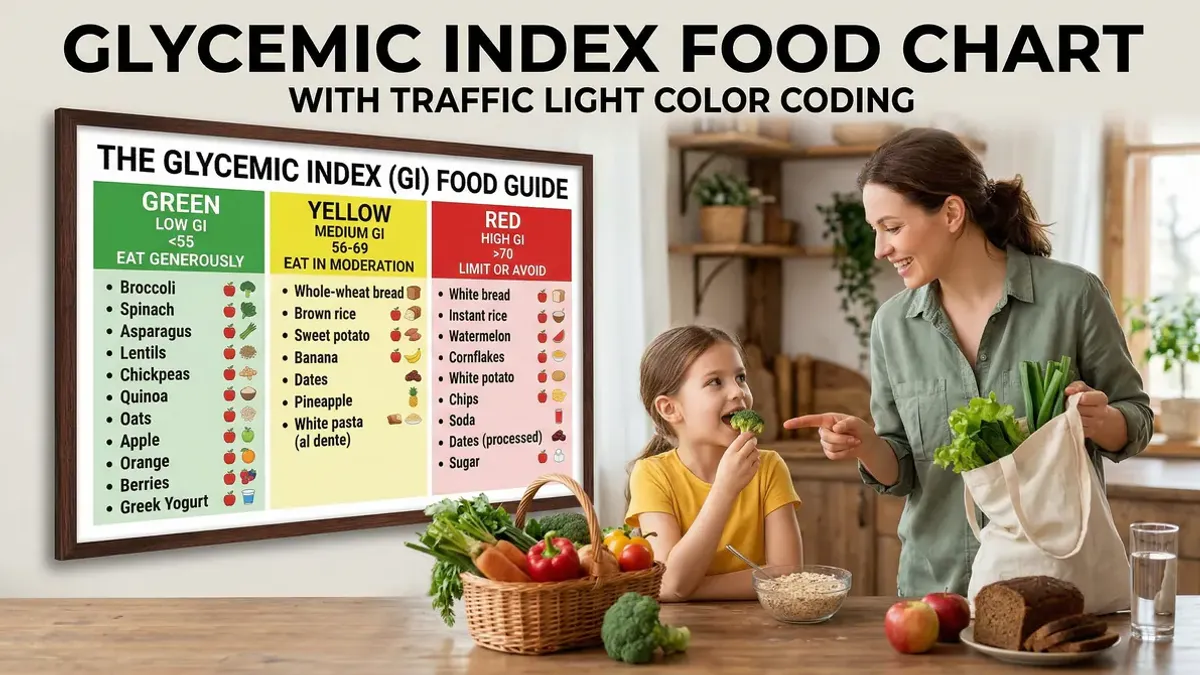
- Low GI (<55): oats, legumes, sweet potato. Medium (56-69): wholegrain bread, brown rice. High (≥70): white bread, cornflakes, baked potato.
- High-GI foods cause a rapid blood sugar spike followed by a drop — which may trigger hunger and energy dips.
- GI is a guideline, not an absolute rule: portion size, cooking method, and food combinations all influence the actual blood sugar response.
- For people with type 2 diabetes, a low-GI diet may help with blood sugar management.
What is the glycemic index?
The glycemic index measures how quickly the carbohydrates in a food are converted to glucose and absorbed into the bloodstream, compared to a reference food — usually white bread or pure glucose (GI = 100).
A GI of 50 means the food raises blood sugar half as fast as the reference. The lower the GI, the more gradual the rise.
According to Voedingscentrum, the categories are:
- Low GI: <55 — gradual blood sugar rise
- Medium GI: 56-69 — moderate rise
- High GI: ≥70 — rapid, sharp rise
Which foods have a low or high GI?
Low GI (<55)
- Oats (GI ≈ 55)
- Lentils and chickpeas (GI ≈ 20-30)
- Sweet potato (GI ≈ 44)
- Full-fat milk and yoghurt (GI ≈ 20-35)
- Apple, pear, cherries (GI ≈ 30-40)
- Wholegrain bread (GI ≈ 50-52)
Medium GI (56-69)
- Brown rice (GI ≈ 50-58)
- Wholegrain pasta (GI ≈ 50-55)
- Banana (GI ≈ 52-62, depending on ripeness)
- Pineapple (GI ≈ 59)
High GI (≥70)
- White bread (GI ≈ 70-75)
- Cornflakes and rice cakes (GI ≈ 70-82)
- Watermelon (GI ≈ 72)
- Baked potato (GI ≈ 80-95)
- Glucose (GI = 100)
Note: watermelon has a high GI but contains few carbohydrates per serving. A normal slice therefore has a relatively modest effect on blood sugar — which brings us to an important caveat.
Why GI is not the full picture
GI is measured by feeding 50 grams of carbohydrates from that specific food in isolation. Real-world eating is different:
Portion size matters. A small portion of a high-GI food may raise blood sugar less than a large portion of a low-GI food. This is why the glycemic load (GL) also accounts for the amount of carbohydrates per serving.
Combinations lower the GI. Fat, protein, and fibre all slow digestion and reduce the blood sugar response. White rice eaten with vegetables, oil, and chicken has a lower effective GI than white rice alone.
Cooking method affects GI. Al dente pasta has a lower GI than overcooked pasta. Cooled cooked potatoes have a lower GI than hot ones. Ripeness raises the GI of fruit (ripe banana vs. green banana).
Why choosing lower-GI foods can help
A diet based primarily on low-GI foods offers several practical benefits:
Steadier energy levels. A gradual blood sugar rise means a more even energy release — fewer afternoon slumps, fewer cravings between meals.
Longer-lasting fullness. Low-GI foods tend to digest more slowly, which may help you feel satisfied for longer and naturally moderate your calorie intake.
Relevant for type 2 diabetes. According to Voedingscentrum, a low-GI dietary pattern may contribute to better blood sugar control and lower HbA1c levels in people with type 2 diabetes. Always consult a dietitian or doctor for personalised guidance.
Putting GI into practice
You do not need to memorise GI tables. A few straightforward rules cover most situations:
Swap white for wholegrain. Wholegrain bread, whole wheat pasta, and brown rice all have a lower GI than their white counterparts.
Add vegetables to every meal. Fibre from vegetables slows the glycemic response of the entire meal.
Eat more legumes. Lentils, chickpeas, and beans are cheap, protein-rich, and among the lowest-GI foods available.
Eat fruit, not juice. Whole fruit has a lower GI than fruit juice — the fibre in the fruit slows absorption.
Smarter choices, not stricter rules
The glycemic index is a tool, not a dietary law. You do not need to permanently ban cornflakes. But if you consistently feel sluggish after breakfast, switching to oats or wholegrain toast might be worth trying. Small adjustments to your carbohydrate choices can make a noticeable difference in how you feel throughout the day.
Sources
- Voedingscentrum — Glycemische index — GI scale, classifications (low <55, high ≥70), and measurement method
- Voedingscentrum — GI diet — applications and limitations of the GI concept
- Voedingscentrum — Does GI help with diabetes type 1 and 2? — effects on HbA1c and fasting glucose levels