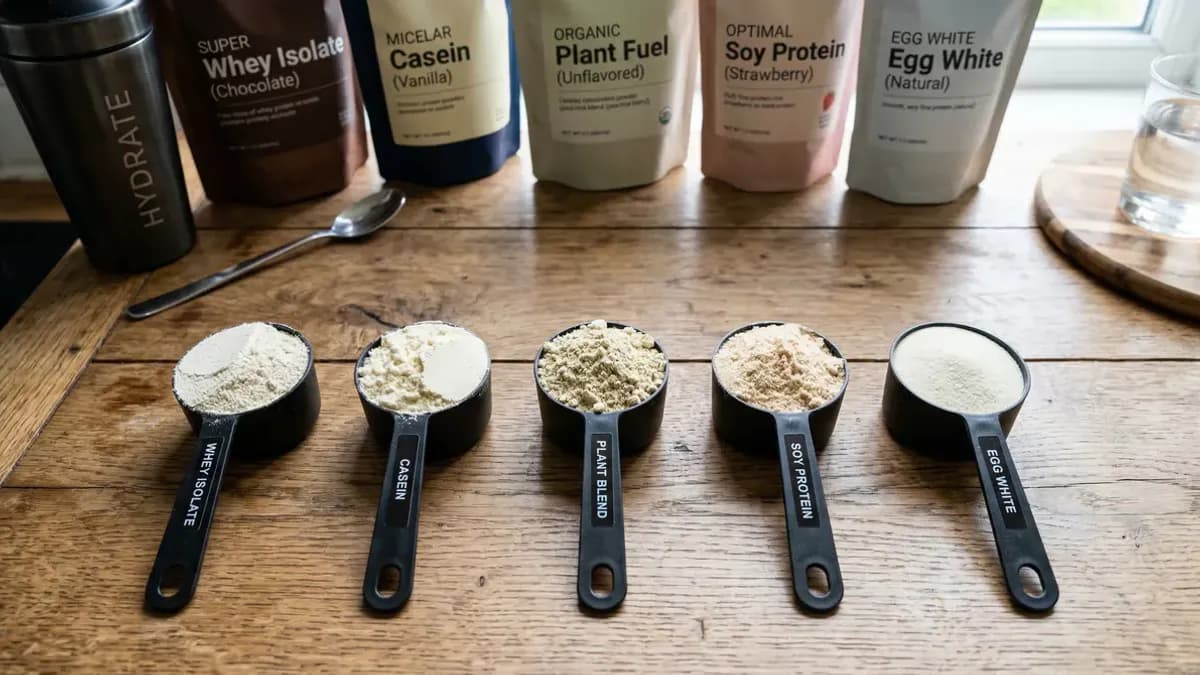
Standing in front of a wall of protein powder tubs — whey, casein, isolate, plant-based — can feel overwhelming. Which one should you pick? And do you even need protein powder in the first place?
The answer depends on your goals, your diet, and how well your digestive system handles dairy. Here is a clear breakdown of the main types, when each makes sense, and how to choose.
Key takeaways
- Whey concentrate is the most affordable option, containing 70-80% protein — ideal if you have no issues with lactose.
- Whey isolate contains 90%+ protein, virtually no lactose, and absorbs quickly — best right after training.
- Casein digests slowly over 6-8 hours, making it well-suited for use before bed.
- Plant-based protein (pea, rice, soy) is a solid choice for vegan diets — combine sources for a complete amino acid profile.
- Healthy adults need 0.83 grams of protein per kilogram of body weight daily; strength athletes up to 2 grams.
- Protein powder is a supplement, not a replacement for whole food.
How much protein do you actually need?
Before picking a product, it is worth knowing your target. According to the Dutch Health Council, healthy adults need 0.83 grams of protein per kilogram of body weight per day — roughly 58 grams for a 70 kg person.
Strength athletes aiming for muscle gain need more: 1.4 to 2 grams per kilogram per day. For an 80 kg person, that is between 112 and 160 grams of protein daily, which can be difficult to reach through meals alone. That is where a shake can help.
For most people eating a balanced diet, however, protein needs are already met through food. Supplement only when you consistently fall short, or when your training volume makes the extra intake genuinely necessary.
Type 1: Whey concentrate — the affordable all-rounder
What it is. Whey is a byproduct of cheese production. Concentrate is the least processed form and typically contains 70-80% protein per 100 grams, with small amounts of fat and lactose making up the rest.
When it fits. If you tolerate lactose well and want a cost-effective option for post-workout recovery, concentrate is a practical choice. The trace fat and lactose give it a creamier taste than isolate.
Watch out for. If dairy regularly causes bloating, cramps, or digestive discomfort, the lactose in concentrate may be the culprit. In that case, move to isolate.
Type 2: Whey isolate — pure and fast
What it is. Isolate undergoes additional filtration, bringing protein content above 90% with virtually no lactose or fat. It is absorbed into the bloodstream faster than concentrate.
When it fits. Isolate is the go-to for the fastest protein delivery — immediately after training. It is also the better option for people with lactose intolerance. The trade-off: it costs more and tastes slightly less creamy.
Blended products. Many supplements combine concentrate and isolate to balance price, flavour, and purity. Check the ingredient label — the first ingredient listed is the most abundant.
Type 3: Casein — the overnight option
What it is. Casein also comes from milk but digests far more slowly than whey. While whey delivers amino acids within 1-2 hours, casein provides a steady release over 6 to 8 hours.
When it fits. The classic application is right before bed. Muscles repair overnight, and a slow protein source may help sustain that recovery process. Research suggests that casein consumed before sleep can support muscle protein synthesis during rest.
Downside. Casein contains lactose and has a thick, pudding-like texture when mixed — it is not ideal as a quick post-workout shake. Mix with water or milk and expect a denser consistency.
Type 4: Plant-based protein — for anyone avoiding dairy
What it is. Plant-based powders are made from peas, rice, soy, hemp, or combinations of these. Protein content varies: pea and soy proteins sit around 80% per 100 grams, rice protein slightly lower.
The amino acid profile. Plant proteins can fall short in certain essential amino acids — particularly leucine, lysine, or methionine. The fix is straightforward: combine sources. Pea protein and rice protein complement each other well, together approaching the amino acid profile of whey.
When it fits. If you follow a vegan diet or prefer to avoid dairy, plant-based powder is the clear choice. Modern formulations with added leucine perform comparably to whey for muscle protein synthesis. Look for products featuring "pea + rice" or added leucine on the label.
Choosing the right powder for your situation
Step 1: Check your diet and intolerances
Vegan or lactose-intolerant? Eliminate whey concentrate. Choose isolate (low lactose) or plant-based.
Step 2: Consider timing
Need a fast post-workout shake? Whey isolate. Something for overnight? Casein. General use throughout the day? Concentrate or plant-based.
Step 3: Check your budget
Whey concentrate is cheapest; plant-based and isolate cost more. Compare price per gram of protein — not per tub — for a fair calculation.
Step 4: Read the label
Check protein content per 100 grams, the ingredient list, and added sugars or artificial sweeteners. Fewer additives generally means a cleaner product.
Protein powder vs. whole food
Protein powder is convenient, but not magic. Chicken (30g protein per 100g), Greek yoghurt (10g per 100g), cottage cheese (13g per 100g), lentils (9g per 100g), and eggs (13g per 100g) deliver protein alongside fibre, vitamins, and minerals that a shake cannot match.
Use powder as a supplement to a varied diet, not a replacement for complete meals. Curious how much protein you actually eat each day? Our guide on daily protein needs walks through practical calculations.
Start with your diet before buying supplements
Protein powder works best when the rest of your nutrition is solid — enough vegetables, whole grains, adequate fat, and a calorie intake that matches your goals. Use Moveno to check whether your daily protein target is already covered by your normal eating before reaching for the tub.
Sources
- Gezondheidsraad — Voedingsnormen voor eiwitten — recommended daily protein intake: 0.83 g/kg for adults, 1.4-2 g/kg for athletes
- Voedingscentrum — Eiwitten — protein sources and daily needs
- Voedingscentrum — Is een eiwitshake nodig als je sport? — guidance on protein supplements for athletes
- Examine — Whey protein types — concentrate 70-80% vs. isolate 90%+ protein content