
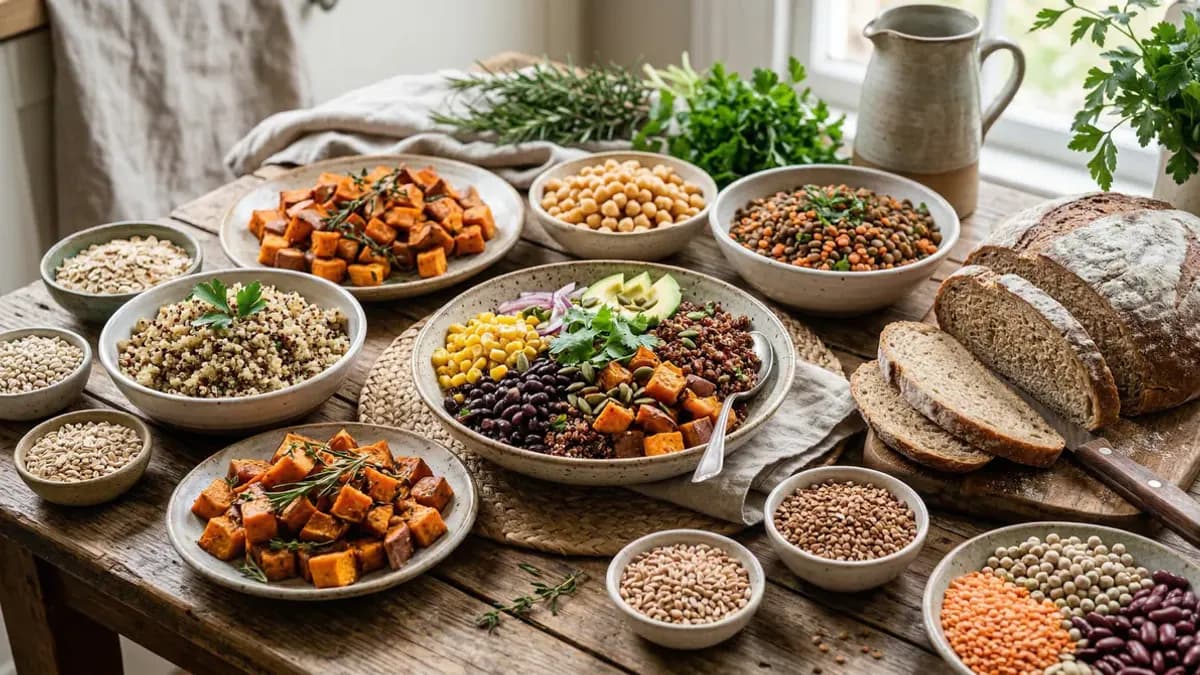
Carbohydrates have endured decades of negative press, but the truth is far more nuanced: not all carbohydrates are equal. There is a vast difference between the carbohydrates in a bag of crisps and those in a bowl of oats. In this article we explain which carbohydrates are genuinely good for you, why they are essential for health and energy, and how to make the best choices every day.
Key takeaways
Healthy carbohydrates are complex, fibre-rich sources such as oats, sweet potato, quinoa, brown rice, wholegrain bread, legumes, fruit and vegetables. They deliver stable energy, keep you full for longer and supply important vitamins and minerals. Unhealthy carbohydrates are highly processed products such as white bread, sweets, soft drinks and biscuits.
What makes a carbohydrate 'healthy'?
The distinction between healthy and unhealthy carbohydrates comes down to two key factors: the degree of processing and the fibre content.
Complex carbohydrates (also called slow carbohydrates) consist of long chains of sugar molecules that are digested slowly. They release energy gradually, keep blood sugar stable and produce a sustained feeling of fullness. Complex carbohydrates are found in wholegrains, legumes, vegetables and potatoes.
Simple carbohydrates (also called fast carbohydrates) are absorbed quickly into the bloodstream, cause blood sugar spikes and often lead to energy crashes shortly afterwards. They are found in sugar, sweets, soft drinks and highly processed foods.
Fibre plays a crucial role: it slows carbohydrate digestion, feeds beneficial gut bacteria, supports healthy cholesterol levels and may help reduce the risk of cardiovascular disease. Healthy carbohydrate sources are almost always fibre-rich.
The best healthy carbohydrate sources
Oats
Oats are among the most nutritious grains available. Per 100 grams dry they contain approximately 60 grams of carbohydrates, 10 grams of protein and 8 grams of fibre (including beta-glucan, a soluble fibre that may help lower LDL cholesterol). Oats have a low glycemic index (GI approximately 55) and keep you full for hours.
How to use: as porridge with fresh fruit and nuts, as overnight oats, in smoothies or as a base for healthy banana muffins.
Sweet potato
Sweet potato contains approximately 20 grams of carbohydrates per 100 grams cooked, but has a lower glycemic index than regular potato (GI approximately 44–63). It is loaded with beta-carotene (a vitamin A precursor), vitamin C, potassium and fibre.
How to use: roasted in the oven, mashed, as a soup base or stuffed as a complete meal.
Quinoa
Quinoa is technically a seed but is used as a grain. Per 100 grams cooked it contains approximately 22 grams of carbohydrates, 4 grams of protein and 2.8 grams of fibre. Notably, quinoa is one of the few plant-based sources containing all nine essential amino acids — making it a complete protein.
How to use: as a substitute for rice or couscous, in salads, or as a breakfast bowl with fruit and nuts.
Brown rice
Brown rice retains the bran and germ layers of the grain, giving it more fibre, B vitamins and minerals (magnesium, zinc) than white rice. GI approximately 50–55 versus 64–72 for white rice.
How to use: as a side dish with vegetables and protein, in stir-fries and curries, or as a higher-fibre sushi base.
Wholegrain bread
Wholegrain bread contains the complete grain kernel, including bran and germ. It is richer in fibre, B vitamins and minerals than white bread. Watch the nutritional declaration: "multigrain" or "brown bread" is not the same as "wholegrain" — look for 100% wholegrain as the first ingredient.
Tip: choose bread with at least 6–8 grams of fibre per 100 grams.
Legumes
Lentils, chickpeas, black beans, kidney beans, edamame — legumes are exceptional nutritional sources. They combine complex carbohydrates with high protein and fibre content, digesting slowly and providing excellent satiety. GI of most legumes: 20–45 (low).
Nutritional values for lentils (per 100g cooked): approximately 20g carbohydrates, 9g protein, 8g fibre.
How to use: in soups, stews, salads, as hummus, as a side dish or as a meat substitute in burgers and bolognese.
Fruit
Fruit contains fructose (a simple sugar) but is considered a healthy carbohydrate source due to its fibre, vitamins, minerals and antioxidants. The fibre in whole fruit significantly slows fructose absorption — fruit juice lacks this fibre and behaves very differently in the body.
Best fruit choices for stable blood sugar: berries (blueberries, strawberries, raspberries — lowest sugar content), apples, pears, citrus fruits.
Vegetables
Vegetables are the most underestimated carbohydrate source. Non-starchy vegetables such as broccoli, spinach, courgette, peppers and cauliflower are low in carbohydrates but rich in fibre, vitamins and antioxidants.
Buckwheat
Buckwheat is gluten-free and contains approximately 65 grams of carbohydrates per 100 grams dry, but scores well on protein (13g), fibre and minerals such as magnesium and manganese. GI approximately 54 (low-moderate).
How to use: as buckwheat porridge, in pancakes, as a salad base or as a substitute for rice or pasta.
What to avoid: unhealthy carbohydrates
Limit the following products as they provide few nutrients and cause rapid blood sugar spikes:
- White bread, white pasta, white rice: refined grains where fibre, vitamins and minerals have largely been removed
- Sugar-sweetened beverages: soft drinks, fruit juice, energy drinks — liquid sugar is absorbed extremely rapidly
- Sweets, biscuits, pastries: high sugar concentration, few to no nutrients
- High-sugar breakfast cereals: check the label — many popular cereals contain 25–35% sugar
- Processed snacks: crisps, low-fibre crackers, rice cakes with sweet toppings
How many carbohydrates per day?
The recommended daily intake of carbohydrates for most adults is 225–325 grams per day at an energy intake of 2,000 kcal. This represents 45–65% of total energy intake.
If you're consciously reducing carbohydrates for weight loss or blood sugar management, the guidelines are lower — explore this further in our article on slow carbohydrates.
Practical tips for more healthy carbohydrates
- Replace white with whole: white bread → wholegrain, white rice → brown rice, white pasta → wholegrain pasta
- Add legumes: start with lentils or chickpeas twice a week
- Choose oats for breakfast: keeps you full much longer than toast or cereal
- Eat more vegetables: aim for 250–400 grams per day
- Read labels: look for products with at least 6g fibre per 100g
- Limit fruit juice: choose whole fruit over juice
Conclusion
Carbohydrates are essential for your health — but the source matters enormously. Choose complex, fibre-rich carbohydrate sources such as oats, sweet potato, quinoa, legumes and wholegrain products. Limit refined carbohydrates and sugar-sweetened products. With the right choices, carbohydrates offer stable energy, sustained fullness and valuable nutrients.
Want to track which carbohydrates you eat daily and what they contribute to your nutritional goals? Take a photo of your meal in Moveno and instantly see all nutritional values — including carbohydrates, fibre and micronutrients.