
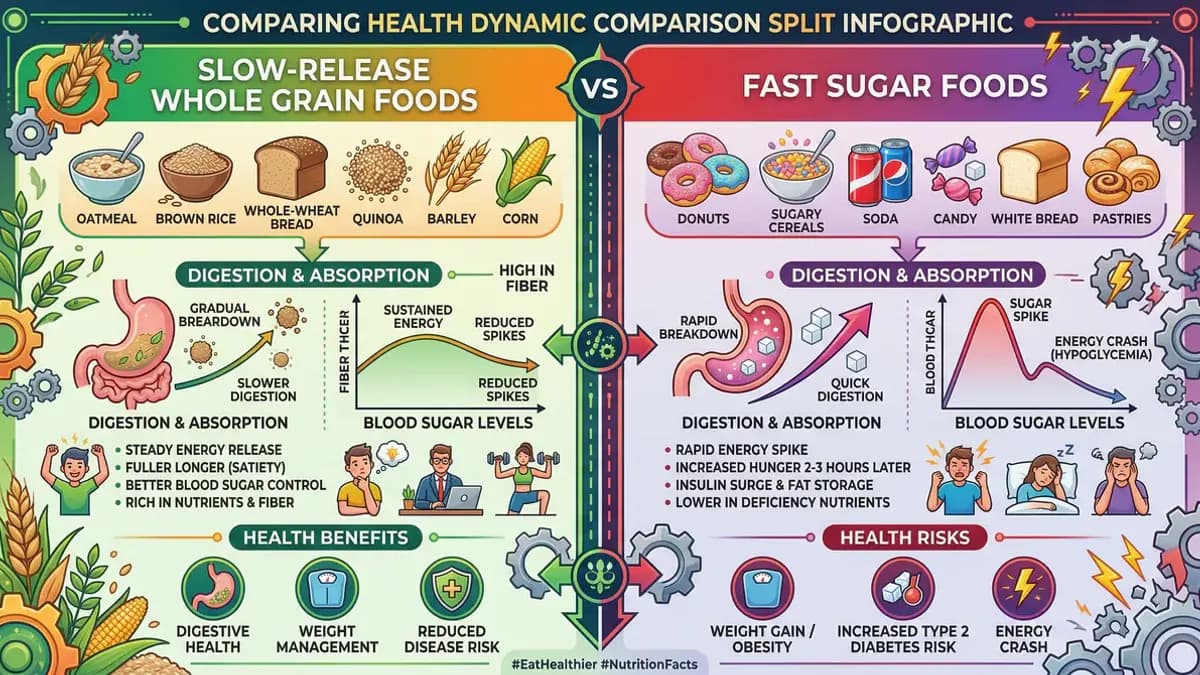
You have probably heard that you should eat "slow" carbohydrates. But what does that actually mean? What makes a carbohydrate slow, and is that always better for you? In this article we explain the science behind slow carbohydrates, provide a practical list of the best sources, and discuss how to use them optimally for your goals.
Key takeaways
Slow carbohydrates are digested gradually, keeping your blood sugar stable and leaving you feeling fuller for longer. They have a low glycemic index (GI below 55). Examples include oats, wholegrain products, legumes, sweet potato and quinoa. They are ideal for weight management, diabetes management and sustained energy supply.
What are slow carbohydrates?
Slow carbohydrates — also called complex carbohydrates — are carbohydrates that are broken down slowly in the digestive system. This slow digestion process is due to their molecular structure: complex carbohydrates consist of long chains of sugar molecules (polysaccharides) that the body must disassemble step by step.
The result is a gradual release of glucose into the bloodstream, leading to:
- A stable blood sugar level without spikes and crashes
- A more sustained feeling of fullness
- Consistent energy availability over a longer period
- Reduced likelihood of unwanted cravings and impulsive eating
The opposite are fast carbohydrates (simple carbohydrates), such as sugar, sweets, soft drinks and white bread. These are digested rapidly, causing a sharp rise in blood sugar followed by a quick drop — the well-known "sugar crash."
The glycemic index as a measure
The glycemic index (GI) is the scientific tool for measuring how quickly a carbohydrate source raises blood sugar. The scale runs from 0 to 100, with pure glucose as the reference at GI = 100.
Classification:
- Low GI (below 55): slow carbohydrates — desirable for stable energy
- Moderate GI (55–70): middle ground
- High GI (above 70): fast carbohydrates — less desirable for frequent consumption
Important nuance: glycemic load (GL) combines GI with portion size and gives a more realistic picture. A food may have a high GI but low GL if you eat a small amount — watermelon has GI 72 but GL of only 4 per portion.
The best slow carbohydrates: list with GI values
Legumes (GI 20–45)
The absolute winners for low GI are legumes:
| Food | GI |
|---|---|
| Lentils | 25–30 |
| Chickpeas | 28–35 |
| Black beans | 30 |
| Kidney beans | 38 |
| Edamame | 18 |
| Split peas | 22 |
Legumes combine low GI with high fibre and protein content — a triple combination that is exceptionally effective for sustained satiety.
Oats (GI 42–55)
Oats are the most popular slow carbohydrate. The beta-glucan fibres in oats additionally slow digestion and help keep blood sugar stable. Fine oats (instant) have a slightly higher GI than rolled oats.
Wholegrain products (GI 45–65)
- Wholegrain bread: GI 47–53
- Wholegrain pasta: GI 45–58
- Brown rice: GI 50–55
- Rye bread: GI 41–46
Wholegrain versions consistently score lower than their white counterparts due to the higher fibre content from the bran layer.
Sweet potato (GI 44–63)
Sweet potato scores significantly lower than regular potato (GI 78) and combines this with a rich nutritional profile: beta-carotene, vitamin C, potassium and fibre.
Quinoa (GI 50–53)
Quinoa is both a complete protein source and a slow carbohydrate. The combination of protein, fibre and complex carbohydrates makes it one of the most satiating grains available.
Low-GI fruit
| Fruit | GI |
|---|---|
| Cherries | 22 |
| Grapefruit | 25 |
| Apple | 35–38 |
| Pear | 38 |
| Orange | 40–44 |
| Grapes | 46–53 |
| Mango | 51–60 |
Berries (strawberries, raspberries, blueberries) have a particularly low GI of 25–40 and are rich in antioxidants.
Dairy products
Milk, yoghurt and cottage cheese have surprisingly low GI values (15–36). The proteins in dairy significantly slow the absorption of lactose (milk sugar).
Why are slow carbohydrates better?
1. More stable blood sugar
Blood sugar spikes and crashes are not only unpleasant (energy dips, cravings, concentration problems) but are also a long-term risk factor for insulin resistance and type 2 diabetes. Slow carbohydrates help avoid these spikes.
2. Better weight management
Slow carbohydrates keep you fuller for longer because they digest slowly. This may help reduce total calorie intake without experiencing hunger. Multiple studies show that lower GI eating may contribute to weight loss and maintenance.
3. More sustained energy
Athletes and active individuals benefit from the even energy release of slow carbohydrates — ideal as a pre-workout meal 2–3 hours before exercise.
4. Beneficial for diabetes
For people with type 2 diabetes or prediabetes, slow carbohydrates may help regulate blood sugar levels and reduce medication requirements. Always consult a doctor or dietitian.
5. Better gut health
Fibre-rich slow carbohydrates feed beneficial gut bacteria (prebiotic effect) and promote healthy digestion.
Slow versus fast carbohydrates: a comparison
| Slow carbohydrates | Fast carbohydrates | |
|---|---|---|
| GI | Below 55 | Above 70 |
| Digestion speed | Slow | Fast |
| Blood sugar effect | Gradual | Spike and crash |
| Satiety | Long-lasting | Short-lived |
| Examples | Oats, lentils, sweet potato | White bread, sweets, soft drinks |
Practical tips for more slow carbohydrates
- Breakfast with oats instead of white bread or sugary cereals
- Replace white rice with brown rice — it takes just 5 minutes extra cooking time
- Add lentils or chickpeas to soups, salads and stews
- Choose wholegrain bread with at least 6g fibre per 100g
- Eat fruit as a snack instead of biscuits or crisps
- Combine carbohydrates with protein and fat — this lowers the effective GI of a meal
Want to know more about specific healthy carbohydrate sources? Read our article on healthy carbohydrates.
Conclusion
Slow carbohydrates are a smart choice for anyone who wants stable energy, longer-lasting fullness, or is managing their blood sugar consciously. The key is choosing fibre-rich, complex carbohydrate sources such as oats, legumes, wholegrain products, sweet potato and quinoa. These are not just "slow" carbohydrates — they are also the most nutritious carbohydrate sources available.
Want to track which carbohydrates you eat and monitor the glycemic impact of your meals? With Moveno, photograph your food and instantly see all nutritional values.