
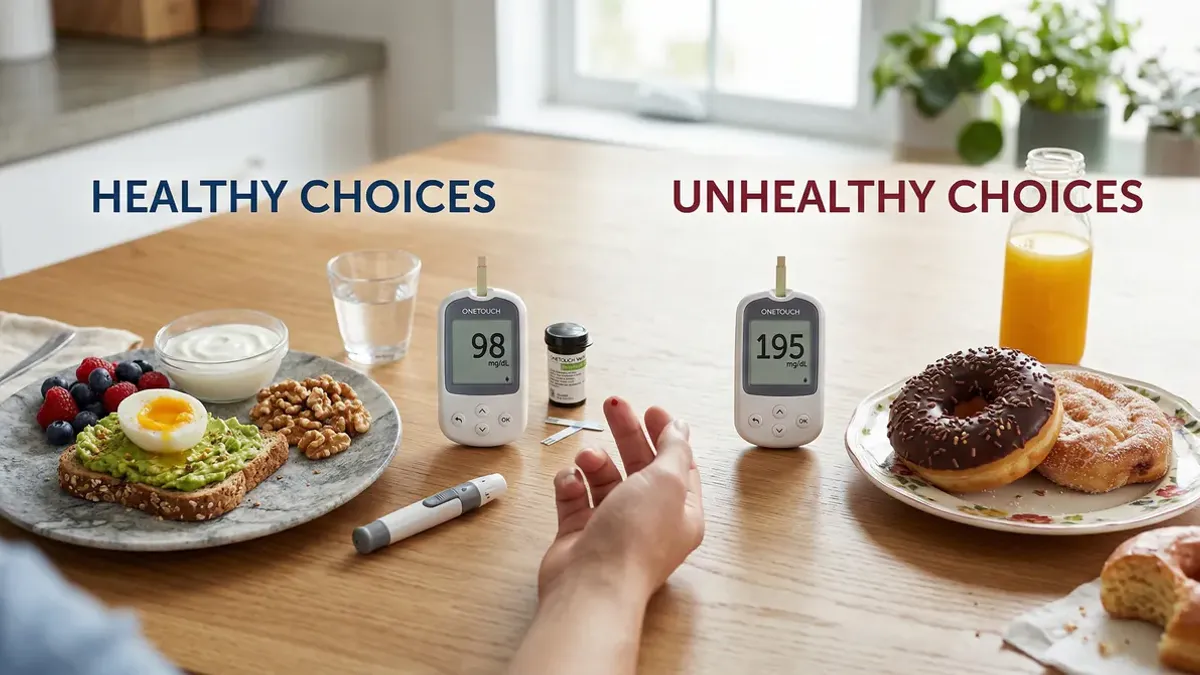
You feel unusually tired, notice you are thirsty more often, or wounds seem to take longer to heal. Or perhaps diabetes runs in your family and you want to know where your numbers stand. Understanding normal blood sugar levels is more straightforward than most people expect — and knowing the benchmarks can make a real difference to your long-term health.
Key takeaways
- Normal fasting blood sugar is between 4.0 and 6.0 mmol/L — above 7.0 mmol/L indicates diabetes.
- Pre-diabetes is diagnosed when fasting blood sugar falls between 6.1 and 6.9 mmol/L.
- After meals, blood sugar rises temporarily — but two hours later it should be back below 7.8 mmol/L.
- HbA1c reflects your average blood sugar over two to three months; a normal result is below 42 mmol/mol.
- Pre-diabetes and early-stage diabetes rarely cause noticeable symptoms — regular testing matters.
- Diet, exercise, sleep, and stress all have a measurable impact on blood sugar levels.
What is blood sugar?
Blood sugar — or blood glucose — is the concentration of glucose in your bloodstream. Glucose is the primary fuel for your cells: your brain, muscles, and organs depend on a continuous supply. Your body regulates glucose levels through insulin, a hormone produced by the pancreas, which transports glucose from the blood into cells.
When this system breaks down — either because the pancreas produces too little insulin or because cells become resistant to it — blood sugar rises and, over time, diabetes develops.
What are normal blood sugar levels?
Values are expressed in millimoles per litre (mmol/L). According to the Dutch Diabetes Fund (Diabetes Fonds) and diabetes.nl:
1. Fasting blood sugar (after 8 hours without food)
- Normal: 4.0 to 6.0 mmol/L
- Pre-diabetes: 6.1 to 6.9 mmol/L
- Diabetes: 7.0 mmol/L or above
2. Post-meal blood sugar (postprandial)
Measured two hours after eating:
- Normal: below 7.8 mmol/L
- Pre-diabetes: 7.8 to 11.0 mmol/L
- Diabetes: 11.0 mmol/L or above
3. HbA1c (long-term average)
HbA1c measures how much glucose has attached to red blood cells over the past two to three months. It provides a more reliable picture than a single snapshot:
- Normal: below 42 mmol/mol
- Pre-diabetes: 42 to 53 mmol/mol
- Diabetes: above 53 mmol/mol
Why does blood sugar rise after eating?
Every time you eat, your blood sugar rises — that is entirely normal. Carbohydrates are broken down into glucose and absorbed into the bloodstream. In healthy individuals, the pancreas responds quickly with insulin, bringing levels back to normal within two hours.
Foods with a high glycaemic index — white bread, soft drinks, white rice, sweet snacks — cause rapid, steep spikes. Foods with a lower glycaemic index — legumes, wholegrains, vegetables — produce a more gradual rise. Understanding which foods cause the biggest spikes in your own body is where continuous glucose monitoring can help, which is covered in our article on measuring blood sugar without finger pricks.
When is high blood sugar dangerous?
Prolonged elevated blood sugar damages blood vessels and nerves. This increases the risk of cardiovascular disease, kidney damage (nephropathy), eye complications (retinopathy), and reduced sensation in the hands and feet (neuropathy).
The complicating factor is that pre-diabetes and early-stage diabetes rarely cause obvious symptoms. Many people live for years without knowing their blood sugar is elevated. A simple fasting blood test at your GP or pharmacy can provide clarity quickly.
What affects your blood sugar?
Blood sugar is not a fixed number — it fluctuates throughout the day in response to:
- What you eat. Carbohydrates raise blood sugar directly; proteins and fats have minimal effect.
- Physical activity. Muscles use glucose as fuel — exercise lowers blood sugar.
- Stress. Stress hormones such as cortisol temporarily raise blood sugar.
- Sleep. Poor sleep impairs insulin sensitivity.
- Alcohol. Can raise blood sugar (from the sugar in drinks) or lower it (by suppressing the liver's glucose output).
Monitoring blood sugar without finger pricks
Technology is making blood sugar monitoring increasingly accessible. Continuous glucose monitors (CGM) such as the FreeStyle Libre and Dexcom measure glucose continuously via a small sensor worn on the arm. Read more about how to measure blood sugar without finger pricks.
For a broader picture of what is in your food, Moveno lets you photograph a meal and instantly see the nutritional breakdown — including carbohydrates and sugars — which helps you understand how your food choices may be affecting your blood sugar over time.
Take the first step
Elevated blood sugar is, in many cases, directly influenced by lifestyle. Regular exercise, fewer processed carbohydrates, better sleep, and reduced stress all have a measurable effect. If you are uncertain about your own levels, ask your GP for a fasting blood test. Early detection prevents serious complications later.
Sources
- Diabetes Fonds — Normal blood sugar levels — official thresholds for fasting, post-meal, and HbA1c values
- diabetes.nl — Blood glucose levels explained — when to take action based on your readings
- Voedingscentrum — Sugar — context on dietary sugar and blood sugar