
Why nutrition is the foundation of muscle building
You train hard and sleep enough — but without proper nutrition, results stall. Building muscle requires a consistent calorie surplus and adequate protein. This article gives you a practical meal plan for muscle building, broken down by meal timing.
Training and nutrition go hand in hand. You can go to the gym every day, but if your macros are off, you will barely gain lean mass. Research shows a daily surplus of 200–400 kcal is optimal for muscle tissue synthesis without excessive fat gain.
How many calories do you need?
The foundation of any muscle-building meal plan is your total calorie requirement. First calculate your maintenance level (TDEE), then add 200–400 kcal. For most men weighing 70–85 kg who train 3–4 times per week, this lands between 2,600 and 3,200 kcal per day.
The macro split for muscle building:
- Protein: 1.6–2.2 g per kg body weight (muscle repair and growth)
- Carbohydrates: 4–6 g per kg (energy and glycogen replenishment)
- Fats: 0.8–1.2 g per kg (hormone production and fat-soluble vitamins)
For someone weighing 80 kg, that means roughly 128–176 g protein, 320–480 g carbohydrates and 64–96 g fat per day. Want to know exactly how much protein you need per day, read our full breakdown.
Daily schedule at 2,800 kcal
Here is a concrete example of a meal plan at 2,800 kcal with 180 g protein, 350 g carbohydrates and 90 g fat:
Breakfast (±600 kcal)
- 100 g oats with 300 ml semi-skimmed milk
- 2 eggs (scrambled or boiled)
- 1 banana
- 15 g mixed nuts
This breakfast delivers complex carbohydrates, a solid first protein portion and sustained morning energy.
Morning snack (±300 kcal)
- 200 g Greek yoghurt (0% fat)
- 30 g low-sugar granola
- Handful of berries
Lunch (±600 kcal)
- 150 g chicken breast or canned tuna
- 250 g cooked rice or pasta (approximately 100 g dry weight)
- Large mixed salad with olive oil
Pre-workout snack (±200 kcal)
Eat this 60–90 minutes before training:
- 1 banana or rice cakes
- 20 g protein powder in water
Complex carbohydrates for energy, a small protein amount to limit muscle breakdown.
Post-workout meal (±600 kcal)
Immediately after training is the ideal window for fast protein and carbohydrates:
- 150 g lean meat (chicken, turkey, beef)
- 200 g potatoes or rice
- 150 g vegetables
Evening snack (±500 kcal)
- 250 g cottage cheese or casein shake
- 1 tablespoon peanut butter
- 1 slice wholemeal bread
Casein protein digests slowly and supports muscle protein synthesis throughout the night.
The best protein sources for muscle building
Not all proteins are equal. Animal proteins contain all essential amino acids and have high biological value:
| Source | Protein per 100 g |
|---|---|
| Chicken breast | 31 g |
| Cottage cheese | 12 g |
| Eggs | 13 g |
| Canned tuna | 26 g |
| Greek yoghurt | 10 g |
Plant-based athletes can choose tofu (8 g/100 g), tempeh (19 g/100 g) and legumes — combined to achieve a complete amino acid profile.
Timing: when do you eat what?
Research on nutrient timing shows that total daily protein intake matters most. That said, there are practical guidelines worth following:
- Pre-workout: carbohydrate-rich for energy
- Post-workout: protein and carbohydrates within 2 hours of training
- Before bed: slow proteins (cottage cheese, casein) for overnight recovery
Spread your protein across at least 4 meals for optimal muscle protein synthesis. One large 80 g serving is less effective than four 20 g portions.
Meal prep: your secret weapon
Consistency is the key to muscle building. Sunday meal prep saves time during the week and prevents you from reaching for unhealthy options:
- Cook a large batch of rice or pasta (lasts 3–4 days)
- Bake chicken breasts in the oven (keeps for 4 days)
- Portion your cottage cheese and snacks into containers
- Prepare sauces and dressings in advance
With good preparation, you eat consistently all week — even on busy days.
Supplements: useful or not?
Supplements complement — they never replace a solid base diet. The most evidence-backed supplements for muscle building:
- Creatine monohydrate: 3–5 g/day, consistent effect on strength and muscle mass
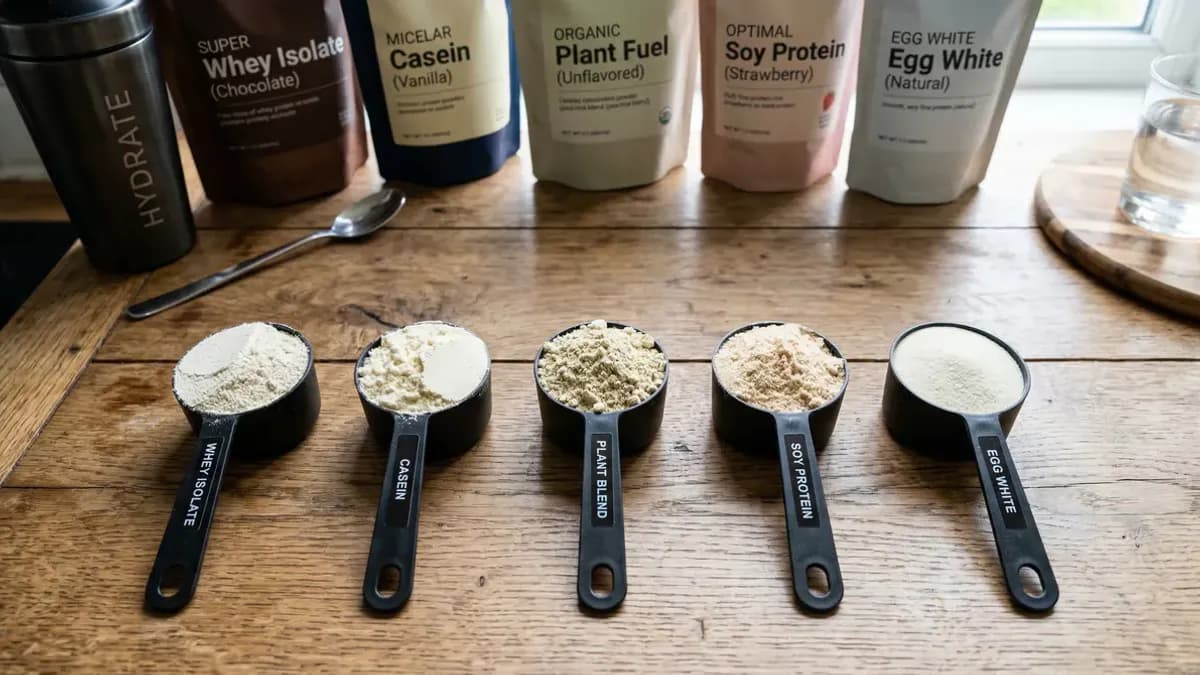
- Protein powder (whey): useful post-training or as a snack to hit protein targets
- Vitamin D: particularly important in northern Europe during autumn and winter
Do not be tempted by expensive stacks. Creatine and adequate food intake does more than ten costly supplements combined.
What to avoid
- Eating too little: a small surplus — or even a deficit — strongly limits muscle growth
- Exceeding 2.2 g protein per kg: excess protein is converted to energy, not muscle
- Sleep deprivation: growth hormone is produced primarily during sleep
- Too few carbohydrates before training: low glycogen leads to poor performance
Key takeaways
An effective muscle-building meal plan rests on three pillars: adequate calories (maintenance +200–400 kcal), sufficient protein (1.6–2.2 g/kg/day) and smart meal timing. Spread your protein across 4–6 meals and prioritise carbohydrates around training. Meal prep makes consistency achievable. Want to know exactly what you are consuming? Use a calorie tracker to log your nutrition — not every day, but especially at the start to build an intuition for portion sizes. Also read how to calculate your macros for muscle building.
Sources
- Morton RW et al. (2018). A systematic review, meta-analysis and meta-regression of the effect of protein supplementation on resistance training-induced gains in muscle mass and strength. British Journal of Sports Medicine. https://bjsm.bmj.com/content/52/6/376
- Stokes T et al. (2018). Recent perspectives regarding the role of dietary protein for the promotion of muscle hypertrophy with resistance exercise training. Nutrients. https://www.mdpi.com/2072-6643/10/2/180
- RIVM NEVO table 2023. National Institute for Public Health and the Environment. https://nevo-online.rivm.nl