Whether you want to lose weight, build muscle, or simply eat more healthily — adequate protein is essential. But which foods actually contain the most protein? And how do you combine them smartly in your daily diet?
Key takeaways
- Chicken breast, tuna, and prawns lead the list with over 24g protein per 100g
- Eggs contain one of the most complete amino acid profiles of any food
- Top plant-based options are tempeh (19g/100g), edamame (11g/100g), and lentils (9g/100g)
- Dairy products such as Greek yoghurt and quark are accessible and affordable protein sources
- Combining animal and plant-based sources provides the best amino acid balance
- Tracking your food intake helps you consistently hit your daily protein target
Animal protein sources: the absolute leaders
Animal products generally contain the most protein per 100 grams and provide all essential amino acids. Here are the best options:
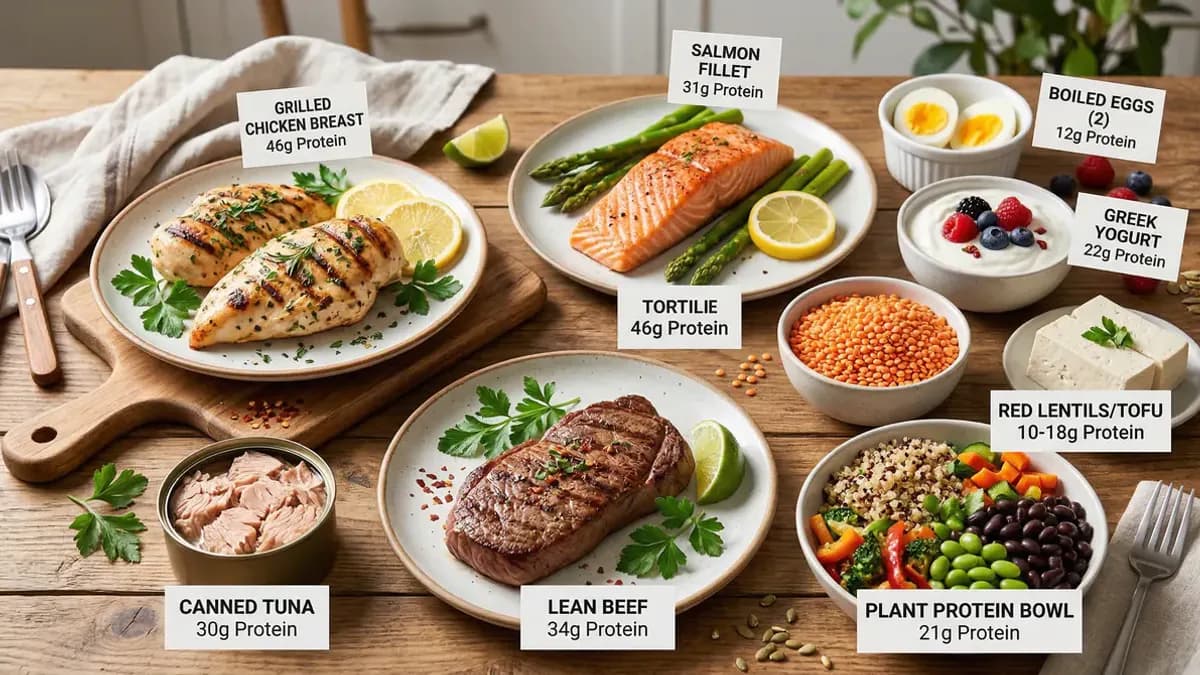
Chicken breast — 31g protein per 100g. The most popular protein source in the Netherlands. Lean, versatile, and affordable. Grilled, baked, or steamed — chicken breast is the backbone of many high-protein meals.
Canned tuna — 29–30g protein per 100g. One of the most convenient protein sources: inexpensive, long shelf life, and ready to eat. Choose the variety in water for fewer calories.
Turkey breast — 29g protein per 100g. Like chicken, a lean and protein-rich choice. Less popular but well worth including.
Lean beef — 26–28g protein per 100g. Also provides iron and zinc. Choose lean mince or steak for the best protein-to-fat ratio.
Prawns — 24g protein per 100g. Low in calories, high in protein. An excellent lean protein source for anyone watching their calorie intake.
Salmon — 20–25g protein per 100g. Also contains omega-3 fatty acids, making salmon unique among protein sources.
Canned sardines — 25g protein per 100g. Underrated but excellent: rich in protein, omega-3, and calcium (from the edible bones).
Low-fat quark — 11–13g protein per 100g. A versatile dairy source you can blend into smoothies, serve as breakfast, or use as a sauce base. Contains casein — a slowly digested protein.
Greek yoghurt — 9–10g protein per 100g. Easy to combine with fruit, muesli, or as a base for dressings. Watch the sugar content in flavoured varieties.
Eggs — 6.3g per egg (13g/100g). Called the 'perfect protein' due to a biological value of 100 — your body utilises it almost entirely. Read more about how much protein is in an egg.
Cottage cheese — 11g protein per 100g. A light, protein-rich option for snacking or as a topping.
Light mozzarella — 18–20g protein per 100g. Surprisingly protein-rich and great in salads or wraps.
Plant-based protein sources: the best options
For those who eat less or no animal products, there are also excellent plant-based protein sources:
Tempeh — 19g protein per 100g. Fermented soybeans with a nutty flavour. Higher in protein than tofu and more digestible thanks to the fermentation process.
Seitan — 25g protein per 100g. Made from wheat gluten, one of the most protein-rich plant-based products. Not suitable for people with gluten intolerance.
Edamame — 11g protein per 100g. Young soybeans and a complete protein source. Great as a snack or in salads.
Extra-firm tofu — 8–15g protein per 100g depending on type. Firm tofu contains more protein than soft silken tofu. Absorbs marinades well.
Lentils (cooked) — 9g protein per 100g. Also rich in fibre and iron. An excellent base for soups, curries, and salads.
Chickpeas (cooked) — 9g protein per 100g. Versatile: in hummus, curry, salad, or roasted as a snack.
Black beans — 8g protein per 100g. Popular in Latin American cuisine. Also a good source of fibre and iron.
Almonds — 21g protein per 100g. Note: also calorie-dense (580 kcal/100g). Use as a supplement, not a primary source.
Pumpkin seeds — 19g protein per 100g. Also rich in zinc and magnesium. Ideal as a topping on salads or cereals.
Hemp seeds — 32g protein per 100g. One of the most protein-rich plant-based products. Also contains all essential amino acids and a favourable omega-3 to omega-6 ratio.
Quinoa (cooked) — 4g protein per 100g. One of the few complete plant-based protein sources. Lower in absolute value but ideal as a meal base.
Fortified soy milk — 3–4g protein per 100ml. The best plant-based milk option in terms of protein content — comparable to cow's milk.
Useful comparison: protein per serving
Per 100g is useful for comparison, but serving size determines the actual contribution to your daily protein intake:
| Food | Serving | Protein |
|---|---|---|
| Chicken breast | 150g | 47g |
| Canned tuna | 1 can (130g) | 38g |
| Eggs | 2 eggs | 13g |
| Greek yoghurt | 200g | 20g |
| Lentils (cooked) | 150g | 14g |
| Edamame | 100g | 11g |
| Almonds | 30g (handful) | 6g |
How to combine protein sources smartly
For omnivores, it is straightforward to get all essential amino acids. For plant-based eaters, combining different sources is advisable:
- Rice + lentils or beans (together a complete amino acid profile)
- Maize tortilla + chickpeas
- Hummus + wholegrain bread
You do not need to achieve this in every single meal — eating a combination across the course of the day is sufficient.
Want to know more about protein?
Want to know exactly how much protein you need per day? Read our guide on how much protein you need per day. Focused on muscle building? Check out our article on protein for muscle building.
With Moveno, you photograph your meal and immediately see the nutritional values including protein content. You always know whether you are hitting your daily protein target — without manual calculations. Also read our guide on calorie tracking for beginners to get started.
Sources
- NEVO Online. Dutch food composition database. https://nevo-online.rivm.nl/
- Voedingscentrum. Eiwitten. https://www.voedingscentrum.nl/encyclopedie/eiwitten.aspx
- USDA FoodData Central. https://fdc.nal.usda.gov/
- van Vliet S, Burd NA, van Loon LJ. The Skeletal Muscle Anabolic Response to Plant- versus Animal-Based Protein Consumption. Journal of Nutrition. 2015;145(9):1981-1991. https://doi.org/10.3945/jn.114.204305