
Is 1,500 kcal right for you?
Before you start: 1,500 kcal creates a calorie deficit that may lead to weight loss for many people, but it is not the right threshold for everyone. For shorter women who are relatively inactive, this may be close to their maintenance level. For taller men or active athletes, it is too little.
A healthy calorie deficit is generally 300–500 kcal below your maintenance level (TDEE). Calculate your TDEE first before choosing a plan. If you are unsure how many calories you need, start with our beginner's guide to calorie tracking. A 1,500 kcal plan is a good starting point for average-height women with moderate activity, or men looking for a gentle deficit.
Always consult a registered dietitian if you are unsure whether a low-calorie plan is right for you.
The keys to a 1,500 kcal meal plan
Fewer calories does not automatically mean less satiety. The key lies in food choice:
- Eat protein-rich: protein satisfies better per calorie than carbohydrates or fat. Aim for at least 100–120 g protein per day at 1,500 kcal
- Choose high-fibre foods: vegetables, legumes and wholegrain products take up volume without many calories
- Avoid liquid calories: fruit juice, soft drinks and alcohol deliver calories without satiety
- Limit processed food: highly processed products are calorie-dense and reduce your feeling of fullness
Daily schedule at 1,500 kcal
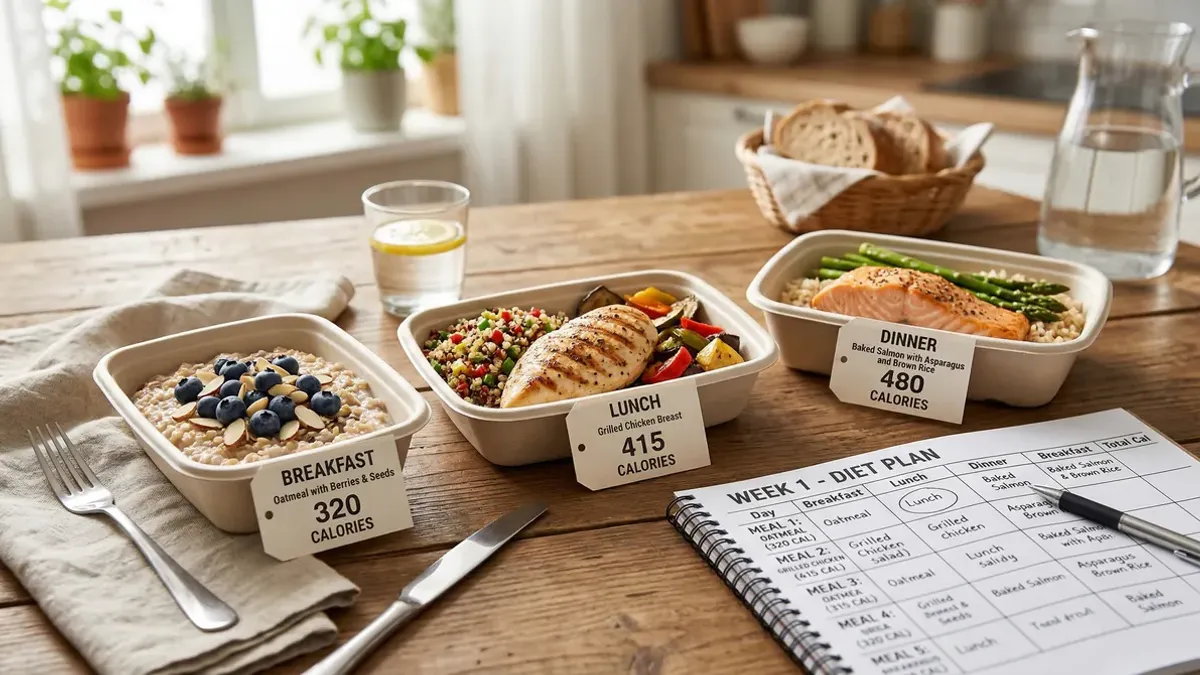
Here is an example of a daily schedule split across 4 eating moments:
Breakfast (±300 kcal)
- 40 g oats (dry) with water or 200 ml skimmed milk
- 100 g Greek yoghurt (0% fat)
- Handful of berries (±80 g)
Or as an alternative:
- 2 scrambled eggs with 1 slice wholemeal bread and tomato
- Black coffee or green tea (0 kcal)
Lunch (±400 kcal)
- Large salad: mixed leaves, cucumber, tomato, bell pepper
- 120 g grilled chicken breast or 100 g canned tuna in water
- 60 g chickpeas
- 1 tablespoon olive oil as dressing
Or as an alternative:
- 2 slices wholemeal bread with 75 g chicken breast, lettuce and mustard
Dinner (±500 kcal)
- 100 g dry rice or pasta (approximately 270 g cooked)
- 125 g lean meat or fish (chicken, turkey, cod, prawns)
- 200 g vegetables (broccoli, green beans, spinach or courgette)
- 1 teaspoon olive oil or small amount of sauce
Snack (±300 kcal)
Choose one of the following:
- 200 g cottage cheese (0% fat) with half a banana
- 2 rice cakes with 30 g hummus and cucumber
- 1 apple and 20 g almonds
- 100 g Greek yoghurt with 1 tablespoon peanut butter
Complete weekly menu at 1,500 kcal
Monday
- B: Oats (40 g) + 100 g yoghurt + berries
- L: Chicken breast salad with chickpeas
- D: Pasta with tuna sauce and courgette (smaller portion)
- S: Cottage cheese (200 g) + half a banana
Tuesday
- B: 2 eggs + wholemeal toast + tomato
- L: Wholemeal wrap with chicken breast, lettuce and avocado (¼ avocado)
- D: Grilled salmon (100 g) + potatoes (150 g cooked) + broccoli
- S: Apple + 20 g almonds
Wednesday
- B: Greek yoghurt (150 g) + 30 g low-sugar granola + kiwi
- L: Lentil soup (300 ml) + 1 slice wholemeal bread
- D: Oven-baked chicken breast (125 g) + sweet potato (150 g) + green beans
- S: 2 rice cakes + 30 g hummus
Thursday
- B: 40 g oats + half an apple + cinnamon
- L: Large salad with tuna and chickpeas (no bread)
- D: Turkey mince (100 g) + courgette and tomato sauce + pasta (80 g dry)
- S: 100 g cottage cheese + 1 tablespoon peanut butter
Friday
- B: 2 eggs + 1 slice wholemeal bread + spinach
- L: Chicken breast (100 g) + rice (60 g dry) + cucumber salad
- D: Cod (125 g) + steamed broccoli + small portion of potatoes
- S: Greek yoghurt + berries
Saturday
- B: Smoothie: 200 ml skimmed milk + half a banana + 30 g whey protein + spinach
- L: Wholemeal pitta with hummus, grilled bell pepper and chicken
- D: Chicken stir-fry with vegetables + 80 g rice (dry)
- S: Apple + tea
Sunday
- B: 2 eggs + 40 g oats as a side
- L: Salad with smoked salmon (50 g), cottage cheese, lettuce
- D: Chicken soup with vegetables and small portion of vermicelli
- S: 150 g cottage cheese + half a pear
Macro overview at 1,500 kcal
The average macros for this plan:
| Macro | Amount | Percentage |
|---|---|---|
| Protein | 110–130 g | 29–35% |
| Carbohydrates | 150–170 g | 40–45% |
| Fat | 40–50 g | 24–30% |
This is a relatively protein-rich plan — intentionally so, to limit muscle loss during calorie restriction. To understand exactly how protein contributes to satiety and muscle preservation, read our guide on high-protein foods.
Practical tips for sticking to 1,500 kcal
Weigh and measure at the start. People systematically underestimate portions. After 2–3 weeks of weighing, you develop a reliable eye for portion sizes.
Prepare your lunch the evening before. When you are tired during the day, you reach for convenience. A ready-made lunchbox removes that barrier.
Use a plate instead of a pan. Eating directly from the pan easily leads to extra portions.
Drink water before meals. Sometimes hunger is actually thirst. A glass of water 20 minutes before eating may increase satiety.
Set a fixed snack time. Spontaneous snacking leads to unintentional extra calories. Planning your snack at a fixed time helps avoid unnecessary in-between eating.
When is 1,500 kcal too little?
Signs that this plan may not suit you:
- Persistent extreme fatigue
- Concentration problems
- Noticeable decline in exercise performance
- Disrupted menstrual cycle (women)
Listen to your body. A deficit of 300–500 kcal per day — not 700–800 — is more sustainable and leads to better long-term results. If you notice your metabolism slowing down, read our guide on slow metabolism. Not sure how large a calorie deficit is right for you? Use our calorie deficit calculator guide to find your personal daily target before committing to a fixed meal plan.
Key takeaways
A 1,500 kcal meal plan may help with healthy weight loss if it aligns with your calorie needs. The key is eating protein-rich and fibre-rich for maximum satiety. Divide calories across 4 eating moments: breakfast (300), lunch (400), dinner (500), snack (300). Avoid liquid calories and processed foods. Use a tracking app to check whether you are hitting your targets — small deviations are normal and no cause for concern.
Sources
- Gezondheidsraad (2015). Dietary guidelines 2015. https://www.gezondheidsraad.nl/documenten/adviezen/2015/11/04/richtlijnen-goede-voeding-2015
- Leidy HJ et al. (2015). The role of protein in weight loss and maintenance. American Journal of Clinical Nutrition. https://academic.oup.com/ajcn/article/101/6/1320S/4564492
- RIVM. NEVO table 2023. https://nevo-online.rivm.nl