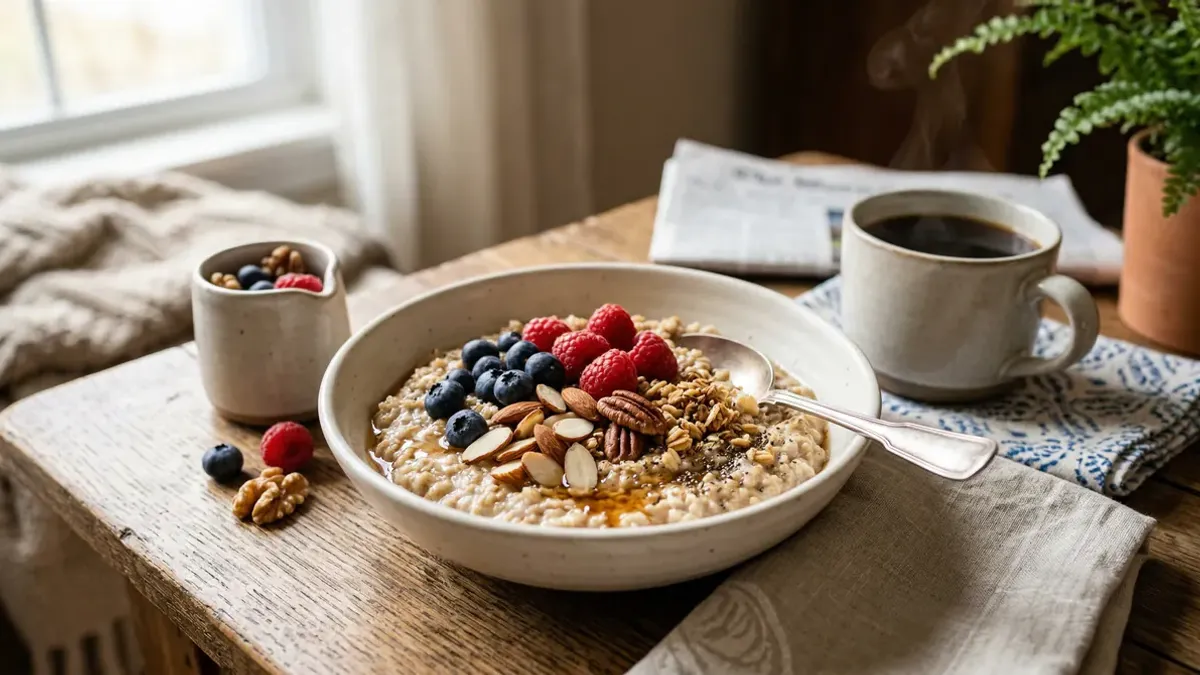
Oatmeal has long been praised as one of the healthiest breakfast options available. But does it actually support weight loss? In this article, we examine the science behind oats, break down the nutritional profile, and explain how to use oatmeal strategically when managing your weight.
Key takeaways
Oatmeal may help with weight management due to its high fibre content, slow digestion, and strong satiety effect. It is not a magic solution, but as part of a balanced diet it is an excellent choice. Opt for rolled oats over instant, and vary your toppings for added nutritional value.
What is in oatmeal?
Oatmeal is one of the most nutrient-dense grains you can eat. A standard serving of 40 g dry rolled oats provides:
- Calories: approximately 150 kcal
- Carbohydrates: 25 g
- Protein: 5 g
- Fat: 3 g
- Fibre: 4 g, of which 2 g is beta-glucan
Beta-glucan is the star ingredient. This soluble fibre forms a gel-like substance in your gut during digestion. That has several beneficial effects: it slows gastric emptying, extends the feeling of fullness, and blunts the blood sugar spike after eating.
Oatmeal also contains manganese, phosphorus, magnesium, iron and B vitamins — making it not just a carbohydrate source but also a meaningful contributor to micronutrient intake that supports energy metabolism and muscle function.
Oatmeal and satiety
One of the main reasons oatmeal may help with weight loss is its strong satiety effect. Research shows that an oatmeal breakfast keeps people fuller for longer compared with refined-grain alternatives such as cornflakes or white bread.
This satiety effect has several mechanisms:
Beta-glucan increases PYY: This gut peptide signals "I am full" to the brain. Studies show that beta-glucan increases PYY release, which delays the return of hunger.
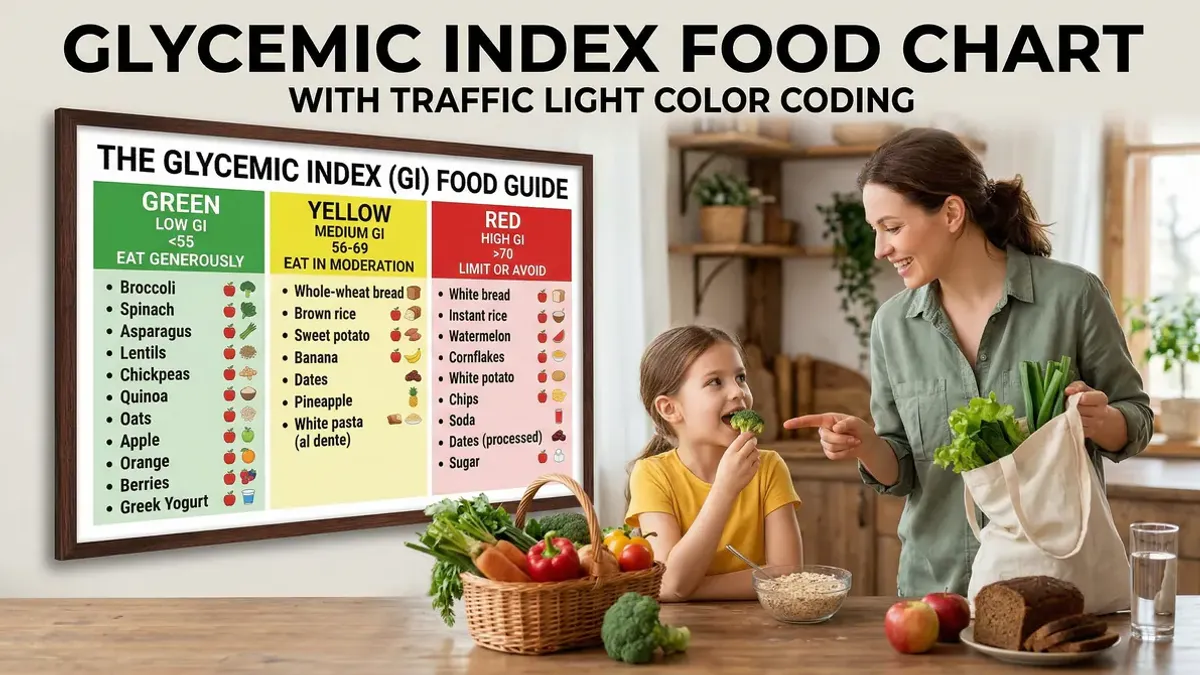
Slow digestion: Oatmeal has a relatively low glycaemic index (GI around 55). Because the carbohydrates are broken down slowly, blood sugar remains more stable — no sharp spike, no sharp crash, and therefore less urge to snack.
Volume: Oats absorb a large amount of water during cooking. A 40 g serving of dry oats becomes roughly 300–350 g of cooked porridge. That volume fills your stomach, further contributing to satiety.
How many calories does oatmeal have?
A serving of cooked oatmeal (40 g dry oats with water) contains approximately 150 kcal. That is relatively low for a breakfast that keeps you satisfied for hours. By comparison, a croissant typically contains 250–300 kcal and is considerably less filling.
Pay attention to what you add to your oatmeal. Toppings have a significant impact on total calorie intake:
| Topping | Calories |
|---|---|
| Handful of blueberries (80 g) | 45 kcal |
| Banana (1 medium) | 90 kcal |
| Tablespoon of honey | 60 kcal |
| Tablespoon of peanut butter | 95 kcal |
| Whole milk (200 ml) | 130 kcal |
A bowl of oatmeal made with milk and peanut butter can easily reach 375 kcal. That is not necessarily too much, but it is worth making conscious choices and tracking your nutritional intake.
Overnight oats vs. hot porridge: which is better?
Both preparations are nutritious and effective. The difference is primarily textural, not nutritional.
Hot oatmeal porridge: Classic, filling, and quick to prepare (3–5 minutes). The warmth may enhance the feeling of fullness.
Overnight oats: You soak the oats overnight in milk or a plant-based drink. Convenient for busy mornings. Soaking softens the fibres slightly and may ease digestion. Add fresh toppings in the morning.
Tip: Add chia seeds or flaxseeds to overnight oats for extra fibre and omega-3 fatty acids.
Which type of oats should you choose?
Not all oats are equal. There are three main types:
Rolled oats (old-fashioned oats): Minimally processed. Slowest digestion, lowest GI. Best choice for satiety and weight management.
Quick oats: Slightly more processed, cook faster. GI is marginally higher than rolled oats but still a good option.
Instant oatmeal: Heavily processed, often with added sugar and flavourings. Higher GI, fewer fibres per serving due to finer milling. Avoid this if you are trying to lose weight.
Choose unsweetened oats where possible and add your own fruit, nuts or a small amount of honey. This way you control the sugar content.
Oatmeal as part of a calorie-conscious diet
Oatmeal is not a magic slimming food. Weight loss ultimately comes down to a calorie deficit: consuming less energy than you expend. What oatmeal does is make that deficit easier to maintain by:
- Reducing hunger throughout the morning, making you less likely to reach for high-calorie snacks.
- Stabilising blood sugar, which reduces impulsive snacking.
- Providing adequate fibre (the recommendation is 30–40 g per day for adults) — oatmeal delivers around 10% of that per serving.
Pair oatmeal with sufficient protein — such as Greek yoghurt, cottage cheese or eggs — for an optimal satiety effect and muscle preservation during weight loss.
Practical tips for better results
- Eat oatmeal at breakfast, not in the evening. You benefit from the satiety effect for the rest of the day.
- Weigh your oats rather than estimating. 40 g looks like less than you might think.
- Add protein: Greek yoghurt, cottage cheese, a scoop of protein powder, or a handful of nuts.
- Limit sweetness: use fresh or frozen fruit rather than jam or honey.
- Tracking helps: research shows people who track their nutritional intake eat on average 200–300 kcal per day less.
Sources
- Rebello, C. J. et al. (2016). "Dietary fiber and satiety: the effects of oats on satiety." Nutrition Reviews, 74(2), 131–147. https://doi.org/10.1093/nutrit/nuv063
- Wolever, T. M. S. et al. (2010). "Physicochemical properties of oat β-glucan influence its ability to reduce serum LDL cholesterol." American Journal of Clinical Nutrition, 92(4), 723–732. https://doi.org/10.3945/ajcn.2010.29174
- Flint, A. et al. (2007). "The effect of oat beta-glucan on weight loss, adiposity and satiety hormones." British Journal of Nutrition, 97(2), 333–340. https://doi.org/10.1017/S0007114507328353
- RIVM (2021). Nederlandse Voedingsmiddelentabel (NEVO). https://www.rivm.nl/nevo
Want to track your calorie intake? With Moveno you take a photo of your food and instantly see all the nutritional values.