Vitamin C is one of the most well-known vitamins — and for good reason. It supports the immune system, enhances iron absorption, and acts as a powerful antioxidant. But there is more: vitamin C plays an essential role in collagen synthesis, neurotransmitter production, and tissue repair. Here is everything you need to know about the benefits, sources, and recommended daily intake.
Key takeaways
- Vitamin C is a water-soluble antioxidant your body cannot produce on its own
- Recommended daily intake: 75 mg (women), 90 mg (men)
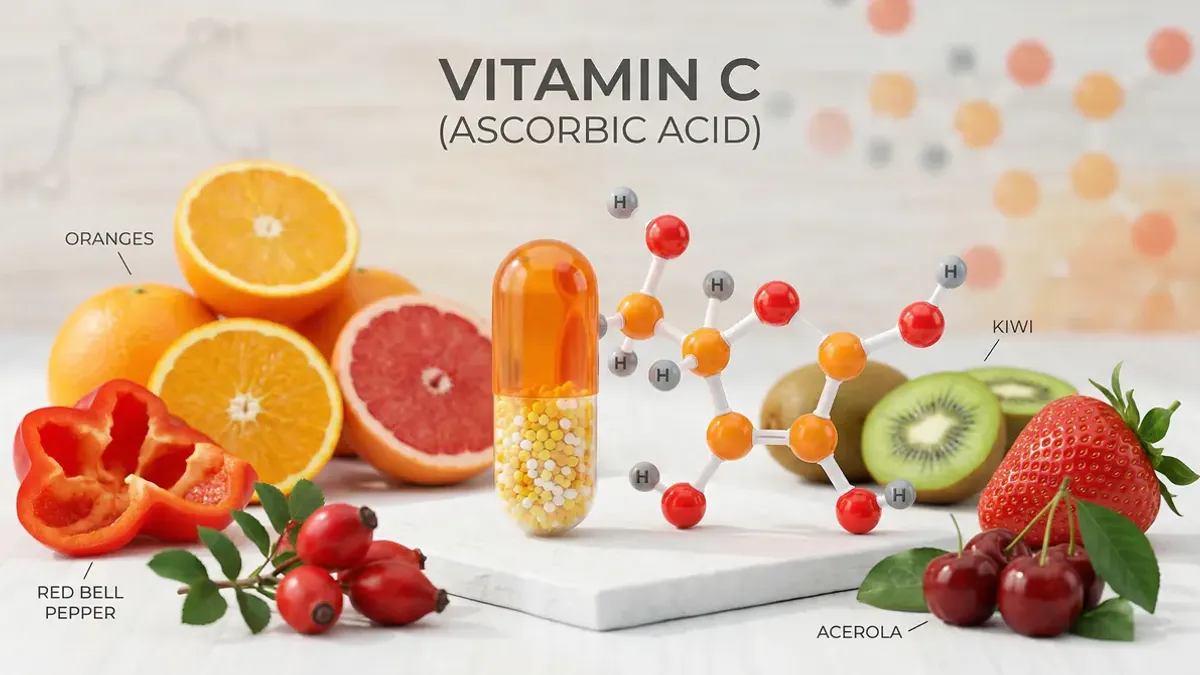
- Best sources: red pepper, kiwi, broccoli, strawberries, orange
- A varied diet rich in vegetables and fruit covers the need for most people
- Mega-doses above 2,000 mg per day offer no proven additional benefit
What is vitamin C?
Vitamin C, also known as ascorbic acid, is a water-soluble vitamin. Unlike fat-soluble vitamins (A, D, E, K), it is not stored in adipose tissue — excess amounts are excreted in urine. Because the body cannot synthesise vitamin C, it must be obtained daily through food or supplements.
Benefits of vitamin C
Immune system
Vitamin C supports the production and function of white blood cells, including lymphocytes and phagocytes, which defend against pathogens. It may help shorten the duration of a cold, though the preventive effect for healthy adults is limited. For people who engage in intense physical exercise or live in extreme cold, supplementation may reduce the risk of respiratory infections.
Antioxidant protection
Vitamin C neutralises free radicals — unstable molecules that can damage cells and contribute to ageing and chronic disease. It also regenerates vitamin E after oxidation, making both antioxidants more effective together.
Collagen synthesis
Vitamin C is indispensable for collagen biosynthesis. Collagen is the most abundant protein in the body and gives structure to skin, blood vessels, bones, cartilage, and tendons. Without sufficient vitamin C, wounds heal more slowly and skin integrity deteriorates.
Iron absorption
Vitamin C substantially improves the absorption of non-haem iron — the type found in plant-based foods. A glass of orange juice with a meal containing spinach or legumes can increase iron absorption by 50–100%. This is particularly relevant for vegetarians and vegans.
Neurotransmitters and energy
Vitamin C is involved in the synthesis of noradrenaline and serotonin, neurotransmitters involved in mood and stress response. It also supports the conversion of fatty acids into energy.
Food sources
A varied diet with plenty of vegetables and fruit provides most people with enough vitamin C. Vitamin C is sensitive to heat and light, so raw or lightly cooked is better than prolonged cooking.
| Food | Vitamin C per 100g |
|---|---|
| Red pepper | 128 mg |
| Fresh parsley | 133 mg |
| Kiwi | 93 mg |
| Broccoli | 89 mg |
| Strawberries | 59 mg |
| Orange | 53 mg |
| Lemon | 51 mg |
| Cauliflower | 46 mg |
| Tomato | 23 mg |
Half a red pepper (approximately 75g) already delivers more vitamin C than the full daily recommendation for an adult.
Recommended daily intake
| Group | Recommended amount |
|---|---|
| Women | 75 mg/day |
| Men | 90 mg/day |
| Pregnant women | 85 mg/day |
| Breastfeeding women | 120 mg/day |
| Smokers | +35 mg extra/day |
Smokers have higher requirements because smoking increases oxidative stress and reduces vitamin C status.
Deficiency: symptoms and risk groups
A severe, prolonged vitamin C deficiency leads to scurvy — a disease that historically affected sailors. Symptoms include swollen gums, bleeding, fatigue, and poor wound healing. Scurvy is rare in the Netherlands, but suboptimal vitamin C levels occur more frequently.
Symptoms of a less severe deficiency:
- Fatigue and low energy
- Poor wound healing
- Increased susceptibility to infections
- Dry, rough skin
At-risk groups:
- People who eat few vegetables and fruit
- Smokers
- People with certain gastrointestinal conditions
- Older adults with a limited diet
Supplements: when do they make sense?
For most people with a varied diet, supplements are not necessary. Vitamin C supplements may be beneficial for:
- Smokers and passive smokers
- People who eat few vegetables and fruit
- Intense athletes
- People recovering from illness or surgery
The safe upper limit is 2,000 mg per day. Higher doses can cause gastrointestinal complaints. There is no proven benefit of mega-doses for healthy individuals.
Vitamin C and colds: what does the science say?
Vitamin C is not a preventive cure for colds in average healthy adults. Research does show that regular intake can slightly shorten the duration and severity of a cold. Only in people performing extreme physical exertion — marathon runners, military personnel in severe cold — does supplementation meaningfully reduce the risk of respiratory infections.
Tracking your vitamin C intake
With Moveno, you can scan your meals and instantly see your vitamin C intake. That way you know whether you are getting enough through vegetables and fruit, and whether a supplement adds real value.
Vitamin C and your overall diet
Vitamin C is just one piece of the puzzle. To get a complete picture of your nutrition, check out our beginner's guide to calorie tracking — it explains how to monitor your daily intake step by step. If weight management is also a goal, learn how to calculate your calorie deficit alongside your micronutrient targets.