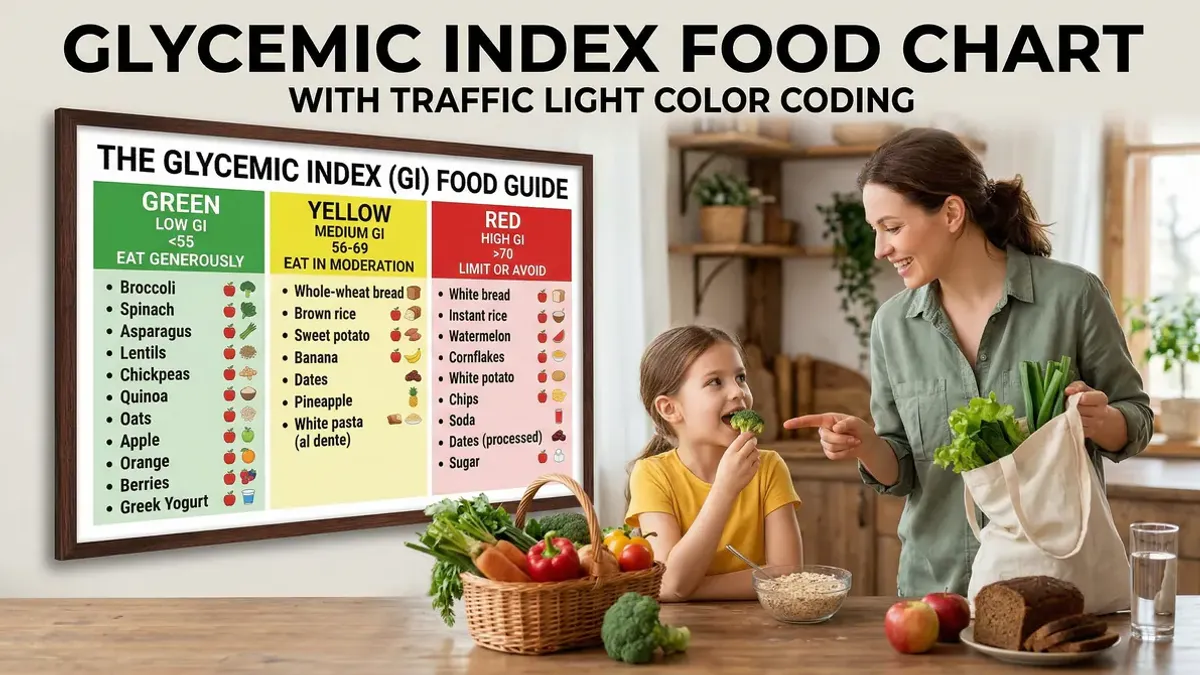
Fat had a bad reputation for decades. Low-fat diets were the norm, and every gram of fat seemed like a step in the wrong direction. That picture was wrong. Fats are essential for your body — for hormone production, brain function, vitamin absorption and organ protection. What matters is not whether you eat fat, but which fats you choose.
Key takeaways
- Unsaturated fats are healthy: olive oil, avocado, nuts, seeds and oily fish are the best sources.
- Saturated fat should be limited: no more than 10 percent of daily calories should come from saturated fat — for someone eating 2,000 kilocalories, that is a maximum of 22 grams.
- Trans fats should be avoided: they raise LDL cholesterol and lower HDL cholesterol simultaneously — the worst possible combination for heart health.
- Fat is needed for vitamins: fat-soluble vitamins A, D, E and K can only be absorbed when fat is present.
- Fats and the brain: the brain is roughly 60 percent fat — omega-3 is particularly important for cognitive function.
- Replace, do not eliminate: swap saturated fat for unsaturated fat rather than cutting fat out entirely.
What exactly are fats?
Fats are made up of fatty acids and glycerol. Every food product contains a mixture of different types of fatty acids. The Voedingscentrum distinguishes three main categories:
- Unsaturated fats: monounsaturated and polyunsaturated — the healthy types
- Saturated fats: mainly found in animal products
- Trans fats: an unsaturated fat with a modified structure that behaves like the worst saturated fat
The quality of fat matters more than the total quantity. Replacing saturated fat with unsaturated fat lowers LDL cholesterol and reduces the risk of cardiovascular disease.
Which fats are healthy?
1. Monounsaturated fat
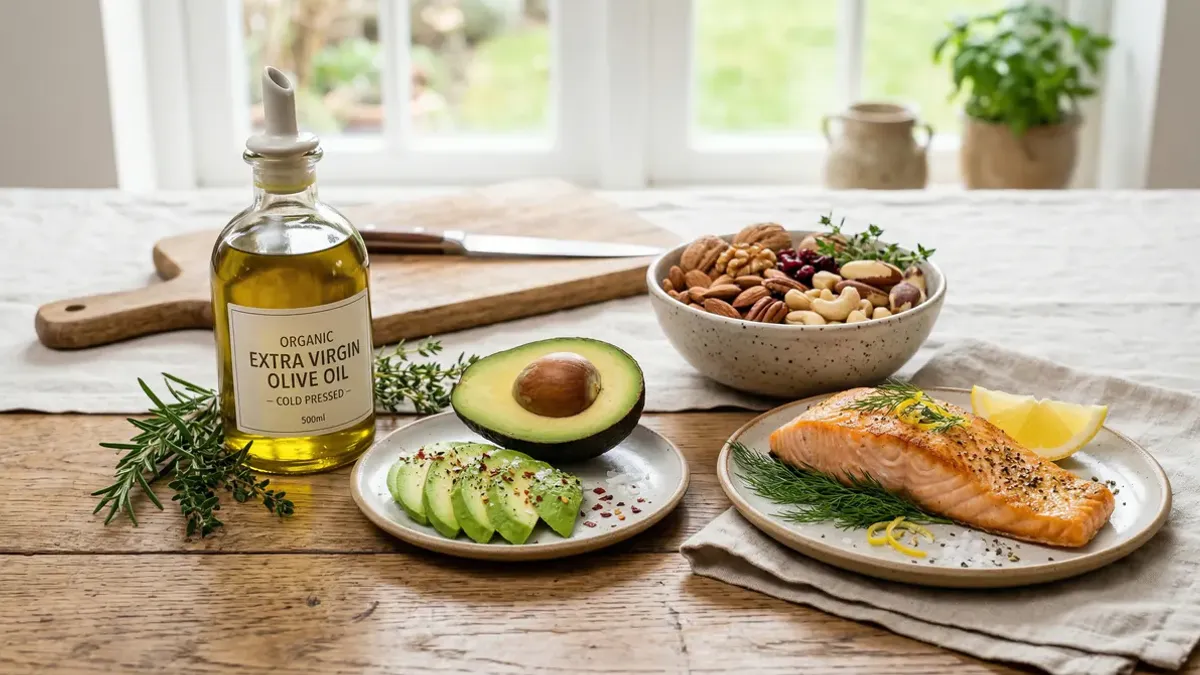
Found mainly in olive oil, avocado, nuts (almonds, cashews, pistachios) and peanut butter. This type of fat may help lower LDL cholesterol without reducing HDL cholesterol (the "good" cholesterol).
Best sources:
- Extra virgin olive oil (cornerstone of the Mediterranean diet)
- Avocado (also a good source of potassium and fibre)
- Almonds, cashews and walnuts
- Rapeseed (canola) oil
2. Polyunsaturated fat (omega-3 and omega-6)
Omega-3 and omega-6 are essential fatty acids: your body cannot produce them, so they must come from food. Omega-3 is found in oily fish (salmon, mackerel, herring, sardines), flaxseed, chia seeds and walnuts. Omega-6 is found in sunflower oil, soy oil and corn oil.
The balance between omega-3 and omega-6 matters. Western diets typically contain far more omega-6 than omega-3. Eating more oily fish is the simplest way to improve the balance.
Best omega-3 sources:
- Salmon, mackerel, herring, sardines (twice per week)
- Flaxseed and flaxseed oil
- Chia seeds and walnuts
- Algae oil (for those who do not eat fish)
Which fats are less healthy?
1. Saturated fat
Saturated fat raises LDL cholesterol — the "bad" cholesterol — which increases the risk of cardiovascular disease. According to the Voedingscentrum, the recommendation in the Netherlands and most other countries is that no more than 10 percent of daily calories should come from saturated fat. For someone eating 2,000 kilocalories per day, that means a maximum of 22 grams.
Sources of saturated fat:
- Fatty meat (minced beef, bacon, sausage)
- Full-fat dairy (butter, full-fat cheese, cream)
- Coconut oil and palm oil
- Biscuits, cakes, snacks and chocolate
The advice is not to eliminate these foods entirely, but to limit them and replace them with products containing unsaturated fats.
2. Trans fats
Trans fats are genuinely harmful. They raise LDL cholesterol and lower HDL cholesterol at the same time — the worst possible effect on your cardiovascular risk profile. The Gezondheidsraad recommends that no more than 1 percent of daily calories should come from trans fats. For someone eating 2,000 kilocalories, that is a maximum of around 2 grams.
Trans fats occur naturally in small amounts in dairy and beef and lamb. Industrial trans fats — created by partial hydrogenation of vegetable oils — are more harmful and were previously found in many margarines and frying fats. Thanks to regulation, industrial trans fats have largely been removed from the food supply in Europe.
Check labels for: "partially hydrogenated oil" or "partially hardened fat". That wording means trans fat.
Why does your body need fat?
Fat is not the enemy. It serves essential functions:
- Energy source. At 9 kilocalories per gram, fat provides more than twice the energy of carbohydrates or protein.
- Vitamin absorption. Fat-soluble vitamins A, D, E and K can only be absorbed when fat is present. A salad without dressing means missing out on many of the vitamins in the vegetables.
- Hormone production. Cholesterol — a fat-like substance — is the building block for hormones including oestrogen, testosterone and cortisol.
- Brain function. A large portion of the brain is made up of fat. Omega-3 fatty acids (DHA and EPA) are particularly important for cognitive function and mood.
- Protection. Fat around organs protects them from impact and stress.
Practical tips: smart fat swaps
You do not need to overhaul your diet. Small substitutions make a meaningful difference:
- Cook with olive oil or rapeseed oil instead of butter
- Use avocado as a spread on bread instead of butter
- Snack on a handful of nuts instead of crisps or biscuits
- Eat oily fish twice per week instead of red meat
- Choose soft margarine instead of hard butter (lower in saturated fat)
Want to know how much fat you are eating daily and which types? With Moveno, you can photograph your food and instantly see the fat breakdown — including saturated and unsaturated.
Choose the right fats deliberately
Fat is not the enemy of a healthy lifestyle. The wrong fats — too much saturated fat and trans fats — increase the risk of cardiovascular disease. The right fats — unsaturated, omega-3 — protect your heart, fuel your brain and help your body absorb vitamins.
For a complete picture of balanced nutrition, read our guide on healthy carbohydrates: the best sources.
Sources
- Voedingscentrum — Fats — overview of fat types and their effects
- Voedingscentrum — Unsaturated fat — how unsaturated fat works and the best sources
- Voedingscentrum — Saturated fat — recommendation: maximum 10% of calories from saturated fat
- Voedingscentrum — Trans fat — why trans fat is more harmful than saturated fat