High cholesterol is one of the most significant risk factors for cardiovascular disease. But not all cholesterol is harmful, and diet can make a considerable difference — provided you make the right choices. This article examines what the science actually knows about cholesterol and food, without unnecessary simplification.
Key takeaways
- Two types of cholesterol are relevant to heart health: LDL ('bad') and HDL ('good')
- Soluble fibre (oats, legumes, apples) binds cholesterol in the gut and lowers LDL by 5–10%
- Plant sterols and stanols lower LDL by 7–12% at a daily intake of 1.5–3 grams
- Saturated and trans fats raise LDL; replacing them with unsaturated fats is proven effective
- Nuts, oily fish and soy each have a modest but consistent cholesterol-lowering effect
Cholesterol: a more nuanced picture
Cholesterol is not a poison — it is an essential molecule your body produces itself. You need it to build cell membranes, produce hormones, and synthesise vitamin D. The problem arises when LDL cholesterol (low-density lipoprotein) becomes too high: LDL can accumulate in artery walls and cause atherosclerosis.
HDL cholesterol (high-density lipoprotein) works the other way: it transports excess cholesterol back to the liver for breakdown. A high HDL value is generally protective.
Total cholesterol tells you less than the ratio between LDL and HDL. Triglyceride levels also play a role. Your GP or cardiologist interprets these values in context.
Soluble fibre: the most evidence-backed approach
Soluble fibre dissolves in water and forms a gel-like substance in the intestines. This gel binds bile acids (which are made from cholesterol) and carries them out of the body via the stool. The liver then has to produce new cholesterol using LDL from the blood — which lowers LDL levels.
Beta-glucan (in oats and barley) is the most thoroughly researched soluble fibre for cholesterol reduction. EFSA has approved that products containing at least 1 gram of beta-glucan per serving may claim to lower cholesterol, provided total daily intake is 3 grams or more.
Good sources of soluble fibre:
- Oats and oat bran — the richest source of beta-glucan; a bowl of porridge (40 g) delivers approximately 2 grams of beta-glucan
- Legumes (lentils, chickpeas, black beans) — rich in pectin and other soluble fibres
- Apples and pears — pectin in the skin helps bind cholesterol
- Psyllium husk — a supplement also sold as a food ingredient; effective at 5–10 grams per day
- Carrots and broccoli — a modest contribution, but they count when eaten daily
Plant sterols and stanols
Plant sterols (phytosterols) are substances that occur naturally in small amounts in vegetable oils, nuts, and grains. They resemble cholesterol structurally and compete with it for absorption in the gut — reducing cholesterol uptake.
A meta-analysis of 124 studies showed that a daily intake of 1.5–3 grams of plant sterols lowers LDL cholesterol by an average of 7–12%. Products enriched with plant sterols (certain margarines, yoghurt drinks) offer a convenient way to reach this amount.
Note: plant sterols are a supplement to a healthy dietary pattern, not a replacement. They have no effect on HDL or triglycerides.
Saturated and trans fats: what to avoid
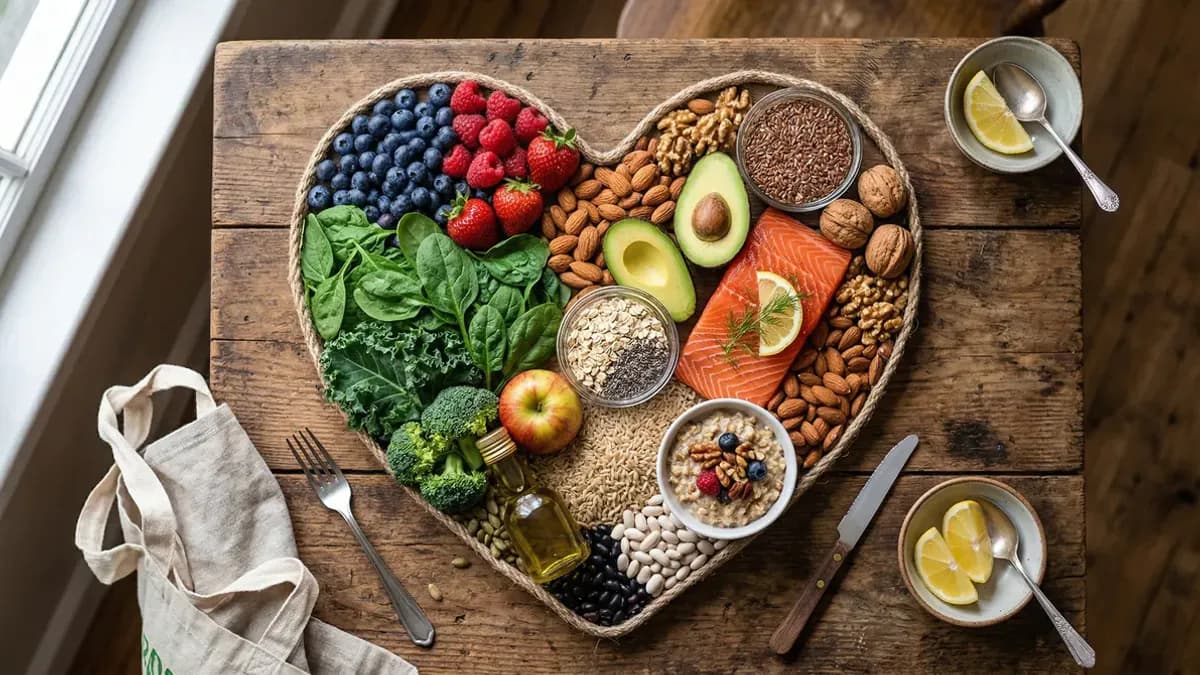
Saturated fats — in red meat, full-fat dairy, coconut oil, and palm oil — raise LDL cholesterol. Replacing saturated fats with unsaturated fats (olive oil, nuts, avocado, oily fish) lowers LDL and improves the LDL/HDL ratio.
Trans fats are even more harmful: they raise LDL and lower HDL simultaneously. Industrial trans fats (in partially hydrogenated fat) are largely banned in the EU, but small amounts may still appear in some biscuits, pastries, and frying fats. Check labels for 'partially hydrogenated fat'.
Foods with proven effects
Nuts Walnuts, almonds, and pistachios lower LDL and improve the LDL/HDL ratio. A meta-analysis of 25 studies found that eating 67 grams of nuts per day lowers LDL by an average of 7.4%. They provide unsaturated fats, fibre, phytosterols, and antioxidants — a combination that beneficially affects cholesterol.
Oily fish Omega-3 fatty acids in salmon, herring, and mackerel substantially lower triglycerides (by 15–30%) and may also improve HDL levels. The direct effect on LDL is limited, but oily fish contributes to a favourable overall lipid profile.
Soy protein Soy contains isoflavones and soy protein that modestly lower LDL cholesterol. The FDA recognises soy protein as a cholesterol-lowering ingredient at a daily intake of 25 grams.
Avocado Rich in monounsaturated fats (oleic acid) and plant beta-sitosterol. Daily consumption of one avocado has been associated with reduced LDL in small studies.
Olive oil Extra-virgin olive oil replaces saturated fats and provides polyphenols that inhibit LDL oxidation — a mechanism that worsens atherosclerosis.
Tracking your diet as a strategy
If you want to lower your cholesterol through diet, tracking your intake of fibre, saturated fat, and specific foods helps enormously. Moveno lets you see the fat composition of products directly. Want to learn how food tracking helps you eat more consciously? Read our article on food tracking.
What can you realistically expect?
Dietary interventions are effective but have limits. In people with moderately elevated LDL (3.5–4.5 mmol/l), a combination of soluble fibre, plant sterols, nuts, and fat adjustments can lower LDL by 20–30%. In cases of severely elevated cholesterol or familial hypercholesterolaemia, statins are generally also needed.
Always discuss with your GP which approach is most appropriate for you.
Sources
- Hartstichting — Hoog cholesterol verlagen met voeding
- Gezondheidsnet — Cholesterol verlagen met plantensterolen
- Voedingscentrum — Wat kan ik eten om mijn cholesterol te verlagen?