Why pre-workout nutrition matters
What you eat before a workout largely determines how much energy you have during exercise and how quickly you recover afterwards. Your muscles rely on glycogen — stored carbohydrates — as their primary fuel source during moderate to intense exercise. Start a session with depleted glycogen stores and you will notice it quickly: reduced strength, faster fatigue and a higher risk of injury.
Good pre-workout nutrition serves three purposes: providing sufficient energy for the workout, limiting muscle protein breakdown and preparing the body for post-exercise recovery.
Ideal timing: when should you eat before training?
1–3 hours before exercise: full meal
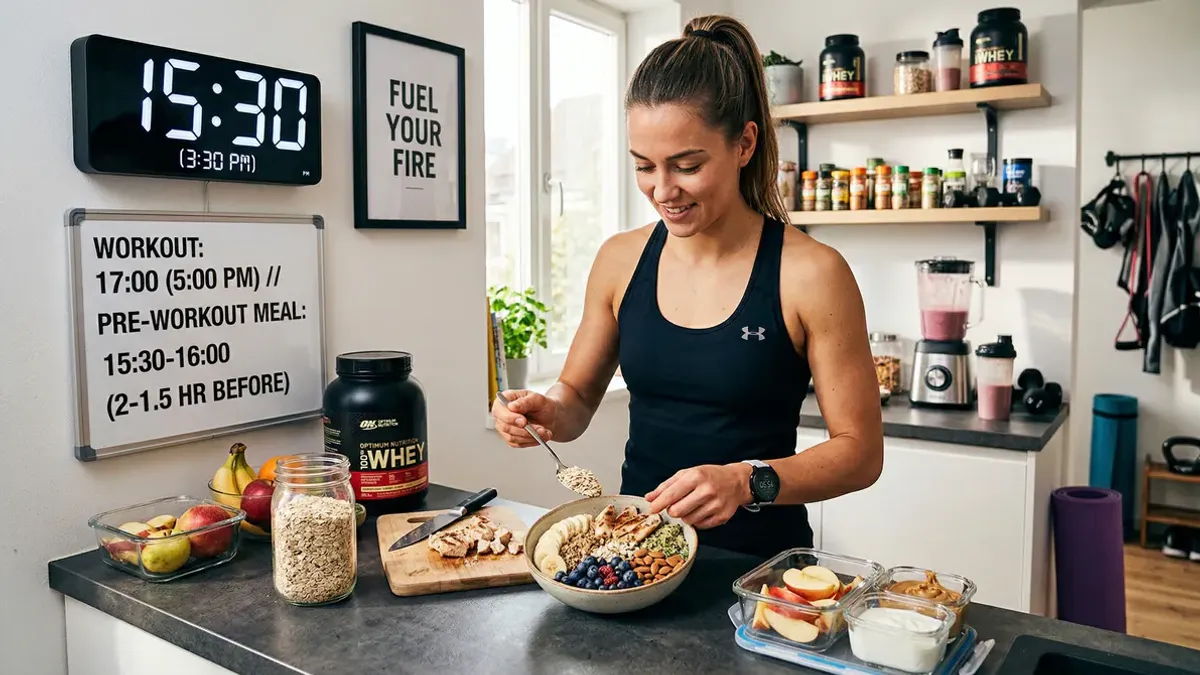
This is the optimal window for a well-balanced meal. Your body has enough time to digest, so nutrients are available as fuel when you start training.
A good pre-workout meal contains:
- Complex carbohydrates (wholegrain pasta, rice, oats, sweet potato) as the primary energy source
- Moderate protein (chicken, Greek yoghurt, eggs, legumes) to support muscle retention
- Low fat and fibre — both slow gastric emptying and may cause discomfort during exercise
30–60 minutes before exercise: light snack
No time for a full meal, or training first thing in the morning? Choose an easily digestible snack with rapidly available carbohydrates:
- A banana
- Rice cakes with a thin layer of peanut butter
- A small portion of oatmeal
- One or two dates with a few nuts
Avoid food high in fat, fibre or large amounts of protein in this window — all three slow digestion at a moment when your body needs to be ready to perform.
Less than 30 minutes before exercise
Training on a near-empty stomach? It is better to eat nothing than to force down a heavy meal. A small amount of quickly digestible carbohydrates — a few grapes or a small banana — can still help without causing gastric distress.
What are the best carbohydrates for pre-workout?
Carbohydrates are the cornerstone of training performance. The International Society of Sports Nutrition confirms in its nutrient timing position stand that the timing and composition of macronutrients may influence performance, muscle recovery and muscle protein synthesis.
Complex carbohydrates (1–3 hours before):
- Wholegrain pasta or rice
- Sweet potato
- Oatmeal
- Wholegrain bread
Fast-release carbohydrates (30–60 minutes before):
- Banana
- Rice cakes
- Raisins or dates
- White bread or white rice
The role of protein before training
Protein consumed before exercise supports muscle retention and may promote muscle protein synthesis during the session. Research shows that pre-workout protein intake may limit muscle protein breakdown, especially during resistance training. You do not need large amounts: 15–25 grams of protein in your pre-workout meal is sufficient.
Good sources:
- Greek yoghurt (10–17 g protein per 100 g)
- Cottage cheese
- Eggs
- Chicken breast or turkey
- Legumes (also high in fibre — best consumed 2–3 hours before training)
What should you avoid before training?
High fat: Fat significantly slows gastric emptying. A high-fat meal close to training may cause nausea, heaviness and reduced performance.
High fibre: Although high-fibre foods are excellent for daily health, large amounts right before exercise are not ideal. They may cause stomach cramps, flatulence and gut discomfort during physical effort.
High sugar without other macronutrients: Rapid sugars may produce a brief energy spike followed by a blood sugar dip — precisely when you need sustained energy to perform.
Too little food: Training fasted can work for some people in certain contexts (low intensity, short duration), but for most it leads to reduced performance and greater muscle catabolic responses.
Hydration: do not forget to drink
Dehydration of just 2% of body weight can noticeably impair sports performance. Drink enough water in the hours leading up to your workout:
- 2–3 hours before: 400–600 ml of water
- 15–20 minutes before: 150–250 ml of water
Avoid large amounts immediately before training — that can cause a full feeling or a stitch.
Practical examples by training goal
Strength and hypertrophy training
- 2 hours before: Chicken breast with wholegrain rice and vegetables
- 45 minutes before: Greek yoghurt with a banana
Endurance training (running, cycling)
- 2 hours before: Oatmeal with fruit and a handful of nuts
- 30 minutes before: A banana or rice cake
Group classes and HIIT
- 1.5 hours before: Wholegrain sandwich with chicken and cucumber
- 30 minutes before: Raisins or a small smoothie
Pre-workout supplements: are they necessary?
For most recreational athletes, supplements are not necessary if nutrition is well organised. Creatine may help with short-duration explosive exercise. Caffeine via coffee is one of the best-researched ergogenic aids — a cup of coffee 45–60 minutes before training may improve endurance and focus.
Want to know whether your pre-workout nutrition is on point? With Moveno you can scan your meals and instantly see how many carbohydrates, protein and calories you are consuming — including around your workouts.
Key takeaways
- Eat a meal with complex carbohydrates and moderate protein 1–3 hours before training.
- Short on time? Choose a light snack with fast-release carbohydrates (banana, rice cake) 30–60 minutes before.
- Avoid high fat and high fibre close to training — both slow digestion.
- Drink 400–600 ml of water in the hours before your workout.
- Pre-workout nutrition is individual — experiment to find what works best for you.