
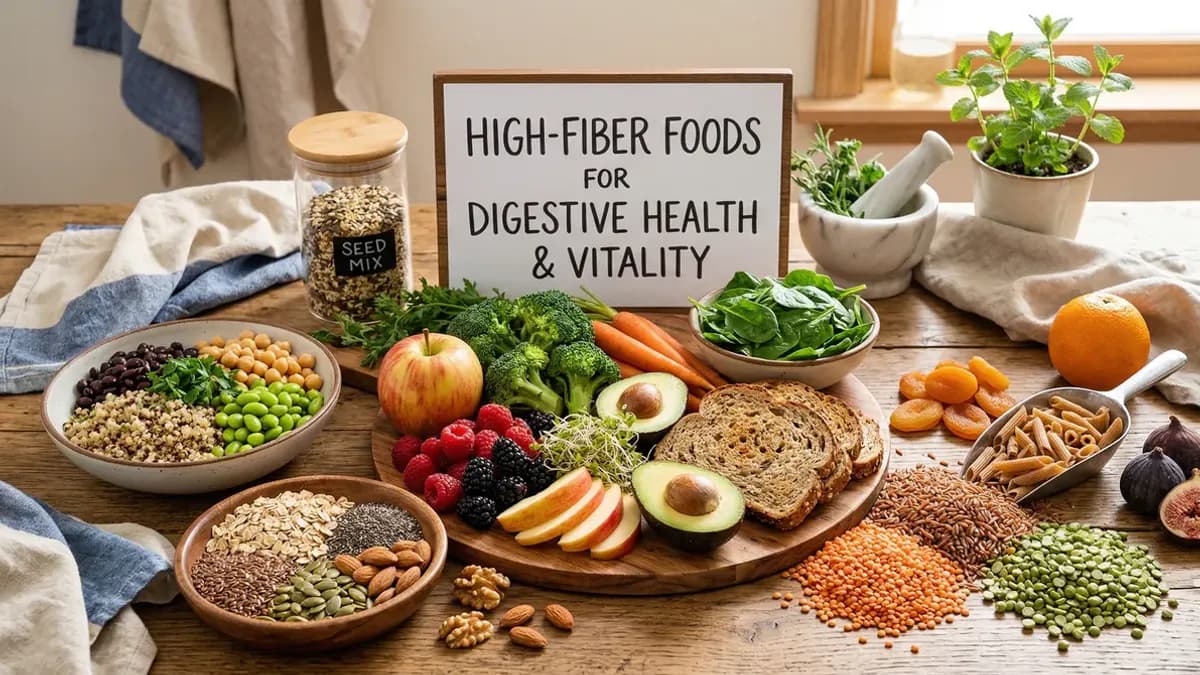
What are dietary fibres and why do you need them?
Dietary fibres are carbohydrates your body cannot digest. They pass largely intact through your digestive system, providing a unique contribution to your health. There are two main types: soluble fibres (which dissolve in water to form a gel-like substance) and insoluble fibres (which stimulate bowel movement and add bulk to stools).
The Dutch Health Council (Gezondheidsraad) advises adults to consume at least 25 grams of fibre per day — 30 grams for men. Most Dutch adults fall short: average intake sits around 20 grams per day, a notable gap with measurable health consequences.
Why high-fibre foods matter
Eating enough fibre has well-documented benefits, backed by large-scale scientific research. A major WHO-commissioned study found that consuming 25 to 29 grams of fibre per day may lower the risk of mortality, cardiovascular disease, type 2 diabetes and colorectal cancer by 15 to 30%.
Digestion: Insoluble fibres speed up intestinal transit and help prevent constipation. Soluble fibres feed beneficial gut bacteria, supporting your microbiome.
Satiety: Fibres absorb water and swell in your stomach, helping you feel fuller faster and stay satisfied longer. This may help regulate overall calorie intake.
Blood sugar: Soluble fibres slow the absorption of glucose into the bloodstream, resulting in more stable blood sugar levels after meals — beneficial for everyone, especially those with type 2 diabetes or insulin resistance.
Cardiovascular health: People who consume high amounts of fibre may have more than 20% lower risk of cardiovascular disease. Fibres may help lower LDL cholesterol by binding bile acids in the intestines.
Gut health: Fibres are the preferred food of your gut bacteria. A healthy microbiome is closely linked to your immune system, mood and even brain function.
Top 20 high-fibre foods
Legumes — the champions
1. Lentils (cooked): 8 g fibre per 100 g Affordable, versatile and rich in plant-based protein. They work well in soups, salads and curries.
2. Black beans (cooked): 8.7 g fibre per 100 g A protein-rich staple with plenty of fibre and a low glycaemic index.
3. Chickpeas (cooked): 7.6 g fibre per 100 g The base of hummus and an excellent addition to salads and warm dishes.
4. Brown beans (cooked): 7.4 g fibre per 100 g A Dutch kitchen classic that happens to be remarkably high in fibre.
5. Split peas (cooked): 8.3 g fibre per 100 g Ideal in pea soup — a traditional dish that is also highly nutritious.
Grains and seeds
6. Oats (dry): 10–11 g fibre per 100 g Oats contain beta-glucan, a soluble fibre with proven cholesterol-lowering effects. Read more in our article on oats and weight loss.
7. Chia seeds: 34 g fibre per 100 g Almost unbeatable in terms of fibre density. Two tablespoons (approx. 28 g) deliver nearly 10 g of fibre. More about chia seeds in our dedicated article.
8. Ground flaxseed: 27 g fibre per 100 g Ground flaxseed is better absorbed than whole seeds. Stir a tablespoon into your yoghurt or oatmeal.
9. Quinoa (cooked): 2.8 g fibre per 100 g Somewhat lower in fibre but a complete protein source. More about quinoa in our dedicated article.
10. Wholegrain bread: 6–7 g fibre per 100 g Two slices of wholegrain bread already provide around 4–5 g of fibre. Always choose wholegrain over white bread.
Vegetables
11. Artichoke (cooked): 5.4 g fibre per 100 g One of the most fibre-rich vegetables, also a good source of prebiotic inulin.
12. Broccoli florets (cooked): 3.3 g fibre per 100 g Easy to include in any meal, rich in fibre plus vitamin C and K.
13. Brussels sprouts (cooked): 3.8 g fibre per 100 g Powerful nutritional profile: fibre, folate and antioxidants.
14. Sweet potato (baked): 3.3 g fibre per 100 g A tasty alternative to regular potatoes, with more fibre and beta-carotene.
15. Parsnip (cooked): 4.7 g fibre per 100 g An underrated winter vegetable with a high fibre content.
Fruit
16. Raspberries: 6.5 g fibre per 100 g The most fibre-rich commonly eaten fruit. A handful at breakfast already makes a difference.
17. Avocado: 6.7 g fibre per 100 g Rich in fibre and healthy unsaturated fats.
18. Pear (with skin): 3.1 g fibre per 100 g Eat the skin — that is where most of the fibre is found.
19. Apple (with skin): 2.4 g fibre per 100 g Contains pectin, a soluble fibre that feeds the microbiome.
20. Dried figs: 9.8 g fibre per 100 g Dried fruit is more calorie-dense but contains more fibre per gram. A few figs as a snack can contribute meaningfully to your daily intake.
How much fibre do you need per day?
| Group | Recommendation |
|---|---|
| Adult women | at least 25 g/day |
| Adult men | at least 30 g/day |
| Children 4–8 years | at least 15 g/day |
| Teenagers | at least 25 g/day |
Higher intakes (up to 40 g/day) are associated with further health benefits, provided you drink sufficient water alongside.
How to build up your fibre intake
A too-rapid increase in fibre intake can lead to bloating, flatulence and stomach cramps. Give your gut time to adjust.
Weeks 1–2: Switch white bread for wholegrain and add one serving of legumes to your daily meals.
Weeks 3–4: Add chia seeds or ground flaxseed to breakfast and choose fruit with the skin on as a snack.
After that: Include at least two types of vegetable with every warm meal and experiment with new legumes.
Also drink enough water — fibres absorb water and may actually cause constipation if fluid intake is insufficient.
High-fibre foods and weight management
Fibre plays a supporting role in weight maintenance. It increases satiety without adding extra calories, slows gastric emptying and stabilises blood sugar — reducing the likelihood of unnecessary snacking. This can support maintaining a healthy calorie deficit.
Want to know how much fibre you consume each day? With Moveno you can scan your meals and instantly see your fibre intake alongside all other macros and micronutrients.
Practical high-fibre daily menu
Breakfast: Oatmeal with raspberries and a tablespoon of chia seeds → approx. 12 g fibre
Lunch: Wholegrain sandwiches with hummus and cucumber → approx. 8 g fibre
Dinner: Lentil soup with wholegrain bread → approx. 14 g fibre
Snack: A pear and a handful of nuts → approx. 4 g fibre
Total: approx. 38 g fibre — comfortably above the daily recommendation.
Fibre, protein and metabolism
High-fibre foods work best in combination with adequate protein — together they maximise satiety. Read more about high-protein foods for specific product tips. Fibre also supports a healthy metabolism: read our article on boosting your metabolism for additional strategies. Want to track exactly how much fibre and how many calories you eat each day? Our beginner's guide to calorie tracking shows you how — and the calorie deficit calculator helps you set a personalised daily target.
Key takeaways
- The recommended daily fibre intake is 25–30 g; most Dutch adults reach only around 20 g.
- Adequate fibre intake may lower the risk of cardiovascular disease, type 2 diabetes and colorectal cancer by 15–30%.
- The richest sources are legumes, seeds (chia, flaxseed), vegetables and wholegrain grains.
- Increase your intake gradually and drink plenty of water to avoid side effects.
- A varied diet built around whole foods is the simplest way to meet your daily fibre needs.