Achy joints, persistent fatigue, or an immune system that never quite settles down — these are common signs that low-grade chronic inflammation may be at play. What you eat every day is one of the most powerful levers you have to influence that process.
Key takeaways
- Chronic low-grade inflammation is linked to cardiovascular disease, type 2 diabetes and joint conditions.
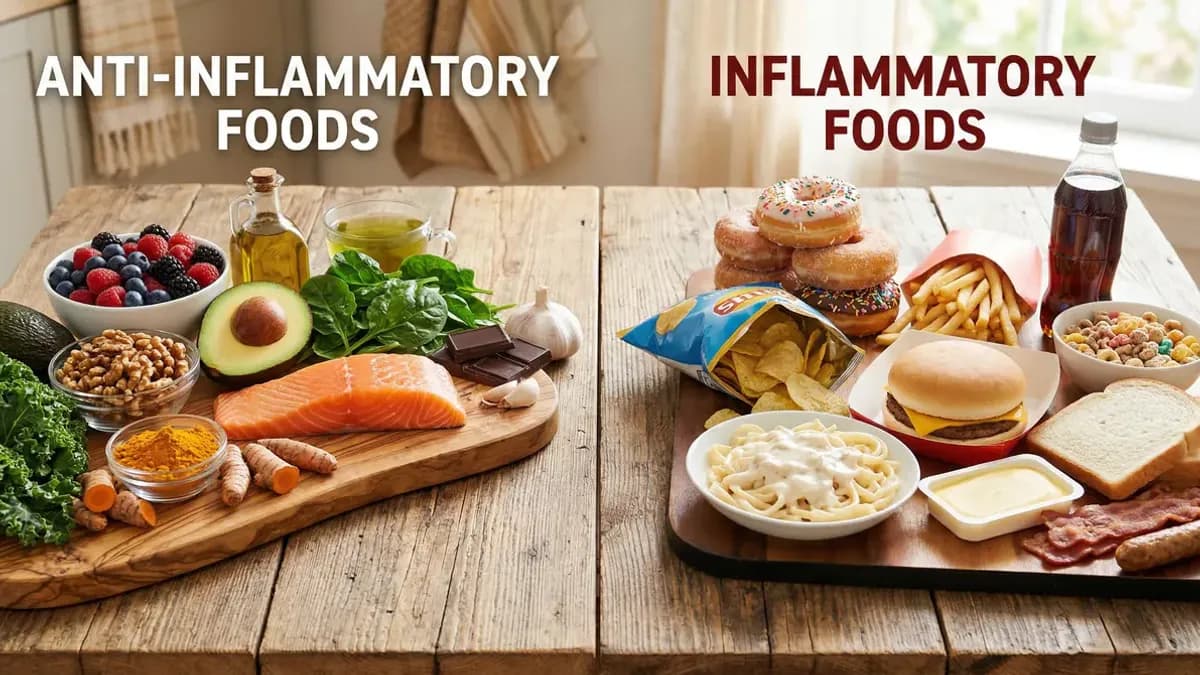
- Omega-3 fatty acids, turmeric, extra virgin olive oil and dark leafy greens may help reduce inflammatory markers.
- Refined sugar, trans fats and processed meat can promote inflammatory processes.
- You don't need a radical diet overhaul — small, consistent shifts in daily food choices make a measurable difference.
- Tracking what you eat helps you identify patterns and make more deliberate choices.
What is inflammation?
Inflammation is a normal and necessary defence mechanism. When you cut your finger or catch a cold, your immune system dispatches inflammatory cells to the site — a healthy, short-term response.
The problem is chronic low-grade inflammation: a persistent, smouldering immune response that can last months or years. Research increasingly links this type of inflammation to cardiovascular disease, type 2 diabetes, arthritis and certain cancers. Diet is one of the most modifiable contributing factors.
Which foods may help reduce inflammation?
1. Oily fish and omega-3 fatty acids
Salmon, mackerel, herring and sardines are rich in EPA and DHA — the two omega-3 fatty acids with the strongest evidence for anti-inflammatory effects. The Dutch Health Council recommends 200 mg of EPA and DHA per day, achievable with one to two portions of oily fish per week.
Omega-3 fatty acids work partly by reducing the production of pro-inflammatory compounds such as prostaglandins. You can also get plant-based omega-3 (ALA) from flaxseed and walnuts, though the conversion to EPA and DHA is limited.
2. Extra virgin olive oil
Extra virgin olive oil contains oleocanthal, a compound that works through a similar mechanism to ibuprofen — as shown in research published in Nature. Two to three tablespoons per day, used as a dressing or for light cooking, is enough to be meaningful.
3. Turmeric and curcumin
Turmeric contains curcumin, one of the most studied bioactive compounds in nutritional science. Over 10,000 studies are indexed on PubMed. Curcumin inhibits NF-κB, a central switch in the inflammatory process.
The catch: curcumin has poor bioavailability on its own. Combine turmeric with black pepper — piperine increases absorption by up to 2,000 percent, according to research in Planta Medica.
4. Dark leafy greens
Spinach, kale and other dark greens provide vitamin K, lutein and beta-carotene — compounds that may help neutralise the free radicals that amplify inflammatory responses. A daily portion of spinach or kale delivers meaningful amounts.
5. Berries
Blueberries, strawberries, raspberries and blackberries are rich in anthocyanins — the pigments that give them their deep colour. Anthocyanins may help reduce oxidative stress, a key mechanism in chronic inflammation.
6. Nuts and seeds
Walnuts contain alpha-linolenic acid (ALA), a plant-based omega-3. A 30g handful per day fits well into a varied diet. Chia seeds and flaxseed offer similar benefits and are easy to add to porridge or yoghurt.
Which foods promote inflammation?
Equally important as knowing what helps is knowing what to limit:
- Refined sugar and refined carbohydrates. White bread, fizzy drinks and biscuits cause rapid blood sugar spikes. Repeated spikes activate inflammatory pathways in the body.
- Trans fats. These fats raise inflammatory markers like CRP. EU regulations have largely eliminated industrial trans fats from processed foods, but check labels on imported products.
- Processed meat. Sausages, bacon and ready-made meat products contain preservatives and additives associated with elevated inflammatory markers. Treat them as occasional rather than regular foods.
- Excess alcohol. More than one to two drinks per day may damage the gut lining, allowing endotoxins into the bloodstream and triggering an inflammatory response.
Anti-inflammatory eating vs. healthy eating: is there a difference?
Honestly, not much of one. An anti-inflammatory diet is essentially a healthy, varied, whole-food diet with a deliberate emphasis on specific nutrients — more oily fish, more olive oil, more dark vegetables — and consistent limits on processed foods.
The Mediterranean diet is the most studied example and aligns closely with mainstream guidelines from bodies like the Dutch Voedingscentrum and the WHO.
With Moveno, you can see exactly which nutrients you're getting each day — making it straightforward to check whether you're hitting your omega-3 targets or going overboard on refined carbohydrates.
How long before you notice a difference?
Research shows that dietary changes can produce measurable reductions in inflammatory markers like CRP and IL-6 within four to eight weeks. You don't need to overhaul your entire diet at once. Start with one change — swap sunflower oil for olive oil, or replace a meat meal with oily fish once a week.
Start making more deliberate food choices today
Fighting inflammation starts on your plate. Pick one change from the list above and track what you eat for a week — pattern recognition is the first step toward lasting improvement.
Photograph your meals in Moveno and instantly see the nutritional breakdown, including your omega-3 intake and your overall inflammatory food balance.
Sources
- Voedingscentrum — Omega-3 — recommended daily intake of EPA and DHA for adults
- RIVM — Nederlands Voedingsstoffenbestand (NEVO) — Dutch food composition data
- PubMed — Curcumin and inflammation — scientific evidence for curcumin's anti-inflammatory properties
- Planta Medica — Piperine enhances curcumin bioavailability — 2,000 percent increase in absorption with piperine