
Carbohydrates may be the most debated macronutrient of our time. Some people swear by low-carb eating, while others emphasise that carbs are indispensable. Who is right? The answer is more nuanced than most discussions suggest — and depends heavily on which type of carbohydrates you choose.
Key takeaways
Carbohydrates are the body's primary energy source and come in three forms: sugars, starches and fibre. Health guidelines recommend that 45–65% of daily calories come from carbohydrates. Not all carbs are equal: complex, fibre-rich varieties are generally far more beneficial than simple sugars.
What exactly are carbohydrates?
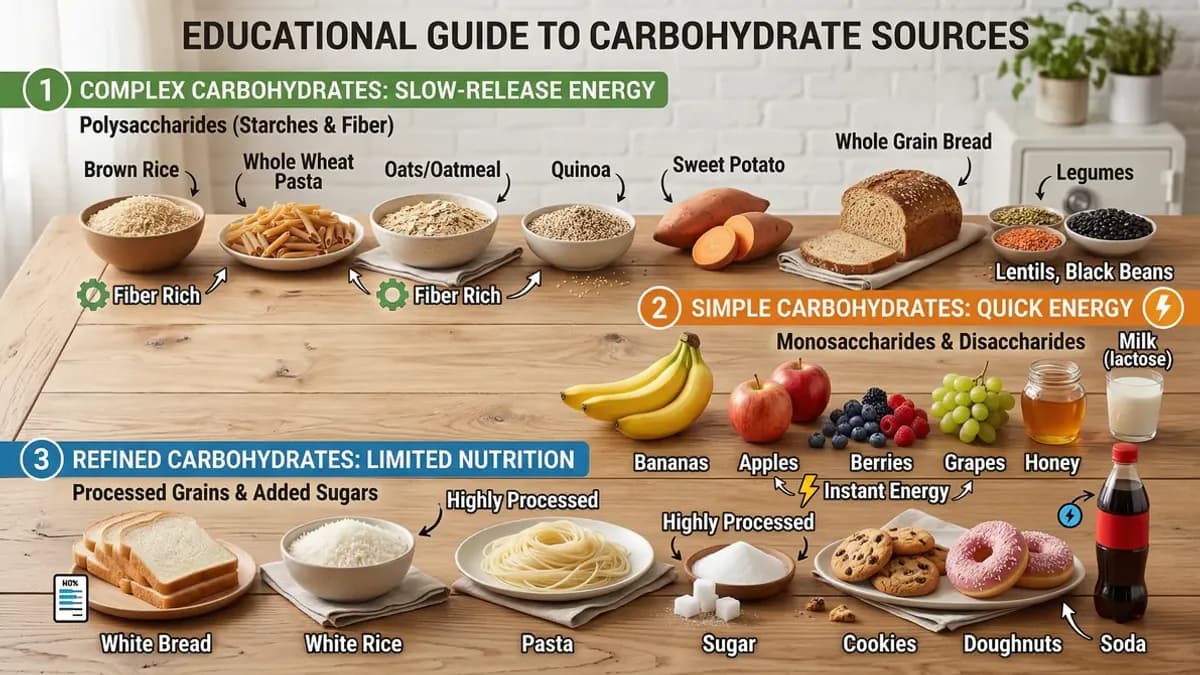
Carbohydrates are organic compounds made of carbon, hydrogen and oxygen. Your body breaks them down into glucose — the primary fuel for your brain, muscles and organs. There are three main types:
Simple sugars are digested rapidly and cause a quick rise in blood sugar. They are found in table sugar, soft drinks, sweets, white bread and syrups. Fruit also contains simple sugars, but the presence of fibre and micronutrients makes it a fundamentally different dietary choice.
Complex carbohydrates (starches) consist of long chains of glucose molecules that are broken down more slowly. They are found in wholegrains, potatoes, legumes and rice. The slower digestion produces a more gradual rise in blood sugar, supporting steadier energy levels throughout the day.
Fibre is a special category: your body cannot digest it, but it is essential for healthy gut function, regulating blood sugar and lowering cholesterol. Fibre also feeds the beneficial bacteria in your intestines.
How many carbohydrates do you need per day?
The Dietary Guidelines for Americans recommend that carbohydrates make up 45–65% of total daily calories. For an average intake of 2,000 calories, that translates to 225–325 grams of carbohydrates per day.
Your personal requirement depends on several factors:
- Activity level — athletes and physically active people need more carbohydrates as a rapid energy source
- Your goal — if you want to lose weight, a lower intake (100–150 g) may help; if you want to build muscle or improve performance, your needs are higher
- Health status — people with diabetes or insulin resistance respond differently to carbohydrates than healthy individuals
Read more about calculating your personal carbohydrate needs in our article on how many carbohydrates per day.
Complex vs. simple carbohydrates: what is the difference?
The distinction between complex and simple carbohydrates goes beyond digestion speed. Complex carbohydrates from wholegrains, vegetables and legumes also contain fibre, vitamins, minerals and phytochemicals alongside starch. They are more satiating, stabilise blood sugar and deliver more nutrients per calorie.
Simple carbohydrates — particularly added sugars — provide rapid energy but few nutrients. Regular overconsumption may contribute to weight gain, insulin resistance and an increased risk of cardiovascular disease.
The Mayo Clinic notes that complex carbohydrates are less likely to cause blood sugar spikes and provide more vitamins, minerals and fibre than simple carbohydrates.
Good sources of carbohydrates
Grains and grain products: Oats, wholegrain bread, brown rice, quinoa, rye bread. These contain starch alongside fibre and B vitamins.
Legumes: Lentils, chickpeas, kidney beans, white beans. An excellent combination of carbohydrates, protein and fibre.
Vegetables: Potatoes, sweet potatoes, corn and pumpkin are starchy vegetables. Leafy greens and brassicas contain fewer carbohydrates but are rich in fibre and micronutrients.
Fruit: Bananas, apples, mangoes, berries. Read more about the carbohydrate content of specific fruits in our article on carbohydrates in bananas.
Dairy: Milk and yoghurt contain lactose (milk sugar) alongside calcium, protein and other valuable nutrients.
See which foods are highest in carbohydrates in our complete carbohydrate list.
Are carbohydrates unhealthy?
The debate about carbohydrates often goes wrong because 'carbs' are treated as a single category. White bread and lentils are both carbohydrate sources, but they have very different effects on your body.
The scientific evidence points to the following:
- Diets rich in wholegrains are associated with a lower risk of cardiovascular disease, type 2 diabetes and obesity
- Diets high in added sugars and refined grains are associated with higher risks of the same conditions
- Fibre (also a carbohydrate) is essential for gut health and has protective effects against several chronic diseases
Low-carbohydrate diets can be effective for certain people with specific goals, but they are not superior for everyone. The quality of carbohydrates matters more than quantity alone.
Tracking your carbohydrate intake
If you want to know how many carbohydrates you eat each day, tracking your intake for a period is a useful exercise. Apps like Moveno let you photograph your meal and instantly see the nutritional values — including carbohydrates, fibre and sugars. Practical if you want insight into your eating patterns without looking up every product manually.
You can also start with a simple check: does each of your meals include a wholegrain product, vegetables or legumes? If so, you are generally on the right track with carbohydrate quality.
Frequently asked questions
Are all carbohydrates sugar? Not directly. Sugars are a subcategory of carbohydrates. Starches and fibre are also carbohydrates, but they behave differently in your body than sugars do.
Can you live without carbohydrates? Technically, the body can produce glucose from proteins and fats (gluconeogenesis). Ketogenic diets work on this principle. But for most people, carbohydrates are a practical and efficient energy source that is difficult to eliminate entirely.
Does fruit make you gain weight due to its sugar content? Fruit contains fructose, but also fibre, water and micronutrients. Research shows that eating fruit is not associated with weight gain as part of a normal dietary pattern. Total calorie surplus determines weight change — not any single food.