
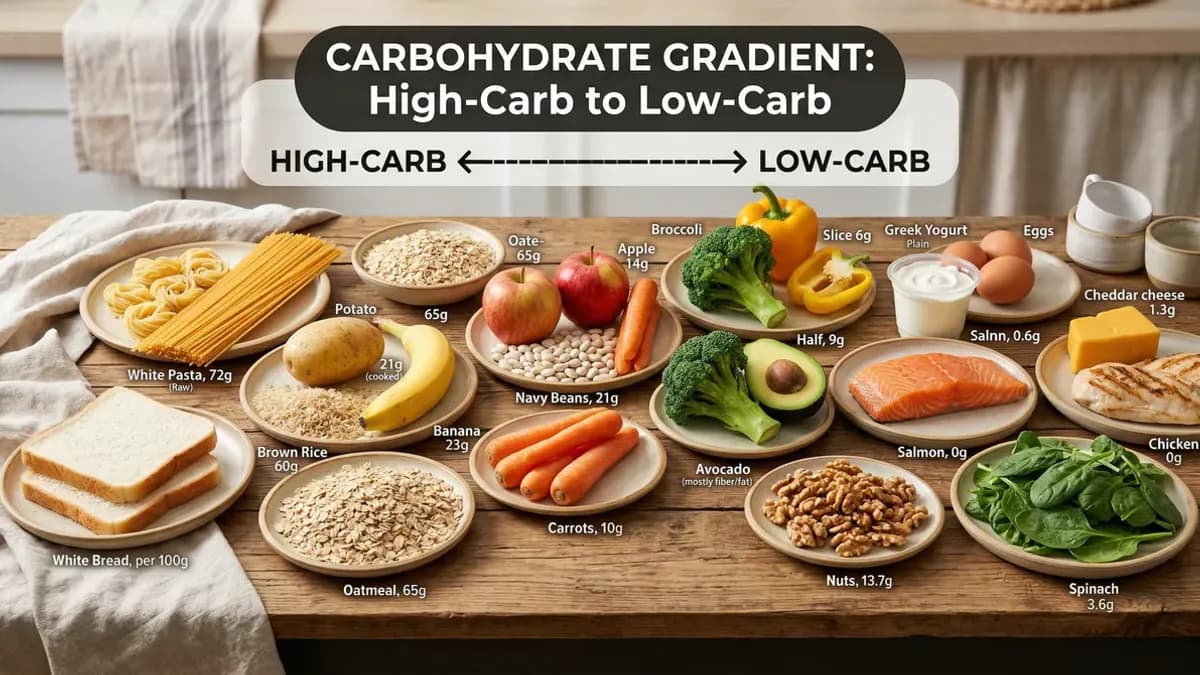
Carbohydrates are found in far more foods than most people realise — and the amounts vary enormously. A banana contains 23 grams per 100 grams, dry pasta 75 grams and dates 75 grams. Whether you want to eat more carbohydrates or fewer, a clear overview helps you make informed choices.
Key takeaways
Foods high in carbohydrates include dried fruit, grains, rice, pasta and bread. Vegetables, meat, fish and eggs contain little to no carbohydrates. A categorised list helps you quickly identify and manage the carbohydrates in your diet.
Foods with the most carbohydrates
Grains and grain products (per 100 g dry)
| Food | Carbohydrates |
|---|---|
| White rice (dry) | 80 g |
| Brown rice (dry) | 76 g |
| Pasta (dry) | 75 g |
| Oats / porridge oats | 66 g |
| Quinoa (dry) | 64 g |
| Rye bread | 46 g |
| White bread | 49 g |
| Wholegrain bread | 41 g |
| Corn (cooked) | 19 g |
Grains and grain products are the most familiar carbohydrate sources. The difference between dry and cooked weight is significant: 100 g of dry pasta contains roughly 75 g of carbohydrates, but cooked pasta only around 25–30 g (due to absorbed water). Keep this in mind when calculating your intake.
Dried fruit (per 100 g)
| Food | Carbohydrates |
|---|---|
| Dates | 75 g |
| Raisins | 79 g |
| Dried figs | 69 g |
| Dried apricots | 63 g |
| Dried mango | 78 g |
Dried fruit is highly concentrated in sugars. A small handful of raisins (30 g) already contains nearly 24 grams of carbohydrates. Nutritious, but watch your portion sizes if you are tracking carbohydrate intake.
Fresh fruit (per 100 g)
| Food | Carbohydrates |
|---|---|
| Mango | 15 g |
| Banana | 23 g |
| Grapes | 18 g |
| Apple | 14 g |
| Orange | 12 g |
| Strawberry | 8 g |
| Blueberry | 14 g |
| Raspberry | 12 g |
| Avocado | 2 g |
Fresh fruit contains fewer carbohydrates than dried fruit, but more fibre, water and vitamins. Berries are relatively low in carbohydrates and high in antioxidants. Read more about carbohydrates in specific fruits in our article on carbohydrates in bananas.
Tubers and root vegetables (per 100 g cooked)
| Food | Carbohydrates |
|---|---|
| Sweet potato (cooked) | 20 g |
| Potato (cooked) | 17 g |
| Beetroot | 10 g |
| Parsnip | 13 g |
| Carrot | 10 g |
Legumes (per 100 g cooked)
| Food | Carbohydrates |
|---|---|
| Lentils | 20 g |
| Chickpeas | 27 g |
| Kidney beans | 22 g |
| White beans | 21 g |
| Edamame | 10 g |
Legumes provide not only carbohydrates but also significant protein and fibre, making them an excellent source of complex carbohydrates.
Dairy and alternatives (per 100 ml / 100 g)
| Food | Carbohydrates |
|---|---|
| Semi-skimmed milk | 5 g |
| Full-fat yoghurt | 4 g |
| Greek yoghurt | 4 g |
| Oat milk | 9 g |
| Rice milk | 10 g |
| Almond milk (unsweetened) | 1 g |
Snacks and sweets (per 100 g)
| Food | Carbohydrates |
|---|---|
| White chocolate | 59 g |
| Milk chocolate | 57 g |
| Rice cakes | 81 g |
| Corn flakes | 83 g |
| Honey | 82 g |
| Jam | 60 g |
Foods low in carbohydrates
If you want to consciously reduce your carbohydrate intake, these are your allies:
Vegetables (per 100 g)
| Food | Carbohydrates |
|---|---|
| Spinach | 1 g |
| Lettuce | 2 g |
| Courgette / zucchini | 3 g |
| Cucumber | 3 g |
| Red bell pepper | 6 g |
| Broccoli | 7 g |
| Cauliflower | 5 g |
| Asparagus | 4 g |
Protein-rich foods (per 100 g)
| Food | Carbohydrates |
|---|---|
| Chicken breast | 0 g |
| Minced beef | 0 g |
| Salmon | 0 g |
| Canned tuna | 0 g |
| Egg | 1 g |
| Tofu | 2 g |
| Tempeh | 10 g |
Fats and nuts (per 100 g)
| Food | Carbohydrates |
|---|---|
| Olive oil | 0 g |
| Coconut oil | 0 g |
| Walnuts | 7 g |
| Almonds | 10 g |
| Cashews | 30 g |
| Peanut butter (100% peanuts) | 12 g |
Note: cashews contain surprisingly high levels of carbohydrates compared to other nuts.
How to use this list
To eat fewer carbohydrates: Partially replace rice, pasta and bread with vegetables, legumes or cauliflower rice. Choose lower-sugar fruits such as berries.
To eat more carbohydrates: Add oats, brown rice, bananas or legumes to your meals. These are fibre-rich, nutritious carbohydrate sources.
To understand your intake: Want to know how many carbohydrates you consume each day? Moveno lets you photograph your meal and instantly see the nutritional values — including carbohydrates, fibre and sugars.
Read more about the ideal daily carbohydrate intake in our article on how many carbohydrates per day.
Frequently asked questions
Which food has the most carbohydrates? Dry cornflakes and rice cakes score highest at 80–83 grams per 100 grams. Honey (82 g) and raisins (79 g) are also very high.
Do meat and fish contain carbohydrates? Barely. Unprocessed meat and fish contain virtually no carbohydrates. Watch out for breadcrumb coatings, marinades and sauces — these often contain sugars or starch.
Are sweet potatoes low in carbohydrates? No. Sweet potatoes contain around 20 grams of carbohydrates per 100 grams cooked weight. They are a better choice than white potatoes thanks to more fibre and beta-carotene, but they are not low-carb.