The first question most people ask when starting keto is not about macros or ketosis — it is simply: what can I actually eat? The carbohydrate restriction sounds severe, but the approved food list is more varied than it first appears. This guide organises every major food category into clear yes, no, and proceed-with-caution sections, with net carbohydrate counts to help you plan.
Key takeaways
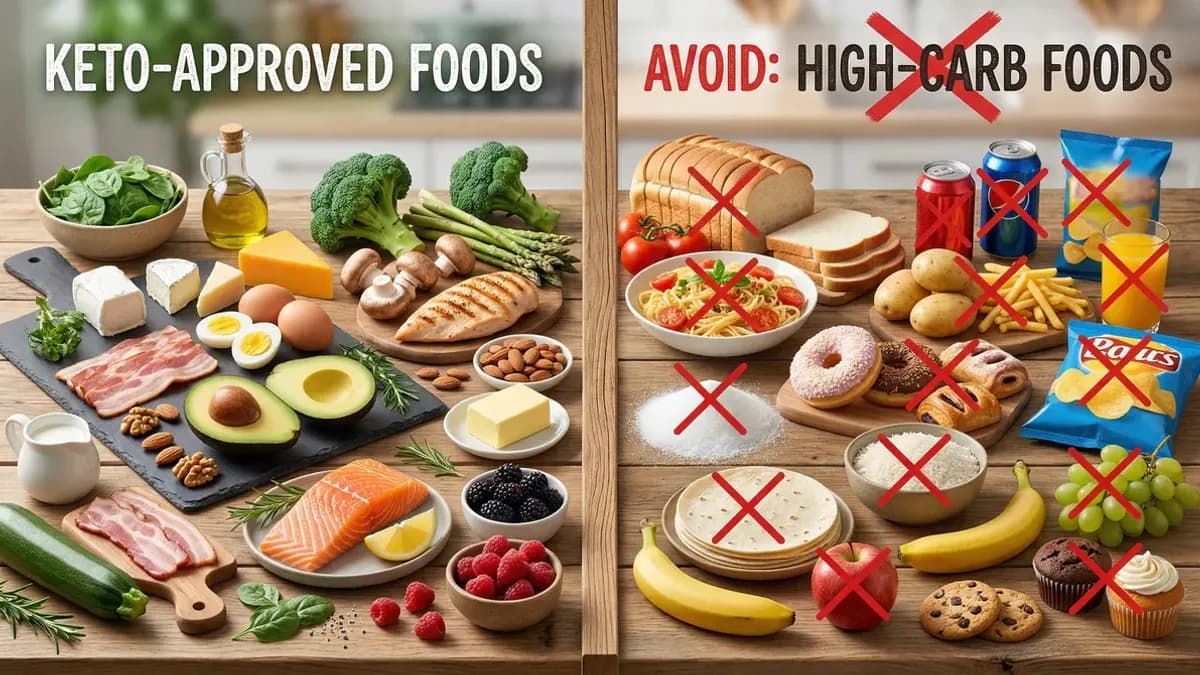
- Meat, fish, eggs, cheese, non-starchy vegetables, nuts, and healthy fats form the core of a keto diet
- Bread, pasta, rice, potatoes, sugar, and most fruit must be avoided
- Net carbohydrates (total carbs minus fibre) is the number that matters — not total carbohydrates
- Hidden sugars in sauces, dressings, and processed foods can quietly break ketosis
- Avocado, eggs, salmon, spinach, and olive oil are among the best keto staple ingredients
- Reading labels is a non-negotiable skill on keto
How to think about keto food choices
The ketogenic diet inverts conventional nutritional wisdom. Fat is the primary fuel, protein is moderate, and carbohydrates are kept to a minimum — typically 20 to 50 grams of net carbs per day. A single slice of bread already contains around 15 grams, which is why almost all grain-based foods are incompatible with strict keto.
The practical question is not "is this healthy?" but "how many net carbs does this contain, and does it fit my daily budget?" Tracking tools — especially photo-based ones — make this significantly easier by giving you an immediate breakdown of any meal without manual calculation.
What to eat on keto
Meat and poultry
Unprocessed meats contain virtually no carbohydrates, making them a keto foundation. Beef steak, ground beef, chicken breast, chicken thighs, pork loin, lamb, turkey, and veal all qualify. Processed meats (sausages, salami, ham) can work but often contain added sugars — check the label. Grass-fed and pasture-raised options offer a better fatty acid profile.
Fish and seafood
Fatty fish is particularly valuable on keto for its omega-3 content: salmon, mackerel, herring, sardines, and anchovies. White fish — cod, sea bass, tilapia — also work well. Prawns, mussels, and squid are fine, though shellfish contain small amounts of carbohydrates. Avoid breaded or battered options.
Eggs
Eggs are the quintessential keto food: near-zero carbohydrates, high in fat and protein, and packed with micronutrients including choline, vitamin D, and selenium. Use whole eggs — most of the nutrition is in the yolk. Boiled, fried, scrambled, poached, or as an omelette, they are endlessly versatile.
Dairy
Not all dairy is equal on keto. High-fat, low-carb options that work well: butter, cream, sour cream, hard cheeses (cheddar, Gouda, Parmesan), soft cheeses (Brie, Camembert), and small amounts of full-fat Greek yoghurt. Avoid or limit: regular milk (contains lactose — around 12g carbs per 250ml), low-fat dairy products, and fruit-flavoured yoghurts.
Nuts and seeds
Excellent for snacking and keto baking, but portions matter since nuts contain carbohydrates.
Lower carb options (recommended): macadamia nuts (±4g net per 100g), pecans (±4g), walnuts (±7g), almonds (±9g), chia seeds (±2g net), flaxseeds (±2g net).
Higher carb options (limit or avoid): cashews (±27g per 100g), pistachios (±18g).
Vegetables
The general rule: vegetables that grow above ground tend to be low in carbohydrates; roots and tubers are not.
Keto-friendly: spinach, kale, rocket, all lettuce varieties, broccoli, cauliflower, zucchini, cucumber, asparagus, mushrooms, celery, bok choy, Brussels sprouts, green beans, bell peppers (red is slightly higher).
Use in moderation: tomatoes (±3g per 100g), onion (±7g — use small amounts for flavour), leek, carrot (±6g).
Avoid: potatoes (±17g), sweet potatoes (±20g), corn (±19g), peas (±14g), parsnips (±13g).
Fats and oils
Fat is fuel on keto — choosing quality sources matters. Extra virgin olive oil, coconut oil, MCT oil, avocado oil, butter, and ghee are all excellent. Avoid seed oils high in omega-6: sunflower, corn, soybean, and rapeseed oils consumed in large quantities are associated with increased inflammation.
Fruit
Most fruit is off the table due to fructose content. Small amounts of berries are the exception:
Allowed (in moderation): raspberries (±5g net per 100g), blackberries (±5g), strawberries (±6g), blueberries (±12g — highest of the berries, eat carefully).
Avoid: banana (±20g), grapes (±17g), mango (±14g), pineapple (±13g), apple (±12g), orange (±9g).
Drinks
Water is essential — aim for at least two litres per day. Black coffee and unsweetened tea are fine. Bone broth replaces lost electrolytes. Avoid all fruit juice, sweetened drinks, sports drinks, and beer. Dry wine and neat spirits contain minimal carbohydrates but slow fat metabolism while they are being processed — use sparingly.
What to avoid
Grains and starchy foods
Bread, pasta, rice, couscous, oats, cornflakes, crackers, and all other grain products are incompatible with keto. A single slice of bread (±15g carbs) can consume more than half a strict keto daily budget.
Sugar in all forms
Table sugar, honey, maple syrup, agave nectar, and fruit juice are the obvious ones. Hidden sugars are more dangerous because they are unexpected: ketchup, barbecue sauce, stock cubes, marinades, and most commercial granola bars all contain significant amounts. Look for sucrose, glucose, fructose, dextrose, and maltose in ingredient lists. Stevia, erythritol, and monk fruit extract are carb-free sweetener alternatives that do not spike insulin.
Legumes
Lentils (±12g net per 100g cooked), chickpeas (±17g), kidney beans (±14g), and most other legumes are too carbohydrate-dense for strict keto. Small amounts of tempeh (±10g) may work for vegetarians tracking carefully.
"Low-carb" processed products
Many products marketed as low-carb or sugar-free still contain enough carbohydrates to impair ketosis, particularly protein bars, low-carb bread, and maltitol-sweetened products. Always check the actual nutrition label rather than relying on front-of-pack claims.
The grey zone
Milk and yoghurt
Regular cow's milk contains lactose — around 12 grams of carbohydrates per 250ml glass. Low-fat yoghurt is similarly problematic. Better alternatives: unsweetened coconut milk, unsweetened almond milk (±0.5g per 100ml), or a small serving of full-fat Greek yoghurt.
Alcohol
Dry wines contain approximately 2–4 grams of carbohydrates per glass. Spirits — whisky, vodka, gin — are virtually carb-free. The issue is not carbohydrates but metabolism: the liver prioritises alcohol processing over fat burning, temporarily pausing ketone production. Occasional moderate use is compatible with keto; regular drinking significantly slows progress.
Root vegetables
Carrots, beetroot, and turnips occupy a middle ground. In small quantities they can fit within a 50-gram daily budget but push against a 20-gram strict limit. Use them as flavour accents rather than side dishes.
Net carbs vs. total carbs
Most keto guidance refers to net carbohydrates: total carbohydrates minus dietary fibre (and sometimes minus sugar alcohols like erythritol). Fibre passes through the digestive system without being absorbed as glucose. This is why avocado, chia seeds, and flaxseeds are far more keto-compatible than their total carbohydrate count suggests.
Tracking net carbs requires either calculating them manually from labels or using a tracking app that does it automatically. Understanding your calorie deficit alongside net carb targets gives you two clear metrics to work with.
For meal ideas using the foods on this list, see our keto recipes and keto meal plan. For the science behind why keto works, read our keto diet beginner's guide.
Sources
- Westman EC et al. Low-carbohydrate nutrition and metabolism. American Journal of Clinical Nutrition, 2007. https://doi.org/10.1093/ajcn/86.2.276
- Volek JS, Phinney SD. The Art and Science of Low Carbohydrate Living. Beyond Obesity LLC, 2011.
- Paoli A et al. Beyond weight loss: a review of the therapeutic uses of very-low-carbohydrate (ketogenic) diets. European Journal of Clinical Nutrition, 2013. https://doi.org/10.1038/ejcn.2013.116
- USDA FoodData Central. https://fdc.nal.usda.gov