You hear the word antioxidants everywhere — in adverts for smoothies, superfood powders, and skincare. But what are antioxidants actually, what do they do in your body, and do you need supplements or is food enough? This article explains it clearly, without overstated claims.
Key takeaways
- Antioxidants are substances that protect cells from oxidative damage caused by free radicals
- The richest food sources include blueberries, dark chocolate, pecans, red cabbage, kale, raspberries, and artichoke
- Food delivers antioxidants in a complex mix that works better than isolated supplements
- EFSA concludes there is insufficient evidence to support specific antioxidant claims for the healthy general population
- A varied diet rich in vegetables and fruit is the most evidence-backed strategy
What are free radicals?
To understand antioxidants, you first need to understand free radicals. Free radicals are unstable molecules with an unpaired electron. They form as a by-product of normal metabolic processes — such as energy production in the mitochondria — but also through smoking, air pollution, UV radiation, and intense physical exercise.
Free radicals attempt to steal their missing electron from neighbouring molecules, which can trigger a chain reaction of damage to cell membranes, proteins, and DNA. This process is called oxidative stress. In limited amounts, oxidative stress is normal and even functional — it is part of the immune response. But chronically high levels are associated with ageing and the development of cardiovascular disease, type 2 diabetes, and certain cancers.
How do antioxidants work?
Antioxidants neutralise free radicals by donating the missing electron without becoming unstable themselves. They interrupt the chain reaction of oxidative damage. Your body produces its own antioxidants — such as glutathione and superoxide dismutase — but food also provides a large arsenal of them.
Well-known antioxidants in food include:
- Vitamin C — water-soluble; high concentrations in citrus fruit, peppers, and broccoli
- Vitamin E — fat-soluble; abundant in nuts, seeds, and vegetable oils
- Beta-carotene — in carrots, sweet potato, and mango; converted to vitamin A in the body
- Flavonoids — a large group of polyphenols found in berries, tea, cocoa, and red wine
- Anthocyanins — give blueberries and red cabbage their purple-blue colour; potent antioxidants
- Lycopene — in tomatoes and watermelon; particularly high in processed tomato products (tomato sauce, passata)
- Selenium — a trace mineral with antioxidant activity, found in Brazil nuts, meat, and fish
The richest sources at a glance
Not all foods are equal when it comes to antioxidant capacity. Measured via the ORAC scale (Oxygen Radical Absorbance Capacity), these score highest:
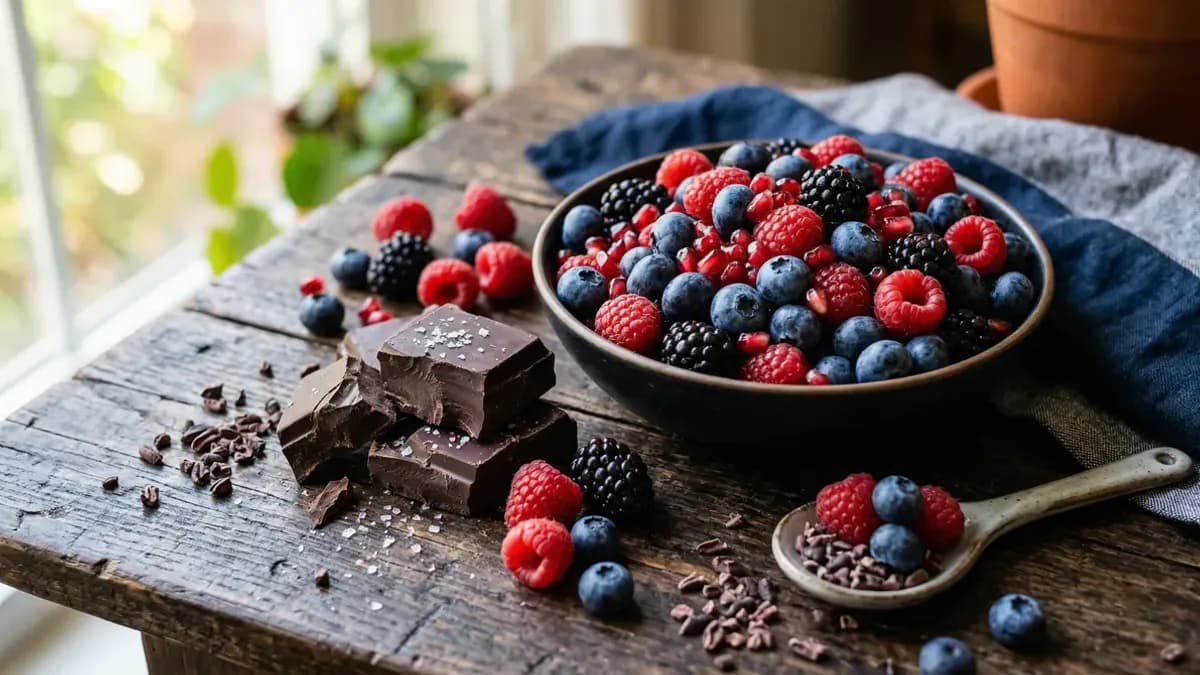
- Blueberries — exceptionally rich in anthocyanins; one of the most thoroughly researched antioxidant-rich fruits
- Dark chocolate (>70% cocoa) — contains flavonoids and proanthocyanidins; choose a high cocoa percentage
- Pecans — among the richest in antioxidants of all nuts
- Artichoke — one of the richest vegetables, particularly the hearts
- Raspberries — high in vitamin C and ellagic acid
- Red cabbage — anthocyanins responsible for the deep red colour
- Kale — rich source of vitamin C, vitamin K, and flavonoids
- Walnuts — alongside antioxidants, also rich in omega-3 fatty acids
- Strawberries — high concentration of vitamin C and anthocyanins
- Red and black beans — often underestimated; contain substantial polyphenols
A practical rule of thumb: the darker or more colourful a fruit or vegetable, the more antioxidants it generally contains.
Antioxidants and health: what does the science say?
Epidemiological research consistently shows that people who eat plenty of vegetables and fruit have a lower risk of cardiovascular disease, type 2 diabetes, and certain cancers. Whether this is specifically due to antioxidants or the combined effect of fibre, vitamins, minerals, and phytochemicals is difficult to isolate.
The European Food Safety Authority (EFSA) has concluded that there is insufficient scientific evidence to support general antioxidant claims for specific substances or products in healthy people. That does not mean antioxidants are irrelevant — it means the science is more nuanced than much of the marketing suggests.
Supplements: necessary or unnecessary?
Taking high-dose antioxidant supplements (such as beta-carotene or vitamin E) has not produced the expected health benefits in several large studies. Some trials even found higher risks among smokers taking high-dose beta-carotene supplements.
The likely explanation is that antioxidants in food work together in a complex matrix of hundreds of substances, and this synergy is lost when they are isolated in a pill. Food delivers antioxidants in a context the body can readily use.
An exception applies to people with confirmed deficiencies (such as vitamin C in someone following a severely restricted diet) or specific medical conditions — always discuss supplementation with a doctor or dietitian.
Practical ways to eat more antioxidants
You do not need to buy superfoods or expensive supplements. Here are simple ways to increase your antioxidant intake:
- Add a handful of berries to your breakfast or yoghurt every day
- Replace milk chocolate with dark chocolate (>70% cocoa) if you enjoy chocolate
- Drink green or black tea instead of soft drinks
- Use more garlic and onion in cooking — both are rich in allicin and quercetin
- Choose colourful vegetables: orange (carrots, peppers), green (broccoli, spinach), purple (red cabbage, aubergine)
- Use extra-virgin olive oil — rich in polyphenols
Moveno lets you photograph your meal and instantly see the nutritional values — useful for checking whether you are eating enough vegetables and fruit. Want to know more about why tracking your diet helps? Read our article on food tracking.
The role of lifestyle
Dietary antioxidants help, but oxidative stress is also strongly influenced by lifestyle. Smoking, chronic stress, too little sleep, and excessive alcohol consumption all significantly increase free radical production. A varied diet full of colourful vegetables and fruit is most effective when it forms part of a broader healthy lifestyle.
Sources
- Voedingscentrum — Antioxidanten
- NICE Voedingsinfo — Antioxidanten: hype of wetenschap?
- Vitakruid — Antioxidanten in voeding: 12 rijke bronnen