You toss a punnet of cherry tomatoes into your shopping basket and wonder: how many calories did I just add to dinner? Not many, it turns out. Tomatoes are among the lowest-calorie foods you can buy. But the exact numbers shift depending on the variety and how you prepare them.
Key takeaways
- 22 kcal per 100 grams. A medium tomato (70g) contains roughly 18 kcal according to Dutch nutrition data.
- Cherry tomatoes are slightly higher. At 30 kcal per 100g, they pack more natural sugars.
- Tomatoes contain lycopene. A carotenoid pigment linked to potential health benefits in research, though no approved EU health claims exist for it.
- Cooking barely changes the count. Cooked tomatoes come in at about 23 kcal per 100g.
- Almost no fat, few carbs. With 0.6g fat and 3.4g carbohydrates per 100g, tomatoes fit virtually any eating pattern.
How many calories are in a tomato?
A standard medium tomato weighing about 70 grams contains roughly 18 kcal. Per 100 grams, that works out to around 22 kcal, based on data from the Voedingscentrum (Dutch Nutrition Centre).
For context, a cucumber is even lower at roughly 13 kcal per 100g, while broccoli sits at about 28 kcal. Tomatoes land right in the middle, making them an excellent base for salads, sauces, and cooked dishes.
What is the full nutritional profile?
Beyond the low calorie count, tomatoes offer a solid spread of nutrients. Per 100 grams of raw tomato:
| Nutrient | Per 100g |
|---|---|
| Energy | 22 kcal |
| Fat | 0.6g |
| Saturated fat | 0.1g |
| Carbohydrates | 3.4g |
| Sugars | 3.4g |
| Fibre | 1.6g |
| Protein | 0.9g |
Source: Voedingscentrum (Dutch Nutrition Centre)
Tomatoes also provide vitamin C and potassium. They contain lycopene, the red pigment that belongs to the carotenoid family. While lycopene has been studied extensively, the European Food Safety Authority (EFSA) has not approved general health claims for dietary lycopene.
Do calories differ between tomato varieties?
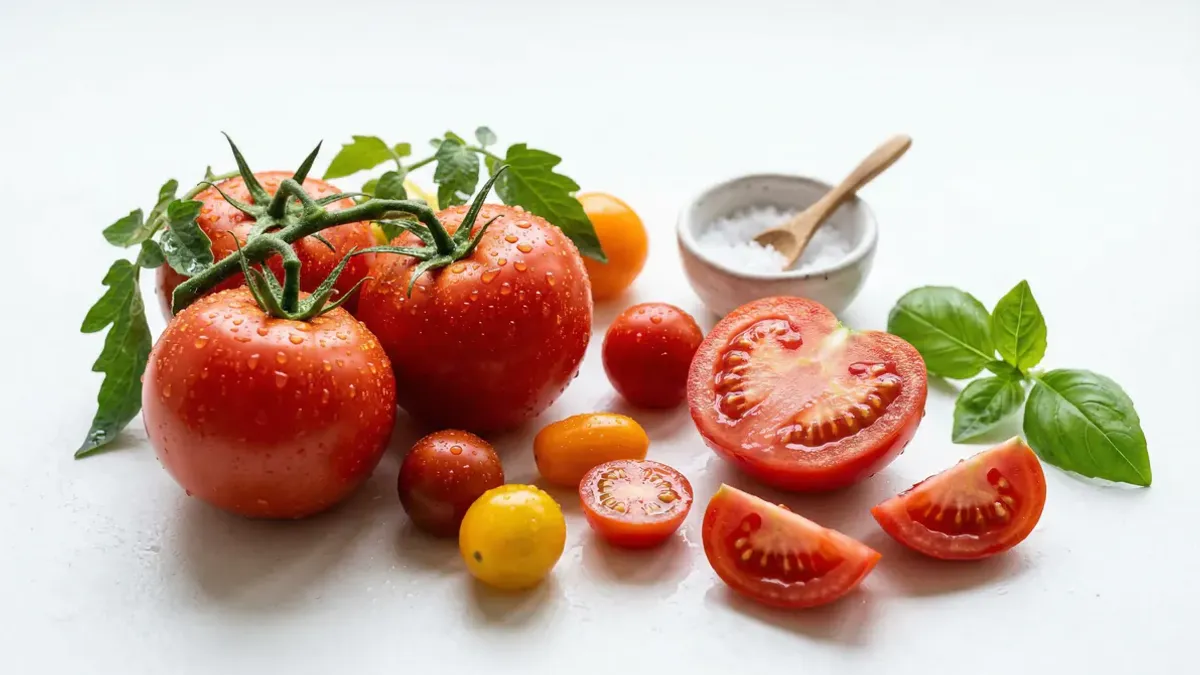
Yes, though the differences are modest. Cherry tomatoes contain more sugars and therefore slightly more calories.
1. Standard round tomato
About 22 kcal per 100g. A single medium tomato (70g) delivers around 18 kcal. A versatile choice for sandwiches, salads, and cooking.
2. Cherry tomatoes
At 30 kcal per 100g, cherry tomatoes are a touch higher in calories. The extra sugars explain their sweeter taste. Ten cherry tomatoes (roughly 100g) still come in at just 30 kcal, making them a great snack.
3. Beefsteak tomato
Calorie density is similar to standard tomatoes, but the slices are bigger. A thick slice of 30 to 40 grams adds just 7 to 9 kcal to a sandwich.
4. Sun-dried tomatoes
Here the numbers climb significantly. Removing moisture concentrates everything, including calories. Sun-dried tomatoes in oil can reach 200 kcal per 100g. Use them as a flavour accent, not a main ingredient.
How does cooking affect tomato calories?
The way you prepare tomatoes slightly alters their nutritional profile.
Raw. 22 kcal per 100g. Most vitamins stay intact. This is the most common way to eat tomatoes, whether on a sandwich, in a salad, or as a snack.
Boiled. Around 23 kcal per 100g. The difference is negligible. Some research suggests cooking may increase the bioavailability of lycopene, though this is not an approved health claim.
Passata (strained tomatoes). About 25 kcal per 100g. A convenient base for sauces.
Tomato paste. Concentration pushes calories to 75 to 100 kcal per 100g. A typical serving is one tablespoon (15g), so the actual calorie impact stays small.
With olive oil. A tablespoon of olive oil adds roughly 40 to 50 kcal. Fat may enhance the absorption of fat-soluble compounds like lycopene.
Can tomatoes support a calorie deficit?
At just 22 kcal per 100g, tomatoes are a strong ally when you are watching your calorie intake. Their low energy density means you can eat a generous portion without a significant calorie cost.
A few practical examples:
On a sandwich. Two slices of tomato (60g) add only 13 kcal to your lunch.
With a hot meal. Half a tomato stirred into a stew or served alongside protein makes the plate bigger without adding many calories.
As a snack. A 150g punnet of cherry tomatoes delivers just 45 kcal. Compare that to a slice of cheese at around 110 kcal.
Curious how many calories you need each day? Check our guide on calculating your daily calorie needs or read the calorie tracking beginners guide.
Frequently asked questions about tomato calories
Are tomatoes a vegetable or a fruit? Botanically, the tomato is a fruit because it grows from the plant's flower and contains seeds. In culinary practice and dietary guidelines, though, tomatoes are classified as vegetables. Nutritional authorities treat them as part of the vegetable group.
Can you eat unlimited tomatoes? Tomatoes are very low in calories, so you can enjoy them generously. Health guidelines recommend around 250 grams of vegetables daily. Tomatoes can absolutely be part of that, though variety across different vegetables remains important.
Do tomatoes contain a lot of sugar? A tomato has 3.4 grams of sugar per 100g. That is comparable to other vegetables and far less than most fruits. Cherry tomatoes contain slightly more, but still well within healthy ranges.
Are canned tomatoes as nutritious as fresh? Canned tomatoes are a solid alternative. They are typically processed at peak ripeness and heated quickly, which helps preserve many nutrients. The calorie content is similar to fresh tomatoes, though cans with added salt may contain more sodium. Check the nutrition label and choose varieties without added salt when possible.
Start tracking what you eat
Tomatoes are low-calorie all-rounders that fit into almost any meal. From a simple sandwich to an elaborate pasta sauce, you now know exactly what they contribute.
Want an easy way to track your meals? Moveno recognises your food from a photo and shows the full nutrition breakdown instantly, tomatoes included.