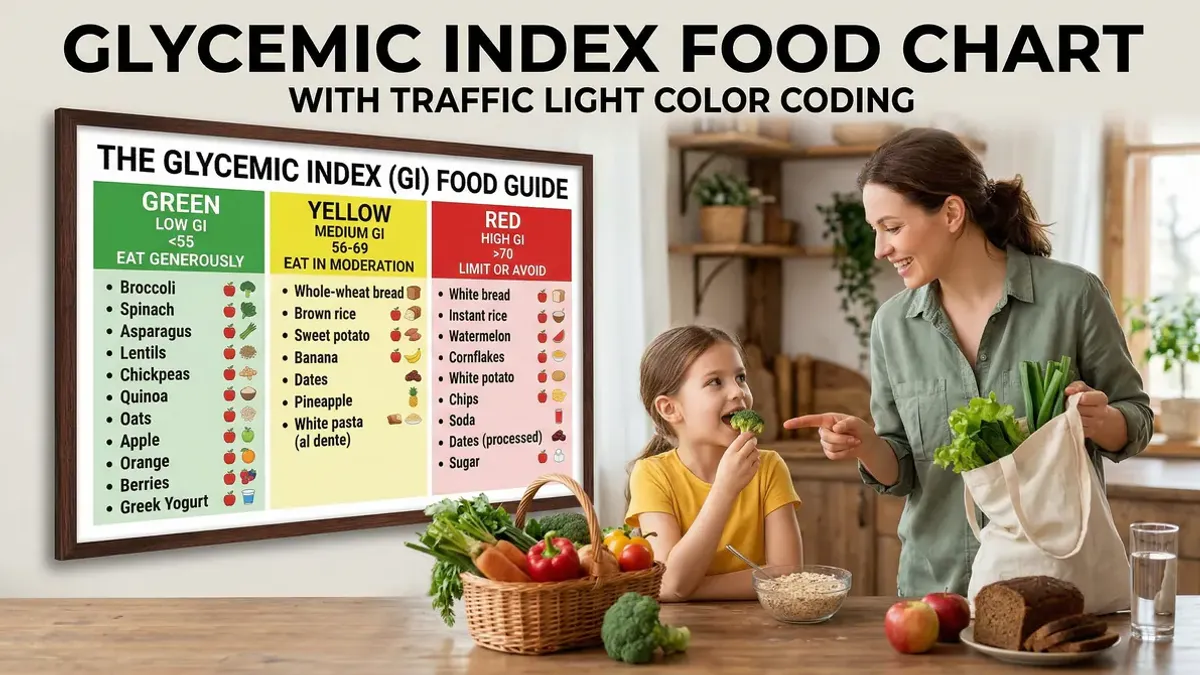
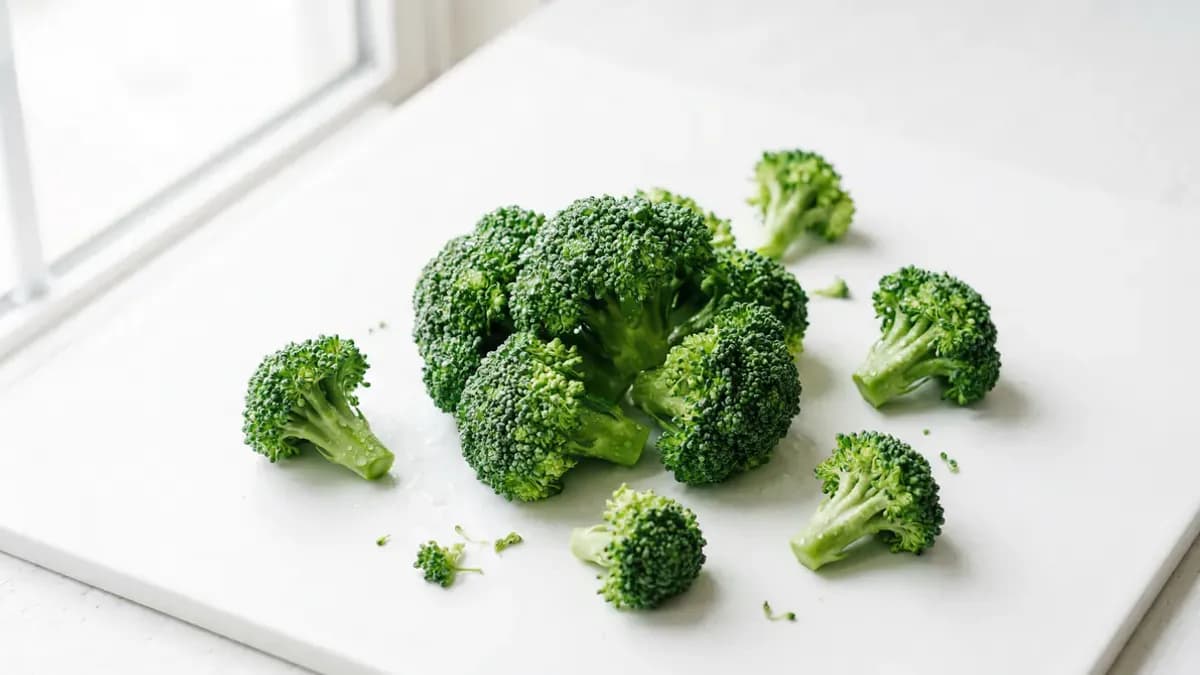
You want to eat more vegetables, but you do not want to overthink every food choice. Here is a vegetable that makes the decision easy: broccoli. At just 28 calories per 100 grams, it is one of the lowest-calorie vegetables available, yet it packs more nutrients per bite than most foods on your plate. From vitamin C to fibre, from folate to vitamin K, broccoli punches well above its weight. Here is what the numbers actually look like.
Key takeaways
- Extremely low in calories. 100 grams of raw broccoli contains just 28 calories. You can eat a generous portion without affecting your daily budget.
- Rich in vitamin C. Raw broccoli contains 47 to 89 mg of vitamin C per 100 grams, comparable to or exceeding an orange (50 mg).
- High in fibre. 3.2 grams of fibre per 100 grams of raw broccoli, supporting digestion and satiety.
- Preparation matters. Steaming preserves the most nutrients. Boiling in water causes water-soluble vitamins to leach out.
- Fits any eating goal. Whether you are managing weight, building muscle or simply eating better, broccoli works.
How many calories are in broccoli?
According to the Dutch Nutrition Centre (Voedingscentrum), 100 grams of raw broccoli contains just 28 calories. Cooked broccoli comes out to the same figure: 28 kcal per 100 grams, because broccoli contains minimal sugars that change during cooking.
In practical terms, a typical serving of broccoli with dinner is 150 to 200 grams. That amounts to 42 to 56 calories. For comparison, a single slice of whole-grain bread contains about 80 calories. You can eat a generous plate of broccoli for fewer calories than a piece of toast.
| Nutrient | Per 100 g (raw) | Per 100 g (cooked) |
|---|---|---|
| Energy | 28 kcal | 28 kcal |
| Fat | 0.8 g | 0.4 g |
| Carbohydrates | 0.8 g | 0.8 g |
| Fibre | 3.2 g | 2.8 g |
| Protein | 2.8 g | 4.0 g |
| Vitamin C | ~47 to 89 mg | reduced |
Source: Voedingscentrum (Dutch Nutrition Centre), based on NEVO food composition data. Vitamin C range reflects NEVO and international databases.
To understand how broccoli fits into your overall daily calorie needs, check our article on how many calories you need per day.
Why is broccoli so nutrient-dense?
Broccoli is not just a low-calorie vegetable. It is one of the most nutrient-dense vegetables you can eat. The value lies in the combination of vitamins, minerals and plant compounds packed into every floret.
1. Vitamin C
Broccoli is well known for its high vitamin C content. Per 100 grams, raw broccoli delivers 47 to 89 mg of vitamin C, depending on the source and season. For comparison, an orange contains about 50 mg per 100 grams. Broccoli can match or exceed an orange in vitamin C delivery.
Vitamin C supports immune function, iron absorption and connective tissue formation.
2. Vitamin K
At 102 micrograms per 100 grams, broccoli provides a substantial contribution to your daily vitamin K needs. Vitamin K plays a role in blood clotting and maintaining bone strength.
3. Folate
Broccoli contains approximately 63 micrograms of folate per 100 grams. Folate is essential for cell growth and DNA synthesis. It is particularly important for women who are pregnant or planning to become pregnant.
4. Fibre
With 3.2 grams of fibre per 100 grams, broccoli supports digestive health and helps you feel full longer. Most people do not get enough fibre in their daily diet. Learn more in our guide to daily fibre intake.
5. Protein
Surprisingly for a vegetable, broccoli contains a decent amount of protein: 2.8 grams per 100 grams raw and even 4.0 grams per 100 grams cooked. Not enough to cover your protein needs on its own, but a welcome contribution to your total intake.
Can broccoli help with weight management?
Yes, and the reason is straightforward. At just 28 calories per 100 grams, you can eat a large portion without exceeding your calorie budget. This concept is called volumetric eating: consuming a high volume of food for relatively few calories, so your stomach feels full while your calorie intake stays low.
Broccoli is particularly effective for this approach because of its combination of fibre (satiety) and water (broccoli is roughly 90 percent water by weight). You feel satisfied after a portion of broccoli, even though you have consumed very few calories.
A practical example: replace half of your pasta with broccoli. Your plate looks just as full, you eat a similar volume, but your calorie intake drops by hundreds of calories. For more strategies like this, read our complete guide to calorie counting.
Which cooking method preserves the most nutrients?
How you prepare broccoli significantly affects its nutritional value. Vitamin C in particular is sensitive to heat and water.
- Steaming. The best choice. Steaming preserves most vitamins and minerals because the broccoli does not come into contact with water. Five to seven minutes is sufficient.
- Stir-frying. A strong second option. Quick stir-frying on high heat with a small amount of oil retains many nutrients and provides a pleasant texture.
- Roasting. Oven-roasting broccoli with olive oil and garlic is flavourful. Most nutrients are preserved, though some vitamin C is lost.
- Boiling. The least favourable option. Vitamin C and other water-soluble vitamins partially leach into the cooking water. If you do boil, use minimal water and keep it brief.
- Raw. Maximum vitamin C retention, but the fibre is harder to digest. Raw broccoli florets work well in salads or as a snack with hummus.
How does broccoli compare to other vegetables?
To put broccoli's nutritional value in perspective, here is how it stacks up against other popular vegetables:
| Vegetable | Kcal/100 g | Fibre/100 g | Vitamin C/100 g |
|---|---|---|---|
| Broccoli | 28 | 3.2 g | 47-89 mg |
| Cauliflower | 23 | 2.0 g | 48 mg |
| Spinach | 22 | 2.2 g | 28 mg |
| Carrots | 30 | 2.5 g | 6 mg |
| Red pepper | 31 | 2.0 g | 128 mg |
Broccoli scores consistently high across nearly every category. Only red pepper contains more vitamin C, but broccoli wins on fibre and additionally provides more vitamin K and folate.
Broccoli is a seasonal vegetable that tastes best from June through November in the Netherlands. During spring and winter, most broccoli in European supermarkets comes from Spain or Italy. You can explore more seasonal vegetables to diversify your plate.
How much broccoli should you eat?
Health guidelines recommend at least 250 grams of vegetables per day. Broccoli does not need to be your only vegetable, but it makes an excellent foundation. A serving of 150 to 200 grams as part of your dinner covers a significant portion of that recommendation.
Variety matters. Alternate broccoli with other vegetables to get a broad spectrum of nutrients. But if you are choosing between eating a vegetable or skipping it, broccoli is almost always a smart choice.
What are the best ways to eat more broccoli?
Broccoli works with almost everything. Here are ideas that go beyond the standard side dish:
- In a stir-fry. Combine with peppers, mushrooms and soy sauce for a quick weeknight meal.
- As soup. Broccoli soup with a splash of cream or coconut milk is comfort food with minimal calories.
- On pizza. Roasted broccoli is an underrated pizza topping.
- In pasta. Blanch broccoli florets and toss them through penne with garlic, olive oil and parmesan.
- As a snack. Raw broccoli florets with hummus or tzatziki make a satisfying mid-afternoon bite.
Make vegetables a daily habit
Broccoli is one of the few foods that combines extremely low calories with an impressive nutrient profile. From vitamin C and K to fibre and folate, it genuinely adds value to every meal.
With Moveno, you snap a photo of your plate and instantly see all the nutritional values, including the broccoli on your plate. Step by step, you build a better understanding of what you eat, without needing a nutrition degree.