
Gout is one of the most acutely painful joint conditions a person can experience. The classic attack arrives suddenly — often at night — with intense pain, swelling, and heat in the big toe joint. Attacks are caused by monosodium urate crystals depositing in joints when uric acid levels in the blood are chronically elevated.
What distinguishes gout from most other inflammatory conditions is that diet directly and measurably influences uric acid levels. Changing what you eat is one of the few genuinely effective non-pharmacological tools available.
Key takeaways
- Gout is caused by excess uric acid crystallising in joints, driven by genetic factors, kidney function, and diet
- Organ meats, shellfish, red meat, beer, and sugary drinks raise uric acid most significantly
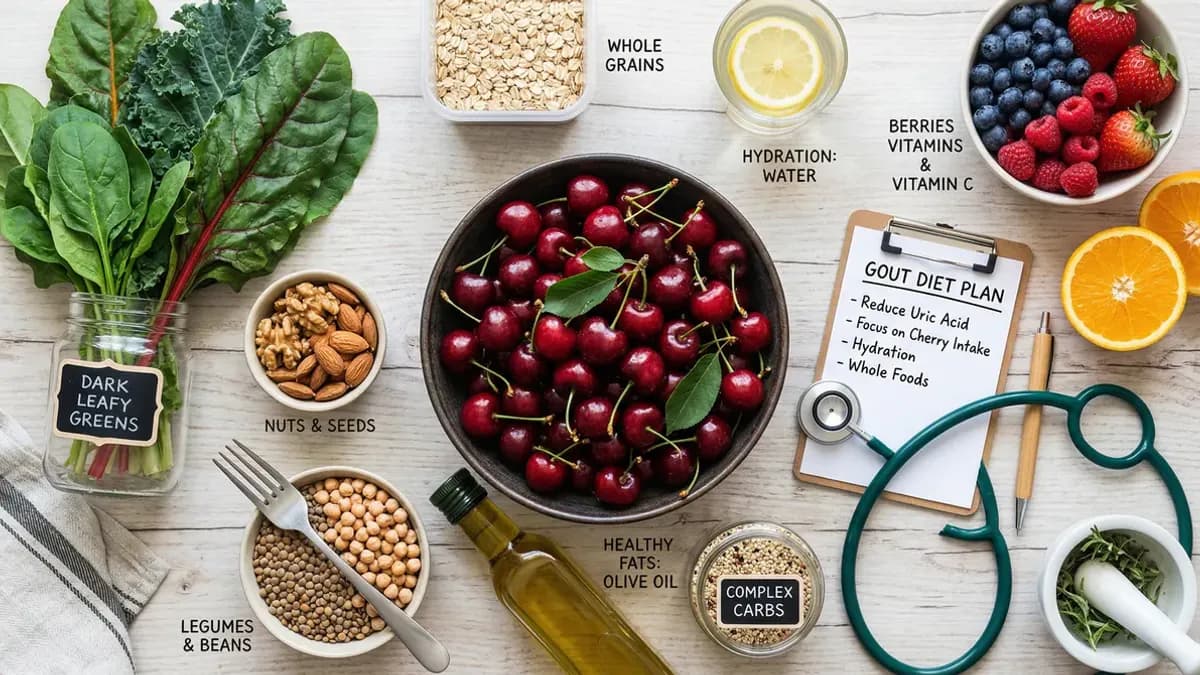
- Cherries, low-fat dairy, whole grains, and adequate water may reduce gout attack frequency
- Fructose from soft drinks and juice raises uric acid as strongly as alcohol — widely underestimated
- Coffee and vitamin C are associated with lower uric acid levels in observational research
- Diet complements rather than replaces medication for people with frequent attacks or hyperuricaemia
How gout develops
Purines are compounds found naturally in many foods and in the body's own cells. When purines are metabolised, uric acid is produced. Normally, uric acid is filtered by the kidneys and excreted in urine. In people with gout, either uric acid production is too high, kidney excretion is too low, or both.
When serum uric acid rises above approximately 360 micromol/L, urate crystals can precipitate in joints, tendons, and surrounding tissues. These crystals trigger a severe inflammatory response — the gout attack.
Risk factors include genetics, obesity, kidney function, sex (men have naturally higher baseline uric acid), age, and diet. Diet is the most modifiable of these.
What to limit or avoid
Organ meats and red meat
Liver, kidney, heart, and sweetbreads are extremely high in purines. Red meat — beef, pork, lamb — also contains significant amounts. Limit red meat to twice a week at most and avoid organ meats as much as possible.
Shellfish and certain seafood
Mussels, prawns, lobster, squid, and sardines have high purine content. These can directly trigger gout attacks in susceptible individuals.
Alcohol, especially beer
Beer is the single strongest dietary risk factor for gout. It contributes purines (via guanosine) and impairs renal uric acid excretion. Wine in moderate amounts (one glass per day) has less impact, but all alcohol elevates uric acid to some degree.
Sugary drinks and fruit juice
Fructose — the sugar in soft drinks, fruit juice, and many sports drinks — raises uric acid through a separate metabolic pathway from purines but with comparable effect. Research published in the BMJ (2008) found that daily consumption of sugar-sweetened beverages increased gout risk similarly to regular beer drinking. This is significantly underappreciated.
Processed foods with high-fructose corn syrup
Many processed foods contain hidden fructose syrups. Check ingredient labels for terms like glucose-fructose syrup or corn syrup.
What helps
Cherries and dark berries
Cherries are the most studied food with a protective effect against gout. A prospective study in Arthritis & Rheumatism (2012) found that cherry consumption over a two-day period reduced the risk of gout attacks by 35 percent. The effect is attributed to anthocyanins, which inhibit inflammatory pathways. Dark berries including blackberries and blueberries also contain anthocyanins.
Low-fat dairy
Milk, low-fat yoghurt, and cottage cheese are associated with lower uric acid levels. The uricosuric effect of casein and lactalbumin has been demonstrated in several studies. The effect is stronger with low-fat dairy than full-fat; cheese has minimal effect.
Whole grains and vegetables
Complex carbohydrates from whole grain bread, oats, brown rice, and vegetables do not raise uric acid. They provide dietary fibre that supports a healthy weight, which independently lowers uric acid levels.
Adequate water intake
Hydration is essential for uric acid excretion via the kidneys. Aim for at least 2 litres of water daily, more in hot weather or with physical activity. Water is the best drink for people with gout.
Coffee
Multiple large observational studies show an inverse association between coffee consumption and both serum uric acid and gout incidence. Three to four cups daily is associated with significantly lower uric acid levels. The mechanism appears to extend beyond caffeine — decaffeinated coffee also shows some effect.
Vitamin C
Vitamin C may increase renal uric acid excretion. Supplementation of 500 mg per day has been associated with measurable uric acid reductions in clinical studies. Dietary sources include red peppers, citrus fruits, and broccoli.
A practical day of eating
Breakfast: Porridge with blueberries and low-fat yoghurt. Coffee or tea.
Lunch: Wholegrain bread with chicken breast or canned tuna (in water), cucumber and tomato. Water.
Dinner: Baked chicken or salmon with steamed broccoli, carrots, and brown rice.
Snacks: A handful of cherries or dark berries, a glass of semi-skimmed milk, or a small portion of low-fat cottage cheese.
Diet as a complement to medication
For people with more than two attacks per year, or confirmed hyperuricaemia without acute attacks, a doctor may prescribe uric acid-lowering medication such as allopurinol or febuxostat. Dietary changes are a valuable complement but do not replace this treatment.
During an acute gout attack, diet does not stop the inflammation — anti-inflammatory drugs (NSAIDs, colchicine, or corticosteroids) are needed. Dietary changes work on prevention, not acute management.
Tracking your meals allows you to correlate specific foods and meals with attack timing — useful data to share with your doctor when reviewing your management plan.
Sources
- Zhang Y et al. (2012). Cherry consumption and decreased risk of recurrent gout attacks. Arthritis & Rheumatism. https://doi.org/10.1002/art.34676
- Choi HK et al. (2004). Purine-rich foods, dairy and protein intake, and the risk of gout in men. New England Journal of Medicine. https://doi.org/10.1056/NEJMoa035700
- Choi HK & Curhan G (2008). Soft drinks, fructose consumption, and the risk of gout in men. BMJ. https://doi.org/10.1136/bmj.39449.819271.BE
- See also: Calorie tracking for beginners and How to calculate a calorie deficit