
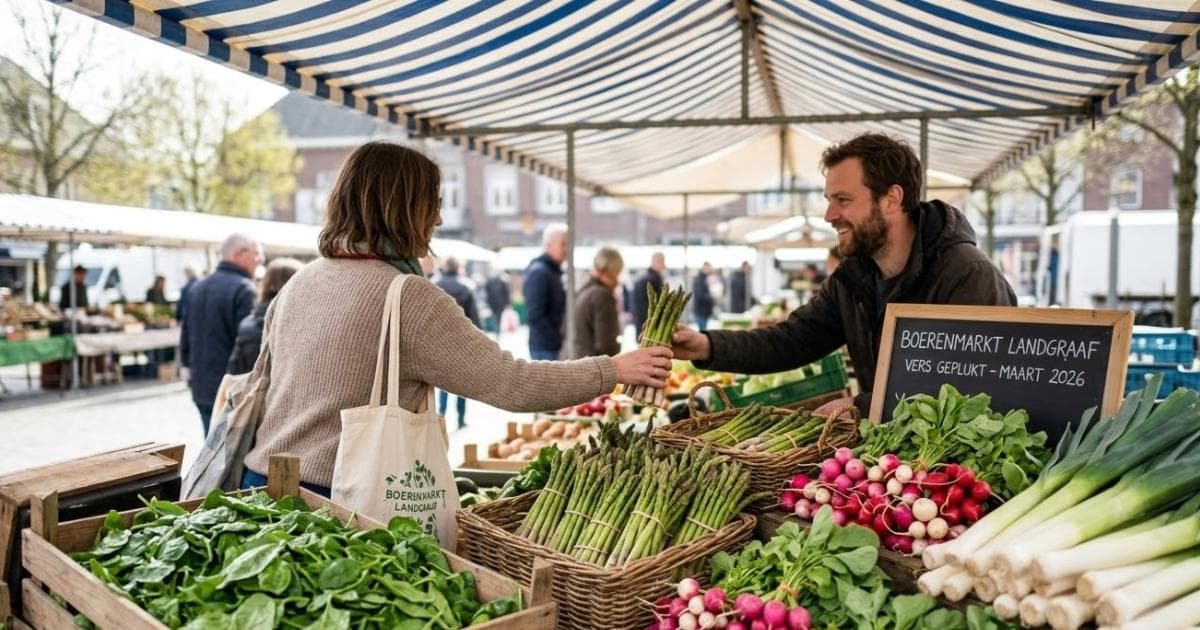
Quick answer: March is the month for leeks, spinach and turnip greens. Which seasonal vegetables should you eat right now, and what do they offer nutritionally?
It is March and spring is slowly making itself known. Markets and supermarkets are stocking vegetables that are at their absolute peak. Eating seasonally is not just better for the environment and your wallet — it simply tastes better too.
But which vegetables are actually in season right now? And what do they offer in terms of nutrition? In this guide, we list the key seasonal vegetables of March in the Netherlands and Northern Europe, including their calorie counts and nutritional values.
Key takeaways
- March is a transitional month with both the last winter vegetables (Brussels sprouts, celeriac) and the first spring produce (spinach, turnip greens) available.
- Seasonal vegetables are low in calories: spinach has just 23 kcal per 100g, turnip greens 22 kcal, and cauliflower 25 kcal.
- Brussels sprouts are the fibre champion at 3.8g per 100g and contain 85mg of vitamin C — more than most fruits.
- Turnip greens (raapstelen) are a typically Dutch seasonal vegetable with an unusually high calcium content of 190mg per 100g, only available from February to April.
- Eating seasonally means better flavour, more nutrients, lower prices and less environmental impact — without requiring much effort.
Why eat seasonal vegetables?
Eating with the seasons may sound like something for food bloggers, but there are real benefits.
- Flavour. Vegetables that grow in their natural season have more taste. They are at their biological peak.
- Nutrition. Seasonal vegetables often contain more vitamins and minerals than greenhouse-grown produce harvested out of season.
- Price. What is abundant is cheaper. Seasonal vegetables are almost always more affordable.
- Environment. Less transport, less greenhouse heating, less food waste.
And the best part: you do not need to overthink it. Check what is on offer at your supermarket and you are probably already eating partly seasonal.
Which vegetables are at their best in March?
March is a transitional month. The last winter vegetables are still around, and the first spring vegetables are arriving. That makes it a particularly varied month for produce.
1. Leeks — the versatile winter-to-spring vegetable
Leeks are at their best in March. They fit into almost anything: soup, casserole, quiche, mashed potatoes or simply pan-fried as a side dish.
- Calories: 29 per 100 grams
- Fibre: 1.8 grams per 100 grams
- Vitamin K: high — important for bone health
- Folate: supports red blood cell production
2. Spinach — the green powerhouse
Fresh spinach is widely available in March. It is easy to digest, versatile and packed with nutrients.
- Calories: 23 per 100 grams
- Iron: 2.7 mg per 100 grams
- Vitamin A: important for eyes and skin
- Fibre: 2.2 grams per 100 grams
Tip: pair spinach with something acidic (lemon, tomato) to improve iron absorption.
3. Turnip greens (raapstelen) — the forgotten vegetable
Turnip greens are a typically Dutch seasonal vegetable, only available in early spring. They have a mild, slightly bitter flavour and work beautifully in mashed dishes or tossed through pasta.
- Calories: 22 per 100 grams
- Vitamin C: high — supports your immune system
- Calcium: more than you would expect — 190 mg per 100 grams
- Season: February to April — now is the time
4. Cauliflower — the quiet hero
Cauliflower is available year-round but is especially good in March. It is one of the most versatile vegetables around.
- Calories: 25 per 100 grams
- Vitamin C: 48 mg per 100 grams
- Fibre: 2 grams per 100 grams
- Tip: roast cauliflower in the oven with a little olive oil and cumin for a surprisingly delicious flavour.
5. Brussels sprouts — the flavour bomb
The last Brussels sprouts of the season are still available in March. If you missed them earlier this winter, this is your final chance.
- Calories: 43 per 100 grams
- Fibre: 3.8 grams per 100 grams — one of the most fibre-rich vegetables
- Vitamin C: 85 mg per 100 grams
- Vitamin K: extremely high
Brussels sprouts are also a star if you are working on eating more fibre. At 3.8 grams per 100 grams, they score well above average.
6. Carrots — always a good idea
Carrots are available year-round, but stored winter carrots from local soil are still flavourful and nutritious in March.
- Calories: 41 per 100 grams
- Beta-carotene: high — the precursor to vitamin A
- Fibre: 2.8 grams per 100 grams
7. Celeriac — the underrated root
Celeriac deserves more attention. It is delicious in soup, mash or as a partial replacement for potatoes in any dish.
- Calories: 42 per 100 grams
- Fibre: 1.8 grams per 100 grams
- Vitamin K: supports blood clotting
How many calories are in a meal with seasonal vegetables?
A typical Dutch plate featuring seasonal March vegetables might look like this:
| Meal | Calories |
|---|---|
| Leek and bacon mash (stamppot) | roughly 450 per serving |
| Spinach with fried egg and wholegrain bread | roughly 380 |
| Cauliflower soup | roughly 180 per bowl |
| Turnip greens mash (stamppot) | roughly 400 per serving |
Want to know more precisely how many calories are on your plate? Our beginner's guide to calorie counting explains how to get started. Or make it easy: with Moveno you take a photo of your plate and instantly see the calories, fibre and vitamins. Even when you toss leeks into your mash or stir spinach through your pasta.
How to store seasonal vegetables
Proper storage keeps your vegetables fresh and nutritious for longer.
- Leeks: in the fridge, loose in the vegetable drawer — keeps up to 2 weeks.
- Spinach: use as soon as possible. Maximum 3 to 4 days in the fridge.
- Cauliflower: in the fridge, in a perforated bag — up to 1 week.
- Brussels sprouts: in the fridge — up to 1 week. Freezing works too: blanch them for 3 minutes first.
- Carrots: in the fridge without the greens — keeps up to 3 weeks.
Frequently asked questions about seasonal vegetables in March
Are frozen vegetables as nutritious as fresh?
Yes, in many cases they are. Frozen vegetables are flash-frozen right after harvest, which preserves vitamins well. If fresh seasonal produce is not available, frozen is a perfectly good alternative.
Which March seasonal vegetable has the most fibre?
Brussels sprouts win with 3.8 grams of fibre per 100 grams. Carrots follow (2.8 grams) and spinach comes next (2.2 grams). Want to learn more about how much fibre you need per day? Read our complete fibre guide.
How do I know if vegetables are truly in season?
Check the country of origin on the label. Local produce in the right month is almost always seasonal. At a farmers' market, you can ask the vendor directly.
Can I combine seasonal vegetables with calorie tracking?
Absolutely. Seasonal vegetables are typically low in calories and rich in nutrients — ideal if you want to eat mindfully. With an app like Moveno, you can effortlessly track what you eat and discover the nutritional values of every dish.
Eat what the season offers
March provides a wonderful range of vegetables. From hearty Brussels sprouts and celeriac carried over from winter to the first fresh spinach and turnip greens of spring. Choose consciously for what is at its best right now and you will not only eat tastier food, but also healthier and more affordable meals.
Curious about how many nutrients are on your plate of seasonal vegetables? Try Moveno free for 14 days and find out in seconds.
Join the waitlist and get early access.
Sources
- RIVM. NEVO-online: Dutch Food Composition Database. nevo-online.rivm.nl
- Voedingscentrum. Vegetables — nutrition facts and preparation tips. voedingscentrum.nl
- Milieu Centraal. Environmentally conscious eating. milieucentraal.nl