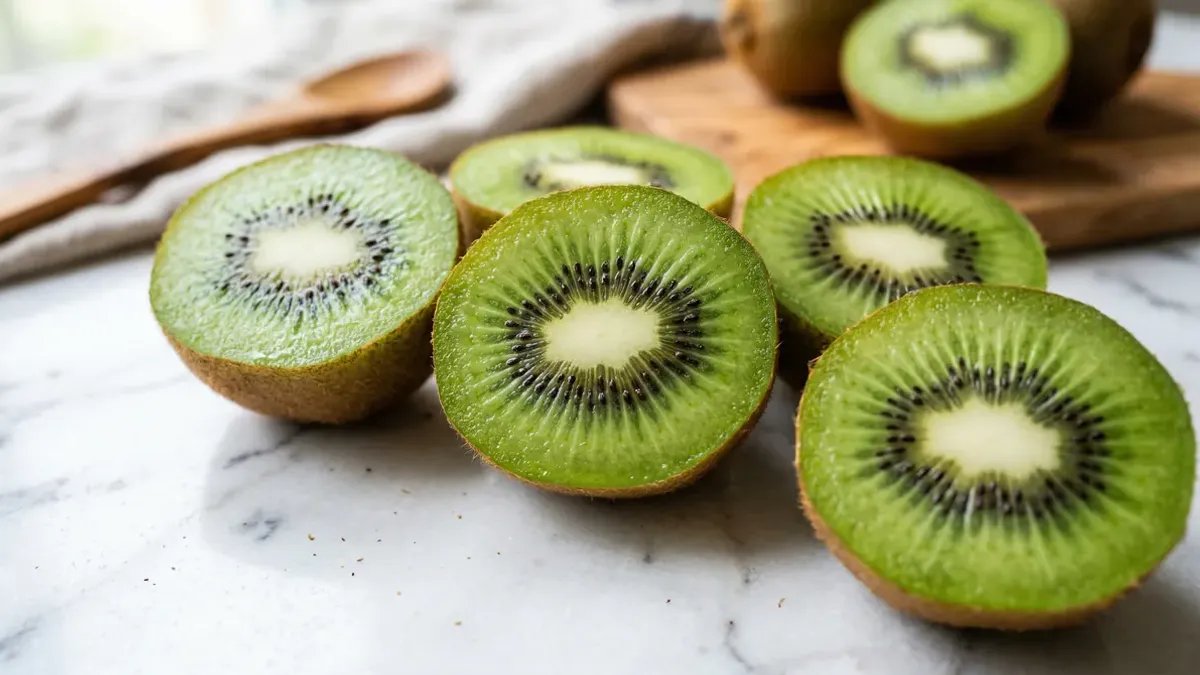
Small, fuzzy, and vivid green inside -- the kiwi may not be the first fruit you think of, but it is one of the most nutritionally impressive. With remarkably few calories and an exceptionally high vitamin C content, the kiwi deserves far more attention than it typically receives. How many calories does it actually contain? What is the difference between the green and golden variety? And is it true that kiwis can improve your digestion? Here are the facts.
Key takeaways
- A green kiwi (69 g) contains just 42 calories, making it one of the lowest-calorie fruits available.
- Kiwis are among the best sources of vitamin C: 92.7 mg per 100 g, nearly twice as much as an orange.
- The enzyme actinidin in kiwis may help improve protein digestion, supported by published research.
- Golden kiwis are sweeter and contain slightly more calories but less fibre than the green variety.
- Two kiwis count as one serving of fruit and already exceed your daily vitamin C requirement.
- Kiwis provide 3 grams of fibre per 100 g, making them a solid source of dietary fibre.
How many calories are in a kiwi?
A medium green kiwi weighing approximately 69 grams contains just 42 calories. That makes the kiwi one of the lowest-calorie fruits you can buy.
Here is the full nutritional breakdown:
| Nutrient | Per green kiwi (69 g) |
|---|---|
| Calories | 42 kcal |
| Carbohydrates | 10 g |
| Fibre | 2.1 g |
| Sugars | 6.2 g |
| Protein | 0.8 g |
| Fat | 0.4 g |
| Vitamin C | 64% DV |
| Vitamin K | 28% DV |
Per 100 grams, green kiwis contain approximately 61 calories. That is comparable to an apple (52 kcal) and significantly less than a banana (89 kcal).
Note that portion sizes vary between data sources. The USDA defines a medium kiwi as 69 grams, while the Dutch Voedingscentrum uses 75 grams (46 kcal). Always check which reference a source is using when comparing nutritional data.
Green kiwi vs. golden kiwi: what is the difference?
Supermarkets typically stock two main varieties: the green kiwi (Hayward) and the golden kiwi (Zespri SunGold). They look similar on the outside but differ meaningfully in taste and nutrition.
| Property | Green kiwi (69 g) | Golden kiwi (69 g) |
|---|---|---|
| Calories | 42 kcal | 46 kcal |
| Carbohydrates | 10 g | 10.8 g |
| Fibre | 2.1 g | 0.9 g |
| Sugars | 6.2 g | 8.5 g |
| Vitamin C | 64% DV | 107% DV |
| Vitamin K | 28% DV | 3% DV |
The golden kiwi is noticeably sweeter with higher sugar content but less fibre. The green kiwi has a tangier flavour and nearly double the fibre. Both are excellent fruit choices -- it comes down to personal preference.
In terms of vitamin C, both varieties are outstanding. The golden kiwi actually contains even more vitamin C than the green. For a broader comparison across fruits, see our complete fruit calorie chart.
Why is the kiwi a vitamin C powerhouse?
The most remarkable nutritional feature of the kiwi is its exceptionally high vitamin C content. A green kiwi contains approximately 92.7 mg of vitamin C per 100 grams. For comparison, an orange contains about 53 mg per 100 grams. The kiwi delivers nearly double the amount.
What does that mean practically? A single green kiwi covers a large portion of the recommended daily intake of vitamin C (90 mg for adult men, 75 mg for adult women). Eat two kiwis and you are well above the daily target.
Vitamin C plays important roles in several bodily functions:
- Immune function. Vitamin C may contribute to the normal functioning of your immune system. This is particularly relevant during autumn and winter months.
- Iron absorption. Vitamin C enhances the absorption of iron from plant-based foods. Eating a kiwi alongside a meal with legumes or whole grains helps your body utilise iron more effectively.
- Skin and connective tissue. Vitamin C is required for collagen production, a protein essential for skin health, joint integrity, and blood vessel function.
Looking for fruits with even more fibre? Read our guide on how much fibre you need per day.
Can kiwis improve your digestion?
Kiwis contain the enzyme actinidin, a cysteine protease that may help with protein digestion. Actinidin constitutes up to 40 percent of the soluble protein in green kiwifruit.
Research published in the Journal of Agricultural and Food Chemistry has shown that actinidin can accelerate the breakdown of various protein sources, including dairy proteins like casein, meat proteins, and wheat gluten. This effect occurs primarily in the stomach, where actinidin is active at low pH levels.
In practice, this means that eating a kiwi as dessert after a protein-rich meal may contribute to more comfortable digestion. Green kiwis contain more actinidin than golden kiwis, which explains why green kiwis sometimes cause a tingling sensation on your tongue -- that is the enzyme reacting with the proteins in your saliva.
How does the kiwi fit into your daily calories?
At just 42 calories per fruit, the kiwi is one of the lightest fruit options available. Here is how it compares to common snacks:
| Snack | Calories |
|---|---|
| Green kiwi (69 g) | 42 kcal |
| Medium apple (182 g) | 95 kcal |
| Banana (118 g) | 105 kcal |
| Granola bar | 140 kcal |
| Chocolate chip cookie | 200 kcal |
Two kiwis together still contain fewer calories than a single apple. That makes the kiwi particularly well-suited as a light snack or a topping for your morning breakfast.
Want a clearer picture of your daily calorie needs? Read our guide to daily calorie requirements.
Kiwi vs. other fruits: the comparison
Here is how the kiwi stacks up against other popular fruits per 100 grams:
| Fruit | Calories per 100 g | Vitamin C per 100 g |
|---|---|---|
| Strawberries | 32 kcal | 58 mg |
| Watermelon | 30 kcal | 8 mg |
| Orange | 47 kcal | 53 mg |
| Apple | 52 kcal | 5 mg |
| Green kiwi | 61 kcal | 93 mg |
| Banana | 89 kcal | 9 mg |
The kiwi sits in the middle range for calories but dominates in vitamin C content. Only strawberries come close, and even they contain significantly less per 100 grams.
For the complete comparison, check our fruit calorie chart.
Practical tips for adding kiwis to your meals
- Eat the skin. It may sound unusual, but the skin of a green kiwi is edible and provides extra fibre. Wash the kiwi thoroughly and trim the ends. Not everyone enjoys the fuzzy texture, but it is worth trying. Golden kiwis have a smoother skin that is easier to eat.
- As a breakfast topping. Slice a kiwi over yoghurt or porridge. The vitamin C helps your body absorb iron from your cereal or oats.
- Two kiwis as a serving. Two kiwis weigh approximately 140 grams, which counts as a serving of fruit. Most dietary guidelines recommend two servings of fruit per day.
- Store in the refrigerator. Ripe kiwis keep for up to two weeks in the fridge. Unripe kiwis can be ripened at room temperature next to a banana -- the ethylene gas accelerates the process.
- As a meat tenderiser. Thanks to the actinidin enzyme, pureed kiwi works as a natural meat tenderiser. Mix it into a marinade for chicken or pork and let it sit for 30 minutes to an hour.
Curious about how many calories are in an egg? It is another popular breakfast item that pairs well with fruit.
Frequently asked questions about kiwis and calories
How many calories does a golden kiwi have? A golden kiwi (69 g) contains approximately 46 calories, slightly more than the green variety (42 kcal). Golden kiwis are sweeter with more sugar but less fibre.
Are kiwis good for weight management? Yes. At just 42 calories per fruit with 2.1 grams of fibre, kiwis are very low in calories. The combination of low energy density and the enzyme actinidin (which may support digestion) makes the kiwi an ideal fruit choice if you are watching your weight.
How much vitamin C is in a kiwi? A green kiwi contains approximately 92.7 mg of vitamin C per 100 grams, nearly double that of an orange. A single kiwi covers most of your daily vitamin C requirement.
Can you eat the skin of a kiwi? Yes, the skin of both green and golden kiwis is safe to eat and provides additional fibre. Wash thoroughly under running water and trim the hard ends. The golden variety has a smoother skin that many people find more palatable.
Add kiwis to your daily fruit rotation
The kiwi is compact, low in calories, and packed with vitamin C. At just 42 calories per fruit, it is one of the lightest and most nutrient-dense options you can choose. Whether you want to boost your vitamin C intake, support your digestion, or simply enjoy a satisfying snack -- the kiwi deserves a regular spot in your fruit bowl.
Want to know exactly what is in your kiwi and everything else you eat? With Moveno, you take a photo of your food and instantly see the full nutritional breakdown. No guessing, no manual data entry. Our complete guide to calorie counting shows you how to make this effortless.