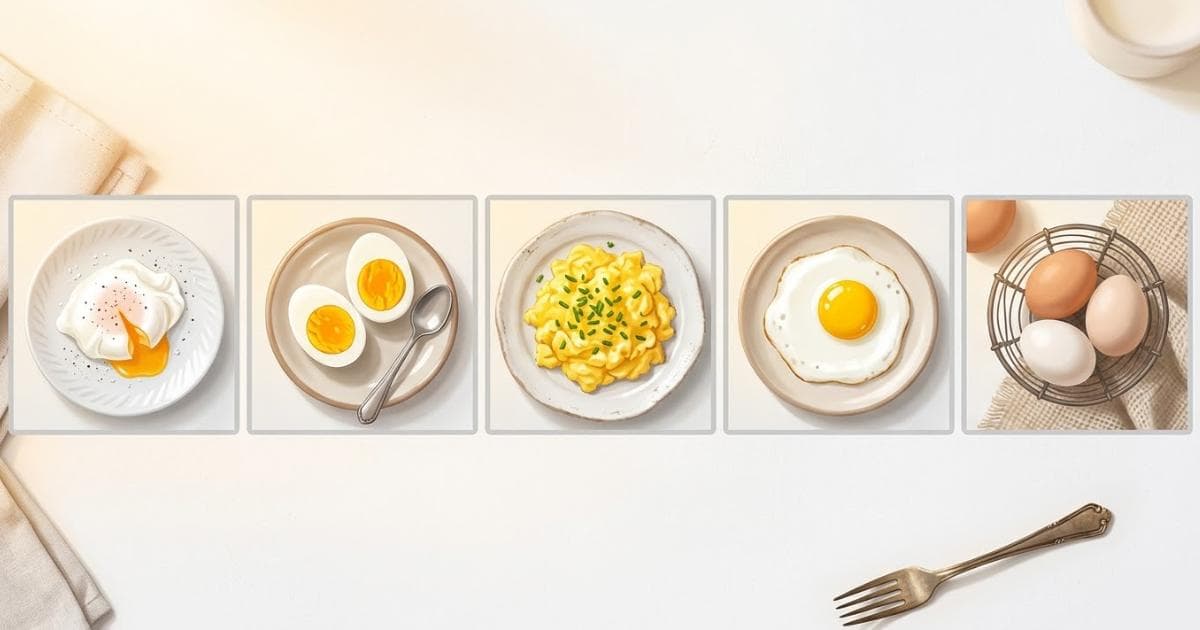
Eggs are one of the most versatile foods in any kitchen. On toast, in a salad, scrambled for breakfast — they show up everywhere. But how many calories are actually in an egg? And does the way you cook it make a difference?
In this guide, you will find a complete breakdown of egg calories — by preparation method, by component (white vs. yolk) and by size. All nutritional values are based on verified food composition databases. If you are just getting started with tracking your food intake, you may also want to read our complete guide to calorie counting.
Key takeaways
- A medium egg (~58g) contains 77 calories. Boiling or poaching adds zero extra calories.
- Frying in butter adds 25 to 40 kcal per egg. The cooking method matters more than the egg itself.
- The egg white has 17 kcal, the yolk 54 kcal. But the yolk delivers most of the vitamins and minerals.
- Dietary guidelines recommend two to three eggs per week as part of a varied, balanced diet.
- Eggs are one of the most affordable protein sources. With 6.2 grams of protein per egg at a fraction of the cost of meat.
How many calories are in an egg?
A medium chicken egg (approximately 58 grams) contains 77 calories. However, the preparation method significantly affects the total:
| Preparation method | Calories per egg | Difference vs. raw |
|---|---|---|
| Raw egg | 77 kcal | — |
| Boiled egg (hard or soft) | 77 kcal | ±0 |
| Poached egg | 77 kcal | ±0 |
| Fried egg (no fat) | 90 kcal | +13 kcal |
| Fried egg (with 10g butter) | 115 kcal | +38 kcal |
| Scrambled eggs (2 eggs, milk and butter) | 220 kcal | +33 kcal (per egg) |
| Omelette (2 eggs, with butter) | 190 kcal | +18 kcal (per egg) |
The key takeaway: the egg itself is not the issue — it is the fat you cook it in that drives the calorie count up. Want to understand how this fits into your daily energy needs? Check out our guide on calculating your calorie deficit.
How many calories are in a boiled egg?
A boiled egg contains 77 kcal — exactly the same as a raw egg. Boiling adds no calories, and virtually no nutrients are lost. That makes a boiled egg the "purest" way to eat an egg.
| Egg size | Weight (without shell) | Calories |
|---|---|---|
| S (small) | ~47g | 62 kcal |
| M (medium) | ~58g | 77 kcal |
| L (large) | ~67g | 88 kcal |
| XL (extra large) | ~75g | 99 kcal |
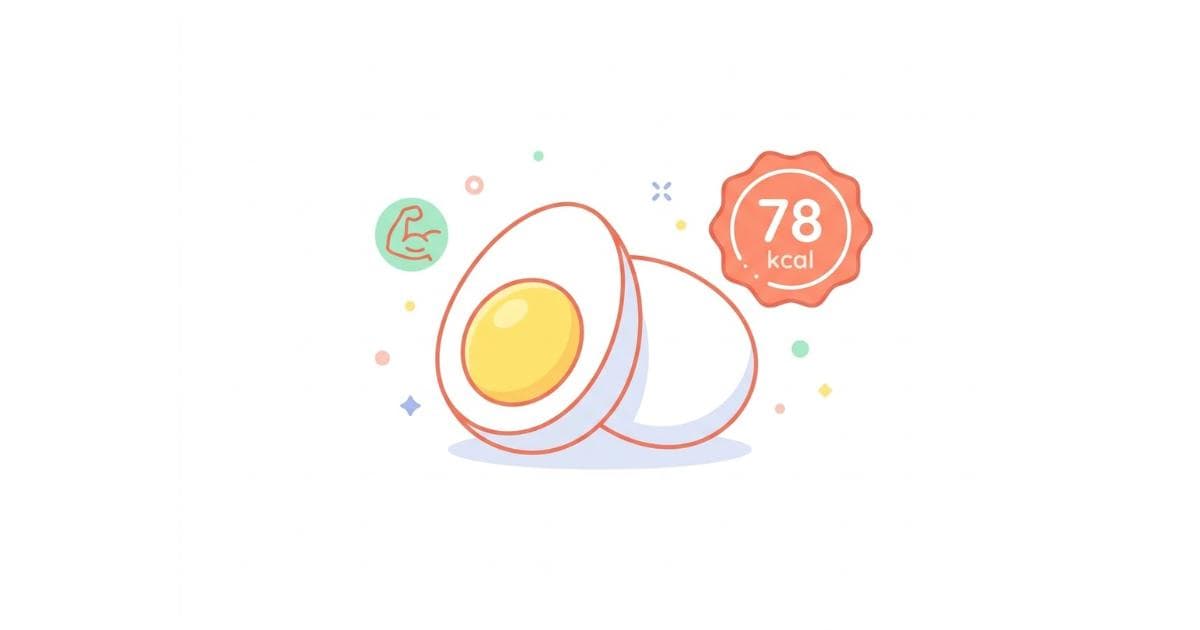
A boiled egg makes an excellent snack: compact, protein-rich and easy to take with you. Two medium boiled eggs together contain about 154 kcal and deliver 12.4 grams of protein — comparable to a small piece of chicken breast.
How many calories are in a fried egg?
This is where the difference becomes clear. A fried egg without fat (in a non-stick pan) contains approximately 90 kcal — 13 more than boiled, because some water evaporates during frying.
But most people fry their eggs in butter or oil:
| Preparation method | Calories per egg |
|---|---|
| Fried without fat | 90 kcal |
| Fried in 5g butter | 102 kcal |
| Fried in 10g butter | 115 kcal |
| Fried in 10g olive oil | 118 kcal |
| Sunny-side up in 10g butter | 115 kcal |
Tip. Fry your egg in a good non-stick pan with a light spray of olive oil. You will save 25 to 40 kcal per egg compared to a generous knob of butter.
Egg white vs. yolk: where are the calories?
The difference between the egg white and yolk is striking:
| Component | Weight (medium egg) | Calories | Protein | Fat |
|---|---|---|---|---|
| Whole egg | ~58g | 77 kcal | 6.2g | 4.6g |
| Egg white | ~33g | 17 kcal | 3.6g | 0.1g |
| Yolk | ~15g | 54 kcal | 2.5g | 4.9g |
The yolk contains roughly three times the calories of the white. But do not throw that yolk away — it also contains most of the nutrients:
- Vitamin D. One of the few dietary sources available.
- Vitamin B12. Essential for your nervous system.
- Choline. Important for brain function.
- Iron and zinc. Minerals that many people do not get enough of.
- Omega-3 fatty acids. Especially present in free-range and organic eggs.
If you are strictly watching calories, you could occasionally use only whites — for example, three whites plus one whole egg for an omelette. But for most people, the nutritional benefits of the whole yolk are well worth the extra calories. Want to better understand how to read nutrition labels? That skill helps when comparing egg products at the supermarket.
Can eggs help with weight loss?
Eggs can be a valuable addition to your diet if you are trying to lose weight. Here is why:
- High protein content. With 6.2 grams of protein per egg and only 77 kcal, eggs have an excellent protein-to-calorie ratio. Protein may keep you feeling full longer than carbohydrates or fats.
- High satiety. Research suggests that a protein-rich breakfast may contribute to reduced hunger and lower calorie intake throughout the rest of the day.
- Versatility. Boiled, fried, scrambled, in a salad, on toast — you can prepare eggs in dozens of ways without getting bored.
- Affordable. Eggs are one of the most cost-effective protein sources available, making them accessible regardless of budget.

How many eggs per week is healthy?
Most dietary guidelines recommend two to three eggs per week as part of a varied eating pattern. The concern around dietary cholesterol in eggs has been partially revised. Current evidence suggests that saturated fat in your overall diet has a greater impact on blood cholesterol than the cholesterol found in foods like eggs.
However, consuming seven or more eggs per week may be associated with higher risk of type 2 diabetes according to some research. If you have elevated cholesterol, it is worth discussing your egg intake with your doctor.
Calories in popular egg dishes
Eggs appear in many dishes beyond a simple boiled egg:
| Dish | Portion | Calories |
|---|---|---|
| Boiled egg on toast | 1 egg + 1 slice wholemeal | ~155 kcal |
| Egg salad | 2 tablespoons (~50g) | ~140 kcal |
| Omelette (2 eggs, cheese, vegetables) | 1 serving | 280 to 320 kcal |
| Scrambled eggs (2 eggs with milk) | 1 serving | ~220 kcal |
| Shakshuka (2 eggs in tomato sauce) | 1 serving | ~250 kcal |
| Pancake (2 eggs, flour, milk) | 1 pancake | ~190 kcal |
| Crêpe (1 egg, flour, milk) | 1 crêpe | ~110 kcal |
How to save calories with eggs
A few simple adjustments can significantly reduce your calorie intake without sacrificing flavour:
1. Boil instead of fry
Save 25 to 40 kcal per egg by choosing boiled or poached. No oil, no butter, same nutritional value.
2. Use a non-stick pan
A quality non-stick pan eliminates the need for butter or oil. A light spray of olive oil is all you need.
3. Mix whole eggs with extra whites
Make your omelette with one whole egg plus two whites: full flavour, fewer calories. You save roughly 108 kcal compared to three whole eggs.
4. Watch your toppings
Cheese, mayonnaise and butter on bread often add more calories than the egg itself. A slice of wholemeal toast with egg and a pinch of pepper is surprisingly satisfying.
5. Choose free-range when you can
There is no calorie difference. But free-range and organic eggs tend to contain slightly more omega-3 fatty acids and vitamin D than caged eggs.
Frequently asked questions
How many calories are in a boiled egg? A boiled egg (medium, ~58g) contains 77 kcal. A small egg (size S) has about 62 kcal, a large egg (size L) about 88 kcal. Boiling does not change the calorie count.
How many calories are in a fried egg? A fried egg without fat contains about 90 kcal. With 10 grams of butter, that increases to 115 kcal per egg. The preparation method makes a difference of 25 to 40 calories.
Are eggs good for weight loss? Eggs can support weight loss. They are high in protein (6.2g per egg), low in calories (77 kcal) and may help you feel satisfied longer. Research suggests that a protein-rich breakfast can contribute to lower overall calorie intake during the day.
How many calories does just the egg white have? The egg white contains only 17 kcal and 3.6 grams of protein, with virtually no fat. The yolk contains 54 kcal along with most of the fat and nutrients.
How many eggs per week is healthy? Most guidelines recommend two to three eggs per week as part of a balanced diet. If you have elevated cholesterol, consult your doctor.
Does it matter if an egg is free-range or organic in terms of calories? No, there is no calorie difference. Free-range and organic eggs do contain slightly more omega-3 fatty acids and vitamin D, but the calories are identical.
Track your egg meals effortlessly with Moveno
Want to know exactly how many calories your egg breakfast contains? With Moveno, you take a photo of your plate and instantly see all the nutritional values — based on verified food databases. No manual searching, no guesswork.