Chicken is by far the most popular meat in Dutch households. We eat it grilled, pan-fried, in soup, as a wrap, or as the base for a curry. But what is actually in it? And what is the difference in nutritional values between a chicken breast, a thigh, or a piece of rotisserie chicken?
Key takeaways
- Chicken breast (raw). Contains roughly 105 kcal per 100g, 22g protein and only 1–2g fat — one of the leanest protein sources available
- Chicken thigh (raw, skinless). Approximately 130 kcal per 100g, 18g protein and 6g fat — juicier but more calorie-dense
- Preparation method makes a big difference. Pan-frying in oil adds ~90 kcal per tablespoon; breaded and deep-fried nearly doubles the calories
- Skin on or off? Chicken thigh with skin contains about 210 kcal per 100g raw — over 60% more than skinless
- Outstanding protein source. 100g cooked chicken breast provides roughly 31g protein — ideal for muscle maintenance and satiety
How many calories are in chicken?
Based on NEVO data (Dutch Food Composition Database):
| Chicken cut / preparation | Per 100g | Protein | Fat |
|---|---|---|---|
| Chicken breast, raw | ~105 kcal | 22g | 1.5g |
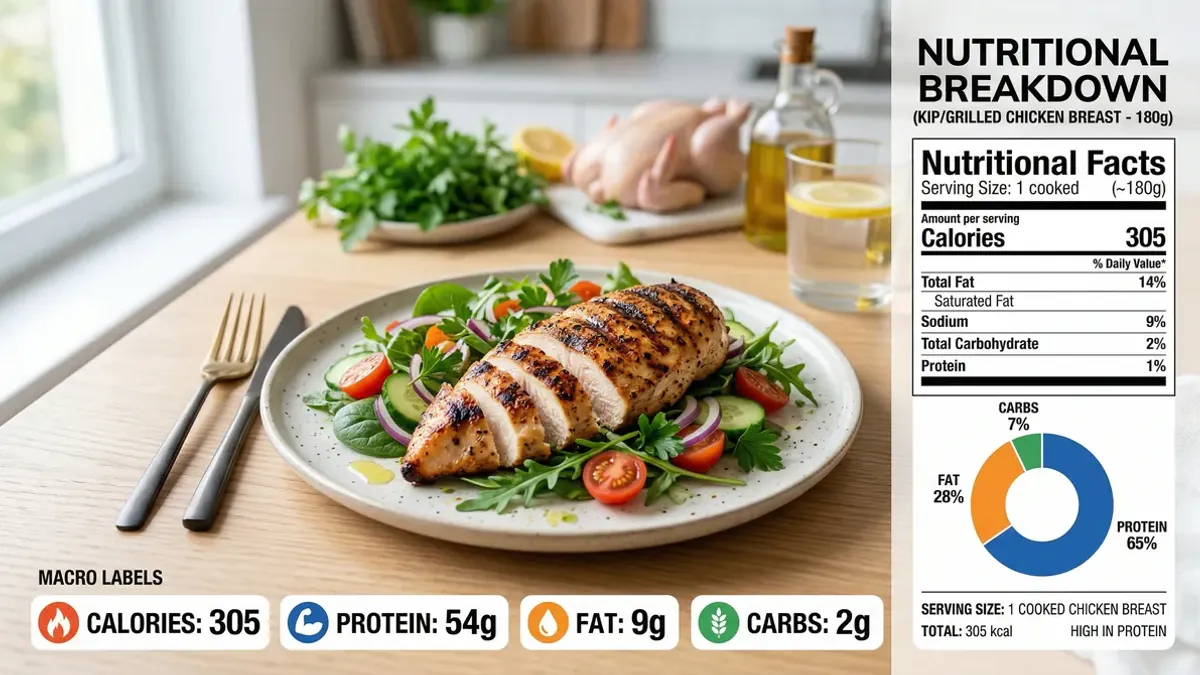
| Chicken breast, boiled | ~165 kcal | 31g | 3.6g |
| Chicken breast, grilled | ~160 kcal | 30g | 3.7g |
| Chicken breast, pan-fried (with oil) | ~195 kcal | 29g | 8g |
| Chicken thigh, skinless, raw | ~130 kcal | 18g | 6g |
| Chicken thigh, skinless, cooked | ~175 kcal | 26g | 8g |
| Chicken thigh, with skin, raw | ~210 kcal | 16g | 15g |
| Drumstick, grilled (without skin) | ~155 kcal | 27g | 5g |
| Chicken, breaded and fried | ~280 kcal | 19g | 17g |
| Rotisserie chicken (breast, no skin) | ~168 kcal | 27g | 7g |
Note: cooked chicken breast contains more calories per 100g than raw chicken breast. This is because chicken loses water during cooking, concentrating the dry matter — and therefore protein, fat, and calories — per 100g of finished product.
Complete nutritional values for chicken breast per 100g (cooked)
| Nutrient | Per 100g cooked |
|---|---|
| Energy | ~165 kcal |
| Protein | 31g |
| Fat | 3.6g |
| Of which saturated | 0.9g |
| Carbohydrates | 0g |
| Sodium | ~74 mg |
| Vitamin B3 (niacin) | ~14 mg |
| Vitamin B6 | ~0.9 mg |
| Selenium | ~27 µg |
| Zinc | ~2 mg |
Chicken is particularly rich in B vitamins, especially niacin (B3) and B6. Niacin plays a role in energy metabolism; B6 is involved in neurotransmitter production and immune function.
Chicken breast vs. chicken thigh: what is the difference?
This is the most frequently asked question about chicken nutrition. In summary:
| Feature | Chicken breast (cooked) | Chicken thigh (cooked, skinless) |
|---|---|---|
| Calories per 100g | ~165 kcal | ~175 kcal |
| Protein | 31g | 26g |
| Fat | 3.6g | 8g |
| Flavour | Mild, can be dry | Richer, juicier |
| Price | Higher | Lower |
Chicken breast wins on protein content and calorie efficiency; chicken thigh wins on flavour, juiciness, and price. For athletes seeking maximum protein with minimal calories, chicken breast is the clear choice. For those who prioritise flavour and budget, chicken thigh is excellent.
Preparation method: the biggest calorie factor
How you cook chicken often matters more than which cut you choose.
Boiling or steaming
The most calorie-efficient option. Chicken loses water but no fat to the cooking liquid. Boiled chicken breast: ~165 kcal per 100g.
Grilling
Nearly identical to boiling (~160 kcal per 100g), but delivers better flavour and texture through the Maillard reaction. Ideal when you want both great taste and calorie control.
Pan-frying in oil
Every tablespoon of oil adds ~90 kcal to the pan. When the chicken absorbs that oil, calories rise noticeably. Use minimal oil or a non-stick pan to reduce fat absorption.
Breading and deep-frying
Breadcrumbs absorb oil during frying. Breaded chicken nuggets or schnitzels can contain 250–300 kcal per 100g — almost double grilled chicken.
Rotisserie
Rotisserie chicken is generally relatively low in calories when you remove the skin (~168 kcal/100g breast without skin). Note: commercial rotisserie chicken is often marinated and may contain more sodium.
Chicken vs. other protein sources
How does chicken compare to other popular protein sources?
| Food (100g, prepared) | Calories | Protein | Fat |
|---|---|---|---|
| Chicken breast (boiled) | ~165 kcal | 31g | 3.6g |
| Salmon (cooked) | ~208 kcal | 25g | 12g |
| Beef (lean, grilled) | ~218 kcal | 29g | 11g |
| Egg (boiled) | ~155 kcal | 13g | 11g |
| Firm tofu | ~76 kcal | 8g | 4g |
| Skimmed quark | ~65 kcal | 11g | 0.2g |
Chicken breast has the best protein-to-calorie ratio of all animal protein sources in this comparison: 31g protein for only 165 kcal. See also the nutritional value of salmon if you want more variety in your protein sources.
Chicken for muscle building and weight loss
Chicken is popular with both those building muscle and those losing weight, for good reason:
For muscle building: 31g protein per 100g cooked chicken breast is exceptionally high. Protein is essential for muscle repair and growth. Read more about daily protein intake in our protein guide. Chicken is also ideal as a meal after training.
For weight loss: Chicken has a high satiety-to-calorie ratio. Protein has the highest thermic effect of all macronutrients — you burn more calories digesting protein than fat or carbohydrates. Calculate your calorie deficit to see results faster.
Practical tips for chicken in your eating pattern
Remove the skin
Chicken thigh with skin contains ~210 kcal per 100g raw; without skin ~130 kcal. The skin consists largely of saturated fat. If you want to save calories: remove the skin before or after cooking.
Marinate for flavour, not calories
Lemon, garlic, herbs and spices add almost no calories but plenty of flavour. Creamy marinades (yoghurt, oil, honey) do count toward your calorie total.
Meal prep is easy with chicken
Chicken is excellent for meal prep: cook or grill a large batch and store for 3–4 days in the refrigerator. Use in salads, wraps, soups, and stir-fries.
Use a meat thermometer
Chicken must reach an internal temperature of 75°C for safe consumption. A meat thermometer prevents both undercooking and overcooking to dry, tough meat.
Frequently asked questions
How much protein is in 100g of cooked chicken breast? Roughly 31g of protein per 100g — one of the highest protein densities of any commonly eaten food.
Is chicken healthy for daily consumption? Yes, chicken fits well into a varied eating pattern. Vary occasionally with other protein sources such as fish, legumes, or eggs for a broader intake of nutrients.
How many calories are in a 150g chicken breast? A 150g raw chicken breast contains roughly 158 kcal and ~33g protein. After cooking: approximately 168 kcal at comparable weight.
Is white or dark chicken meat healthier? Chicken breast (white meat) has more protein and less fat; chicken thigh (dark meat) has more flavour, more iron and zinc, and slightly more calories. Both are healthy — choose based on your goals and preferences.
Chicken: the versatile protein source
Chicken deservedly ranks among the most consumed meats in the world. The combination of high protein content, low calories (especially with breast), culinary versatility, and a relatively low price makes it hard to beat. Keep preparation method in mind — that is where the biggest calorie factor lies.
Want to track exactly how many calories and protein you consume? With Moveno, you photograph your meal and instantly see the nutritional values of your grilled chicken, including estimated portion size. Discover how simple food tracking can be.
Sources
- Dutch Food Composition Database (NEVO): nevo-online.rivm.nl
- Voedingscentrum, Chicken: voedingscentrum.nl/encyclopedie/kip
- Harvard T.H. Chan School of Public Health – Protein: hsph.harvard.edu/nutritionsource/what-should-you-eat/protein