
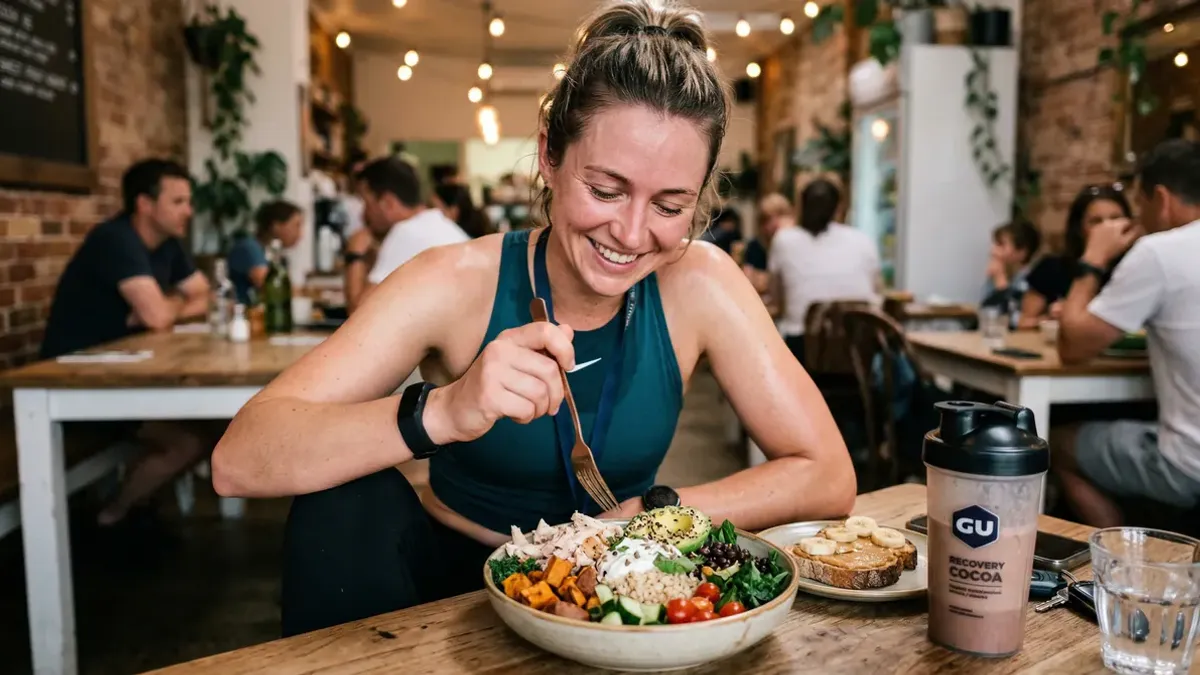
Why post-workout nutrition matters
After an intense training session, your muscles are damaged and your glycogen stores have been drawn upon or depleted. Your body is now primed to recover — but it needs the right building blocks. Eating after exercise serves two core functions: replenishing glycogen with carbohydrates and initiating muscle repair with protein.
Skip this meal and recovery takes longer, you feel more fatigued the next day and you miss a key opportunity to build or maintain muscle mass.
When should you eat after training?
For a long time, the concept of a strict "anabolic window" of 30–45 minutes post-workout was widely promoted. Recent research paints a more nuanced picture: the window is likely wider than previously thought, but timing remains relevant.
Recommendation: Eat a meal containing protein and carbohydrates within 2 hours of your training session. If you ate a substantial pre-workout meal shortly before, this window is less critical. If you trained fasted, the sooner you eat, the better.
A 2024 study published in Acta Physiologica found that delaying carbohydrate intake after training significantly reduced exercise capacity the following day, even when participants ultimately consumed the same total amount of glycogen. This suggests that the timing of post-exercise nutrition also affects recovery quality at a cellular level.
How much protein do you need after exercise?
Protein is essential for muscle repair and muscle protein synthesis. The evidence is clear: you need more than a token amount to maximise the recovery process.
Recommendation: 20–40 grams of protein after training. For most people, 0.3 g of protein per kilogram of body weight is a practical guideline.
Good post-workout protein sources:
- Cottage cheese or Greek yoghurt (approx. 10–17 g per 100 g)
- Chicken breast or turkey (approx. 31 g per 100 g)
- Eggs (approx. 13 g per 100 g)
- Salmon or tuna (approx. 25 g per 100 g)
- Whey or plant-based protein shake
- Legumes combined with wholegrain cereals (complete amino acid profile)
How many carbohydrates do you need after exercise?
Carbohydrates after training replenish glycogen stores. This is especially important if you train daily or twice per day and need rapid glycogen resynthesis.
Recommendation: 0.5–0.8 grams of carbohydrates per kilogram of body weight within the first hours after training. For less intense sessions or when recovery time is 24 hours or more, the urgency is lower.
Good sources:
- Wholegrain rice or pasta
- Potatoes or sweet potato
- Oatmeal
- Fruit (banana, kiwi, grapes)
- Wholegrain bread
Combining protein and carbohydrates: the effect
Research shows that combining carbohydrates and protein after training may enhance glycogen resynthesis compared to carbohydrates alone — provided the total energy intake is comparable. The practical conclusion: eat a meal that contains both carbohydrates and protein.
Chocolate milk is a widely cited example of an effective recovery drink: it provides a favourable carbohydrate-to-protein ratio (approximately 3:1 or 4:1), is affordable and quick to consume.
Practical recovery meals
Light and quick (within 30 minutes):
- Greek yoghurt with banana and a handful of granola
- Cottage cheese with honey and strawberries
- A glass of chocolate milk with a rice cake
Full meal (within 2 hours):
- Chicken breast with wholegrain rice and roasted vegetables
- Salmon with sweet potato and broccoli
- Omelette with wholegrain toast and avocado
- Lentil curry with basmati rice (plant-based option)
Tracking your nutrition after training
Want to optimise recovery? Knowing how much protein and carbohydrates you actually consume makes a real difference. Many people underestimate their protein intake after training. With Moveno you can scan your recovery meal and instantly see whether you are hitting the right amounts — no manual calculations needed.
Hydration after training
Replenish your fluid deficit as well. Weigh yourself before and after training: the difference largely represents lost fluid. Drink 1.2–1.5 litres of water per kilogram of weight lost during the session. Add a pinch of salt to your recovery drink or choose a meal with some sodium to replenish electrolytes.
Common mistakes after training
Too little protein: A small yoghurt or a single slice of bread is insufficient for most athletes to fully initiate the recovery process.
Carbohydrates only: Pasta or rice without protein replenishes glycogen but leaves muscle repair incomplete.
Waiting too long: Particularly after fasted training, it is wise to eat something as soon as possible — even if that means a snack before your main meal.
Compensation eating: After a hard session, people often feel they have "earned" extra food. Be cautious about overestimating calorie burn — an intense 45-minute workout typically burns 300–500 kcal for most people.
Key takeaways
- Eat a meal with 20–40 g of protein and 0.5–0.8 g of carbohydrates per kg of body weight within 2 hours of training.
- Combining protein and carbohydrates supports both glycogen resynthesis and muscle repair.
- Chocolate milk, cottage cheese with fruit or chicken breast with rice are practical recovery options.
- Hydration is as important as nutrition — replenish fluid deficits after training.
- Trained fasted? Eat as soon as possible after your session.
Sources
- Díaz-Lara et al. — Delaying post-exercise carbohydrate intake, Acta Physiologica (2024)
- Nutritional Strategies to Improve Post-exercise Recovery, Sports Medicine (2025)
- Coingestion of Carbohydrate and Protein on Muscle Glycogen Synthesis — Meta-analysis (PMC)
- JOSPT — Is there a postworkout anabolic window?