Salmon is widely considered one of the healthiest foods you can eat. But what does the nutritional profile actually look like — and why do dietitians consistently recommend it? Here is a complete breakdown based on authoritative sources.
Key takeaways
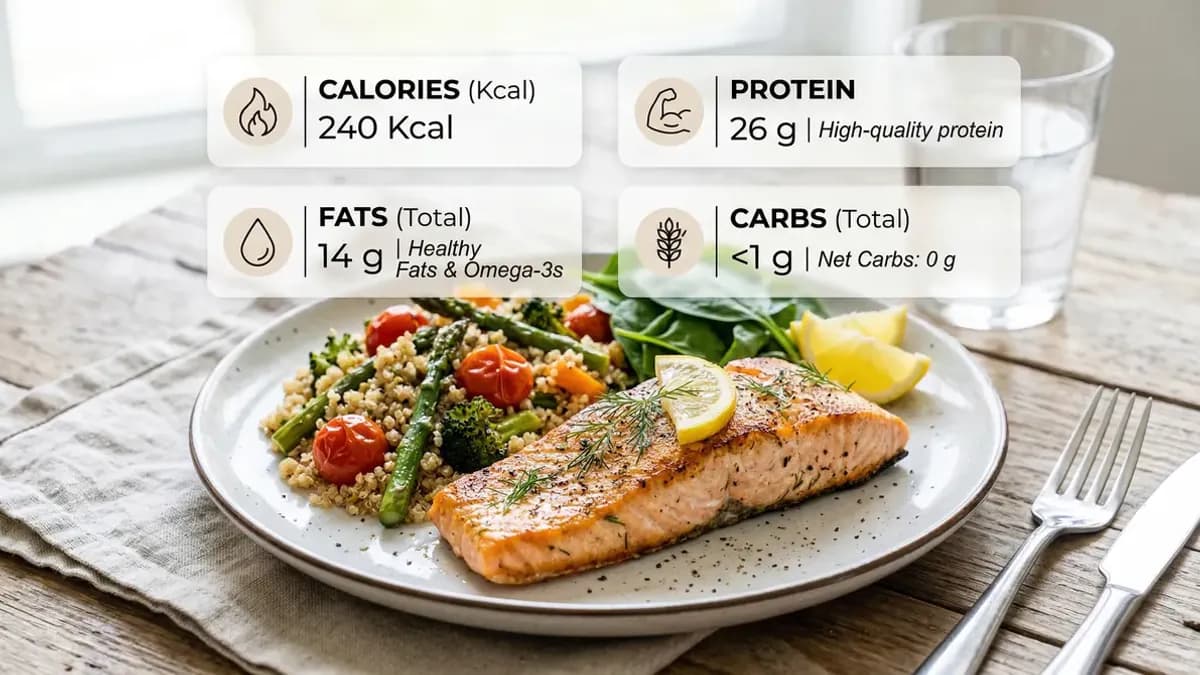
- A 100g serving of raw salmon provides around 179 calories, 20g of protein and 11g of fat.
- The fat in salmon is predominantly unsaturated, including the omega-3 fatty acids EPA and DHA.
- The Dutch Health Council (Gezondheidsraad) recommends 200mg of EPA and DHA per day — a single 100g portion of salmon exceeds this.
- Salmon contains virtually no carbohydrates, making it suitable for a wide range of eating patterns.
- Its high protein content may help you feel fuller for longer after meals.
What does salmon actually contain?
Salmon is a fatty fish, meaning its fat is distributed throughout the flesh rather than stored in the liver like lean fish (think cod or haddock). That sounds counterintuitive, but it is precisely what makes salmon so nutritious.
Per 100g of raw salmon, based on data from the Dutch Nutrition Centre (Voedingscentrum):
- Calories. Approximately 179 kilocalories.
- Protein. Around 20g — comparable to chicken breast.
- Fat. Around 11g, predominantly unsaturated.
- Carbohydrates. Virtually zero.
- Fibre. Zero (fish contains no dietary fibre).
A typical serving in the Netherlands is 100 to 150g. Cooking salmon in the oven or on a grill changes the calorie count very little, unless you add substantial amounts of oil or sauce.
Omega-3: what are EPA and DHA?
Omega-3 is an umbrella term for a group of polyunsaturated fatty acids. The two most relevant for human health are EPA (eicosapentaenoic acid) and DHA (docosahexaenoic acid). Both are found in fatty fish such as salmon, herring and mackerel.
According to the Voedingscentrum, adequate EPA and DHA intake may contribute to normal heart function. The Dutch Health Council recommends adults consume at least 200mg of EPA and DHA daily. Eating one portion of fatty fish per week is sufficient to meet this target.
Salmon is among the richest sources of these fatty acids available. That makes it an efficient choice if you want to increase your omega-3 intake without relying on supplements. Read our full guide to omega-3 fatty acids for more detail.
Salmon vs. other protein sources
How does salmon compare to other common protein sources?
- Chicken breast. Comparable protein (~22g per 100g) but far less fat and virtually no omega-3. Good for hitting protein targets without adding calories.
- Canned tuna. Less fat than salmon, also less omega-3. More affordable per portion.
- Eggs. Lower protein (~13g per 100g) but rich in vitamin D, choline and other micronutrients. See our guide to high-protein foods for a full comparison.
- Legumes. Good for plant-based protein, but contain no EPA or DHA.
If you want one weekly meal that delivers both protein and omega-3 in one go, salmon is one of the most efficient options available.
How does salmon fit into a balanced diet?
The Voedingscentrum recommends eating fatty fish once a week. Salmon counts as a fatty fish and delivers sufficient EPA and DHA for the entire week in a single portion.
Pair salmon with vegetables and a carbohydrate source — potatoes, rice, or wholegrain bread — for a nutritionally complete meal. Baked salmon with broccoli and rice is a classic. So is a simple salad with smoked salmon and avocado. Preparation method makes little difference to the nutritional values, as long as you are not adding a lot of extra fat.
Want to track exactly what you are eating? With Moveno you can photograph your meal and see the full nutritional breakdown in seconds.
Smoked salmon: different nutritional values?
Smoked salmon has a slightly different profile than fresh salmon. The smoking process removes moisture, which concentrates nutrients per 100g. Smoked salmon also contains considerably more sodium — relevant if you are watching your salt intake.
The basic protein-to-fat ratio remains similar to fresh salmon. Smoked salmon is a convenient option for a quick lunch or snack.
Start making more informed food choices
You do not need to be a nutritionist to understand what you eat. One portion of salmon a week is a concrete step towards adequate omega-3. Want to see how that fits into your daily calorie and nutrient targets? The Moveno app helps you track it — photograph your meal and get immediate nutritional feedback. Learn how to track calories as a beginner and how to calculate your calorie deficit to reach your goals.
Sources
- Voedingscentrum — Nutritional value of salmon — nutritional values per 100g raw salmon
- Voedingscentrum — Omega-3 — explanation of EPA and DHA and recommended intake
- Voedingscentrum — Why is fatty fish healthy? — advice on fatty fish and omega-3 intake
- Voedingscentrum — How much protein is in salmon? — protein content per portion