Vitamin K receives far less attention than vitamins C and D, yet it is equally indispensable to your health. It regulates blood clotting, plays a crucial role in bone health, and protects your blood vessels. In this article you will discover the difference between K1 and K2, the best sources, and how much you need daily.
Key takeaways
- Vitamin K exists in two main forms: K1 (phylloquinone) and K2 (menaquinone)
- K1 is primarily involved in blood clotting; K2 in bone health and vascular protection
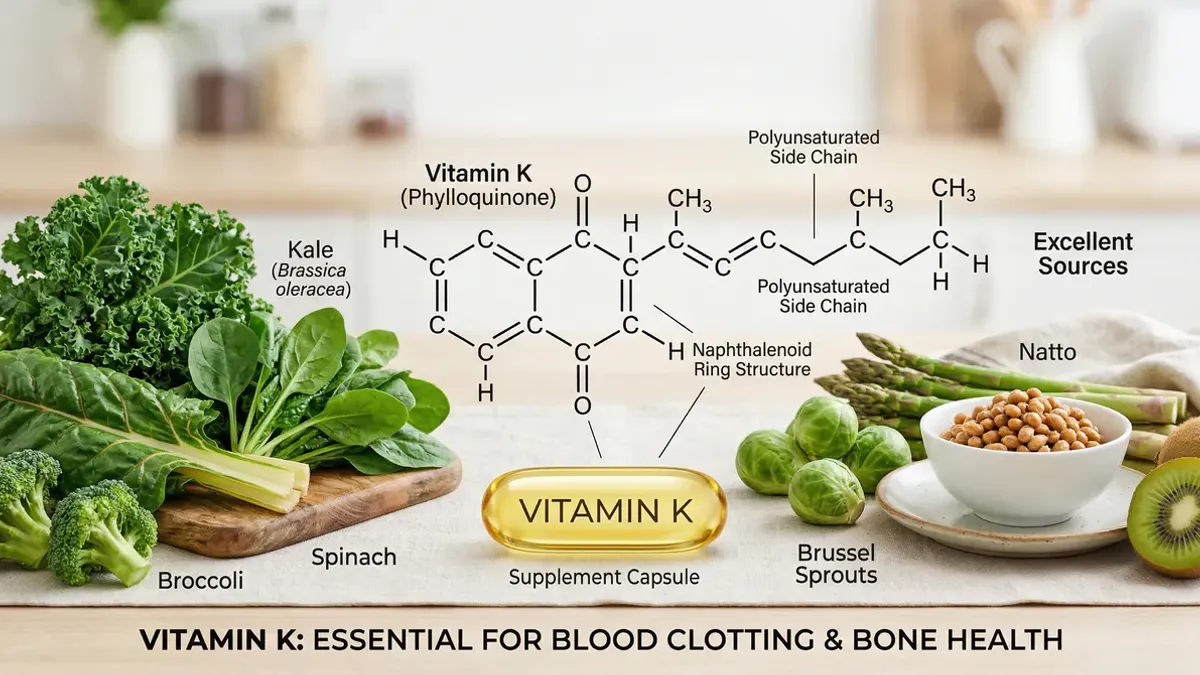
- Best K1 sources: kale, spinach, broccoli, parsley
- Best K2 sources: natto, hard cheese, egg yolk, fermented products
- Severe deficiency is rare with a varied diet
What is vitamin K?
Vitamin K is a fat-soluble vitamin that occurs in two main forms:
- Vitamin K1 (phylloquinone): derived from plants, particularly green leafy vegetables
- Vitamin K2 (menaquinone): produced by bacteria, found in fermented and animal products. K2 has multiple subtypes (MK-4 through MK-13), of which MK-7 is the most active and longest-lasting
Both forms are stored in the liver and converted into active compounds that activate proteins (carboxylation).
Functions of vitamin K
Blood clotting
This is vitamin K's best-known function. It activates coagulation factors (including prothrombin and factors VII, IX and X) needed to stop bleeding. People taking anticoagulants such as warfarin must monitor their vitamin K intake carefully, as these medications block vitamin K activity.
K2 also plays a role in regulating blood clotting via activation of protein S, which locally inhibits excessive clot formation.
Bone health
Vitamin K2 is essential for activating osteocalcin, a protein that binds calcium in the bone matrix. Without sufficient K2, osteocalcin remains inactive and calcium is not properly incorporated into bones. Studies suggest that good vitamin K2 status is associated with higher bone density and lower fracture risk.
Vascular health
Vitamin K2 activates Matrix Gla Protein (MGP), which inhibits calcium deposits in arterial walls. This is relevant for preventing arterial calcification (arteriosclerosis). Low K2 levels are associated with higher degrees of arteriosclerosis.
K1 vs K2: what is the difference?
| Property | Vitamin K1 | Vitamin K2 |
|---|---|---|
| Source | Green vegetables | Fermented products, animal foods |
| Primary function | Blood clotting (liver) | Bone health, vascular protection |
| Half-life | Short (hours) | Long (days, MK-7) |
| Tissue distribution | Primarily liver | Bones, blood vessels, other tissues |
K1 is rapidly available but is largely used by the liver for blood clotting. K2, particularly MK-7, has a longer half-life and reaches bones and blood vessels more effectively.
Sources of vitamin K1
Green leafy vegetables are by far the richest sources:
| Food | Vitamin K1 per 100g |
|---|---|
| Kale | 817 mcg |
| Spinach | 483 mcg |
| Fresh parsley | 1,640 mcg |
| Broccoli | 101 mcg |
| Romaine lettuce | 102 mcg |
| Brussels sprouts | 177 mcg |
A 100g serving of spinach delivers well above the recommended daily intake.
Sources of vitamin K2
K2 is less widely distributed in the diet:
| Food | Vitamin K2 per 100g |
|---|---|
| Natto (fermented soy) | 1,103 mcg MK-7 |
| Hard cheese (Gouda, Brie) | 75-80 mcg MK-9 |
| Egg yolk | 32 mcg MK-4 |
| Butter | 15 mcg MK-4 |
| Chicken liver | 14 mcg MK-4 |
Natto is by far the richest source of K2, but is not common in the Dutch diet. Cheese and egg yolk are more realistic daily sources for most people.
Recommended daily intake
The EFSA sets an adequate intake (AI) of 70 mcg vitamin K per day for adults. There is no separate recommendation for K1 and K2. For optimal extra-hepatic functions (bone and vascular), some experts advise a daily intake of 90-360 mcg MK-7 specifically for K2.
| Group | Adequate intake |
|---|---|
| Adults | 70 mcg/day |
| Pregnant women | 70 mcg/day |
| Breastfeeding | 70 mcg/day |
Deficiency: who is at risk?
Severe vitamin K deficiency is rare with a varied diet. At-risk groups include:
- Newborns (insufficient gut bacteria for K2 production; K injection at birth is standard)
- People on prolonged antibiotic courses (disruption of gut bacteria)
- People with fat malabsorption (coeliac disease, IBD, chronic kidney disease)
- Users of anticoagulant medications (note the interaction)
Symptoms of deficiency include unusual bleeding, bruising, and poor wound healing.
Combining vitamin D3 and K2
Vitamin D3 promotes calcium absorption from the gut, while vitamin K2 ensures that calcium goes to the bones rather than depositing in arterial walls. Many supplements combine D3 and K2 (MK-7) to harness this synergy. If you take a high-dose vitamin D supplement, adding K2 may be worthwhile.
Tracking your intake
With Moveno, you can scan your meals and instantly see nutritional values. That way you gain insight into your vitamin K intake and can see whether you are eating enough green vegetables.
Vitamin K and your nutrition overview
Vitamin K is one part of a well-rounded diet. To keep track of all your nutrients, read our beginner's guide to calorie tracking — it makes monitoring your daily intake straightforward. If you are also aiming to lose weight, our calorie deficit calculator guide will help you find the right energy balance.