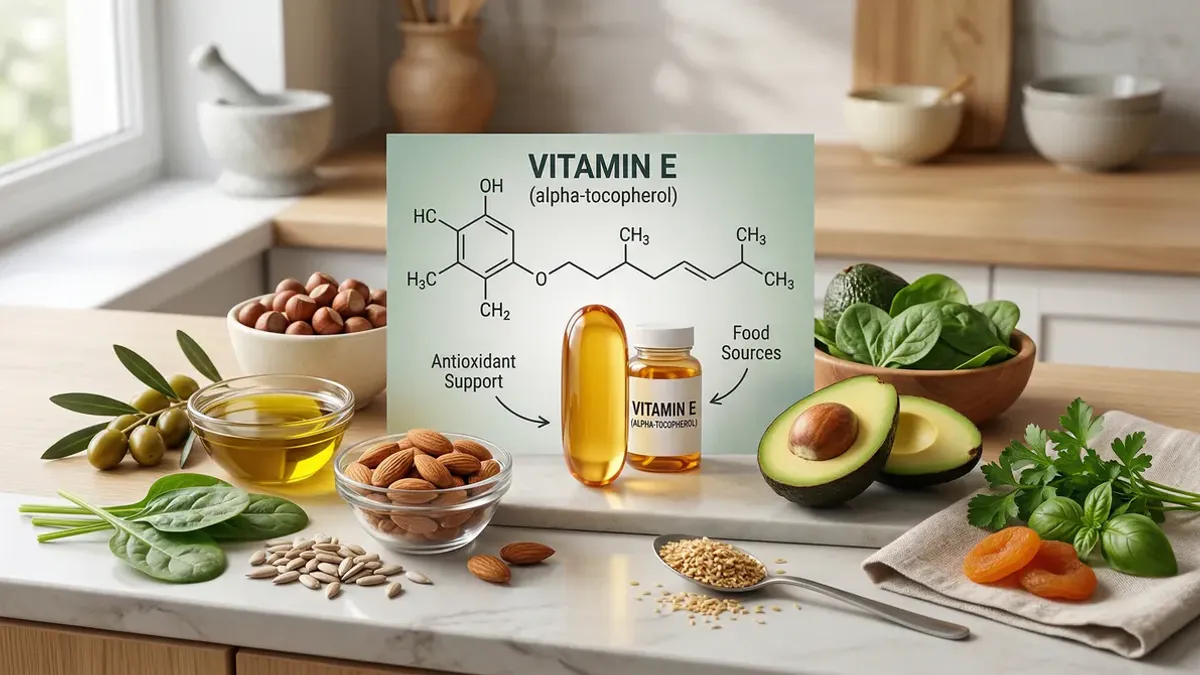
Vitamin E is a fat-soluble vitamin with powerful antioxidant properties. The name "vitamin E" is an umbrella term for eight chemical compounds: four tocopherols and four tocotrienols. Of all variants, alpha-tocopherol is the most biologically active and the most common in food and supplements.
Key takeaways
- Vitamin E is a fat-soluble antioxidant that protects cells against free radical damage
- RDA: 11–15 mg/day (depending on sex)
- Best sources: almonds, sunflower seeds, hazelnuts, olive oil, avocado
- Always eat vitamin E with a source of fat for optimal absorption
- Deficiency is rare but may occur in people with fat malabsorption disorders
What does vitamin E do in the body?
Antioxidant function
The primary function of vitamin E is neutralising free radicals — unstable molecules produced during normal metabolism and from external factors such as UV radiation, air pollution and smoking. Free radicals can damage cell membranes, DNA and proteins, contributing to ageing and chronic disease over time. Vitamin E intercepts free radicals and prevents this oxidative damage.
Immune system support
Vitamin E supports immune function, particularly the activity of T-cells (a type of white blood cell). Adequate vitamin E may help maintain a normal immune response, especially in older adults whose immune function declines with age.
Cardiovascular health
Vitamin E may help prevent the oxidation of LDL cholesterol ("bad cholesterol"). Oxidised LDL plays a key role in the development of plaques in blood vessels (atherosclerosis). Research on whether vitamin E supplements actually reduce cardiovascular disease is mixed — a varied diet rich in antioxidants remains the best approach.
Skin health
Vitamin E is widely used in skin care products for its purported skin benefits. As an antioxidant it may protect the skin from UV damage and help maintain the skin barrier. Whether topical vitamin E meaningfully reduces wrinkles is less well supported by evidence.
Eye health
Vitamin E, together with other antioxidants such as vitamin C and zinc, may help slow the progression of age-related macular degeneration (AMD) — the most common cause of vision loss in older adults.
How much vitamin E do you need per day?
The recommended daily amount (RDA) for vitamin E is:
| Group | RDA |
|---|---|
| Women (adult) | 11 mg/day |
| Men (adult) | 13 mg/day |
| Pregnant women | 11 mg/day |
| Breastfeeding women | 14 mg/day |
The tolerable upper intake level is set at 300 mg/day for adults. Exceeding this through food alone is virtually impossible.
Which foods are high in vitamin E?
Vitamin E is found primarily in nuts, seeds and vegetable oils. Because vitamin E is fat-soluble, it is better absorbed when eaten alongside a source of fat.
Top vitamin E sources:
| Food | Portion | Vitamin E |
|---|---|---|
| Sunflower seeds | 30 g | ~7.4 mg |
| Almonds | 30 g | ~7.3 mg |
| Hazelnuts | 30 g | ~4.3 mg |
| Wheat germ oil | 1 tbsp (14 ml) | ~20 mg |
| Sunflower oil | 1 tbsp (14 ml) | ~5.6 mg |
| Avocado | 100 g | ~2.1 mg |
| Spinach (raw) | 100 g | ~2.0 mg |
| Olive oil | 1 tbsp (14 ml) | ~1.9 mg |
A handful of almonds or sunflower seeds already covers more than half your daily requirement. Read our overview of the vitamin B complex for more on vitamins that work alongside vitamin E.
Who is at risk of vitamin E deficiency?
Vitamin E deficiency is rare in healthy people with a normal diet. Risk groups include:
- People with fat malabsorption: conditions such as Crohn disease, coeliac disease or cystic fibrosis reduce absorption of fat-soluble vitamins
- People following an extremely low-fat diet: fat-soluble vitamins require dietary fat for absorption
- Premature infants: low fat reserves at birth
- People with rare genetic disorders that affect vitamin E transport
Symptoms of severe deficiency include muscle weakness, coordination problems (ataxia), nerve damage and immune dysfunction.
Vitamin E supplements: when are they useful?
A varied diet with nuts, seeds and vegetables provides sufficient vitamin E for most people. Supplements are rarely necessary. High doses of vitamin E (>300 mg/day) may interfere with blood clotting and increase bleeding risk — particularly in people taking anticoagulants.
If you suspect you are not getting enough vitamin E, discuss this with your doctor before taking supplements.
Tracking vitamin E in your diet
Want to know whether you are getting enough vitamin E? With Moveno you can photograph your meal and instantly see all your nutrient values. Try Moveno free for 7 days.
Vitamin E and your broader nutrition
Vitamin E works best as part of a balanced diet. To get a complete view of your daily nutrition, read our beginner's guide to calorie tracking. If you are also looking to manage your weight, our guide to calculating a calorie deficit will show you exactly where to start.