Vitamin B6, also known as pyridoxine, is a water-soluble vitamin that plays a central role in metabolism, the immune system and the nervous system. The name "vitamin B6" is actually an umbrella term for three chemical forms — pyridoxine, pyridoxal and pyridoxamine — all of which are active in the body.
Key takeaways
- Vitamin B6 is involved in more than 100 enzymatic reactions
- RDA: 1.3 mg/day for adults, up to 1.7 mg for men over 50
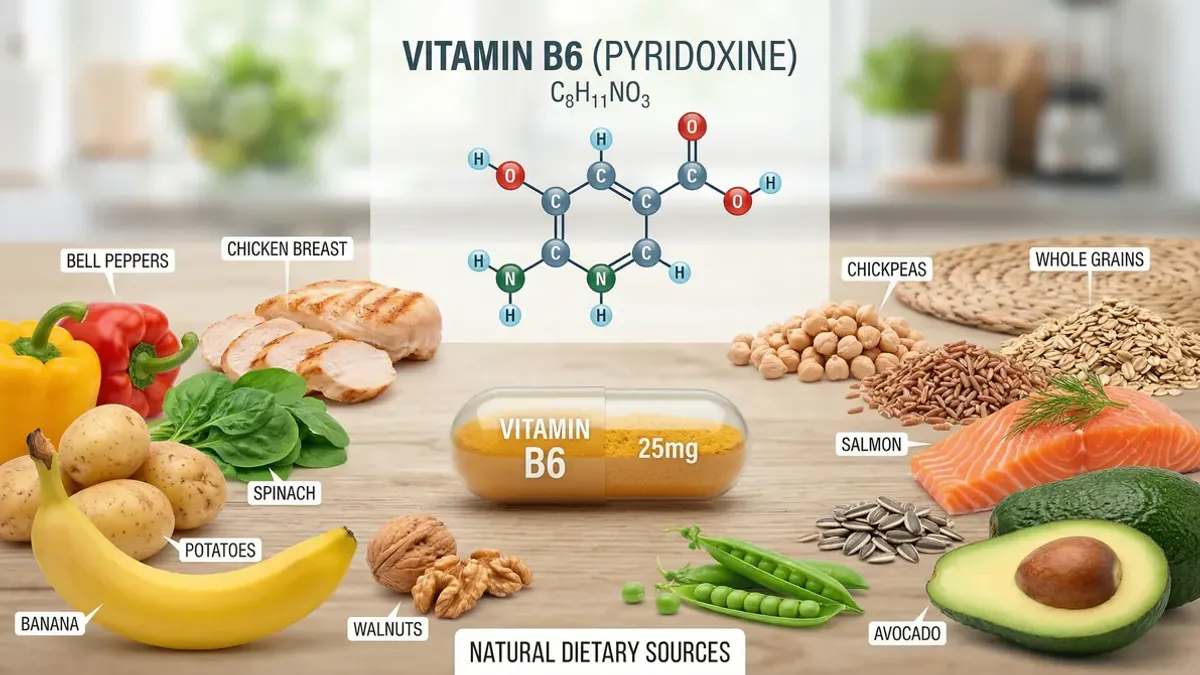
- Best sources: chicken, salmon, potatoes, banana, chickpeas, sunflower seeds
- Deficiency is rare but may cause anaemia, skin irritation and neurological symptoms
- High supplement doses (>25 mg/day long-term) may cause nerve damage
What does vitamin B6 do in your body?
Vitamin B6 acts as a coenzyme in an enormous range of biochemical reactions. The main functions are:
Protein metabolism
B6 is essential for the breakdown and synthesis of amino acids — the building blocks of proteins. Without sufficient B6, your body cannot process proteins efficiently, which may affect muscle recovery and immune function.
Neurotransmitter production
B6 is required for the synthesis of serotonin, dopamine, GABA and noradrenaline. These neurotransmitters regulate mood, sleep and stress response. This explains why a B6 deficiency may contribute to mood changes and sleep problems.
Immune system support
Vitamin B6 supports the production of white blood cells and antibodies that defend the body against infections. Adequate B6 may help maintain a normal immune response.
Homocysteine and cardiovascular health
B6 helps convert the amino acid homocysteine into other compounds. Elevated homocysteine levels in the blood are associated with increased cardiovascular risk. B6, together with B9 and B12, may help reduce this risk.
Haemoglobin formation
Vitamin B6 is involved in the production of haemoglobin — the protein in red blood cells that transports oxygen. A deficiency may contribute to anaemia.
How much vitamin B6 do you need per day?
The recommended daily amount (RDA) for vitamin B6 is:
| Age group | RDA |
|---|---|
| Adults 19–50 years | 1.3 mg/day |
| Men over 50 | 1.7 mg/day |
| Women over 50 | 1.5 mg/day |
| Pregnant women | 1.9 mg/day |
| Breastfeeding women | 2.0 mg/day |
Which foods are high in vitamin B6?
Vitamin B6 is found in both animal and plant foods, though the bioavailability differs: pyridoxine from plant sources is less well absorbed than pyridoxal from animal sources.
Rich animal sources:
- Chicken breast (100 g): ~0.9 mg
- Salmon (100 g): ~0.8 mg
- Tuna (100 g): ~0.9 mg
- Pork (100 g): ~0.5 mg
Rich plant sources:
- Sunflower seeds (30 g): ~0.6 mg
- Potatoes (150 g, boiled): ~0.4 mg
- Banana (1 piece): ~0.4 mg
- Chickpeas (100 g, cooked): ~0.5 mg
- Pistachios (30 g): ~0.4 mg
A varied diet with daily vegetables, legumes and protein sources easily covers requirements for most people. Want to know how B6 works together with other B vitamins? Read our article on the vitamin B complex.
What are the symptoms of vitamin B6 deficiency?
A B6 deficiency is rare in Western countries but occurs in:
- Chronic alcohol users
- People with poor nutritional intake
- People with kidney disease
- Users of certain medications (isoniazid, penicillamine)
- Pregnant women with severe nausea
Deficiency symptoms may include:
- Skin irritation (seborrheic dermatitis, glossitis)
- Anaemia due to reduced haemoglobin production
- Confusion and irritability
- Reduced immune function (more frequent illness)
- Tingling in hands and feet (in severe deficiency)
Risk of too much vitamin B6
Unlike most water-soluble vitamins, vitamin B6 can be harmful in high doses. Long-term intake of more than 25 mg/day via supplements may lead to peripheral neuropathy — nerve damage presenting as tingling, numbness and coordination problems. The European EFSA has set a tolerable upper intake level of 25 mg/day for adults.
An overdose through normal food intake is not possible.
Vitamin B6 and PMS
Research suggests that vitamin B6 may help with premenstrual syndrome (PMS), particularly mood-related symptoms. However, the doses used in studies were typically around 50–100 mg/day — above the safe upper limit for long-term use. Consult a doctor before taking high doses of B6 for PMS symptoms.
Tracking vitamin B6 in your diet
Want to know how much vitamin B6 you are getting each day? With Moveno you can photograph your meal and instantly see all your nutrient values — including B6. Try Moveno free for 7 days.
Vitamin B6 and your nutrition plan
Vitamin B6 is just one part of a healthy diet. To track all your nutrients together, read our beginner's guide to calorie tracking. And if you are working towards a healthier weight, use our calorie deficit calculator to find your daily calorie target.