Vitamin A is one of the most versatile vitamins in the body. It plays a role in vision, skin health, immune defence, and cell growth. Yet it is also a vitamin where overdosing — through supplements or liver — carries serious risks. Here is everything you need to know about its functions, the two forms, the best sources, and safe limits.
Key takeaways
- Vitamin A comes in two forms: retinol (animal) and beta-carotene (plant-based)
- Recommended daily intake: 680 mcg RAE (women), 800 mcg RAE (men)
- Best animal sources: liver, butter, eggs, whole milk
- Best plant sources: carrots, sweet potato, spinach, mango
- Too much retinol (from supplements or liver) can be toxic; beta-carotene from food is safe
What is vitamin A?
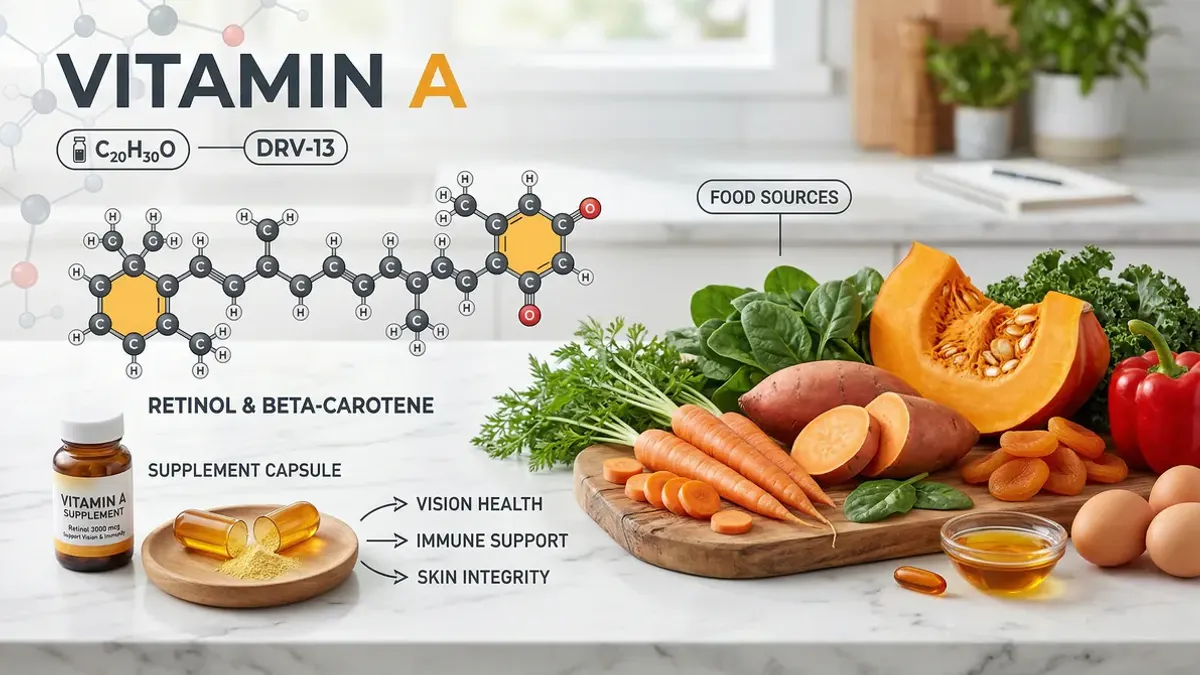
Vitamin A is a fat-soluble vitamin that occurs in two main natural forms:
Retinol (preformed vitamin A)
Retinol is the direct, active form of vitamin A. It is found exclusively in animal products. Retinol is used directly by the body and stored in the liver. It is also the form that can become toxic at high intake.
Beta-carotene (provitamin A)
Beta-carotene is a plant-based precursor that the body converts to retinol as needed. Conversion efficiency is variable: on average, 12 mcg of beta-carotene yields 1 mcg of retinol (expressed as Retinol Activity Equivalent, RAE). Beta-carotene from food is not toxic because the body regulates the conversion.
Functions of vitamin A
Vision
Vitamin A is essential for producing rhodopsin, the light-sensitive pigment in the rod cells of the retina. Rods are responsible for vision in dim light. A vitamin A deficiency therefore first manifests as night blindness. With severe, prolonged deficiency this can progress to xerophthalmia, a serious eye condition that can lead to blindness.
Skin and mucous membranes
Vitamin A supports the growth and differentiation of epithelial cells — the cells lining the skin, airways, digestive tract, and other mucous membranes. Without sufficient vitamin A, mucous membranes become drier and more vulnerable to infection.
Immune system
Vitamin A may help maintain the integrity of mucous membranes as a first line of defence. It also supports the production and function of white blood cells. In regions with vitamin A deficiency (particularly in lower-income countries), infections such as diarrhoea and measles are far more lethal.
Cell growth and development
Vitamin A derivatives (retinoids) regulate gene expression and are involved in the growth and differentiation of cells in virtually all tissues. This makes vitamin A crucial during pregnancy for embryo development — but excessive retinol intake is teratogenic (causes birth defects).
Food sources
Animal sources (retinol)
| Food | Vitamin A per 100g |
|---|---|
| Beef liver | 4,968 mcg RAE |
| Chicken liver | 3,296 mcg RAE |
| Liverwurst | 1,461 mcg RAE |
| Butter | 684 mcg RAE |
| Whole egg | 140 mcg RAE |
| Whole milk | 46 mcg RAE |
Liver is by far the richest source, but due to its high retinol content it is recommended to eat it at most once a week. Pregnant women are advised to avoid liver entirely due to the risk of birth defects.
Plant sources (beta-carotene)
| Food | Beta-carotene per 100g | Estimated RAE |
|---|---|---|
| Sweet potato (cooked) | 9,444 mcg | 787 mcg |
| Carrots | 8,285 mcg | 690 mcg |
| Kale | 5,927 mcg | 494 mcg |
| Spinach | 5,626 mcg | 469 mcg |
| Mango | 640 mcg | 53 mcg |
| Red pepper | 1,624 mcg | 135 mcg |
Beta-carotene from plant sources is safe regardless of the quantity consumed. A harmless orange tint to the skin (hypercarotenaemia) can occur with very high intake.
Recommended daily intake
| Group | Recommended amount |
|---|---|
| Women | 680 mcg RAE/day |
| Men | 800 mcg RAE/day |
| Pregnant women | 700 mcg RAE/day |
| Breastfeeding | 1,050 mcg RAE/day |
The safe upper limit for retinol (not beta-carotene) is set at 3,000 mcg RAE per day for adults. Sustained intake above this level can lead to acute or chronic vitamin A toxicity.
Deficiency: symptoms and risk groups
Vitamin A deficiency is rare in the Netherlands among those with a varied diet. Globally, however, it is one of the most common micronutrient deficiencies, particularly among children in low-income countries.
Symptoms of deficiency:
- Night blindness (earliest sign)
- Dry eyes and mucous membranes
- Increased susceptibility to infections
- Slow wound healing
- Dry, flaky skin
At-risk groups in the Netherlands:
- People with fat malabsorption (IBD, coeliac disease, chronic pancreatitis)
- Vegans (no dietary retinol; low beta-carotene conversion efficiency)
- Heavy drinkers (alcohol disrupts vitamin A storage in the liver)
- Older adults with a limited diet
Too much vitamin A: when does it become dangerous?
Only retinol — from supplements or liver — can be toxic. Beta-carotene from food is safe.
Acute toxicity occurs with a single very large dose (>300 mg retinol). Symptoms: headache, nausea, dizziness, blurred vision.
Chronic toxicity occurs with sustained intake above 3,000 mcg RAE per day. Symptoms: liver damage, raised intracranial pressure, bone abnormalities, hair loss, skin peeling.
Teratogenicity: intake above 3,000 mcg RAE per day in pregnant women increases the risk of birth defects. Pregnant women should not use liver preparations or high-dose vitamin A supplements.
Supplements: when do they make sense?
For most people in the Netherlands, vitamin A supplements are not necessary. Exceptions:
- People with fat malabsorption, after consultation with a doctor
- Vegans in whom beta-carotene conversion is insufficient
When in doubt, choose supplements containing beta-carotene rather than retinol to avoid the risk of toxicity.
Tracking your intake
With Moveno, you can scan your meals and instantly see nutritional values. That way you have a clear picture of your vitamin A intake and can see whether you are eating enough colourful vegetables and fruit.
Want to map your complete eating pattern? Read our beginner's guide to calorie tracking. Vitamin A also contributes to healthy metabolic processes — read more about how to speed up your metabolism. To recognise vitamin A on labels, also read about reading nutrition labels.