
In fitness culture, there's a simple belief: more protein is always better. The higher your intake, the more muscle you build, the faster you recover, the better your results. But is that actually true? And what are the real risks if you eat too much protein? Science offers a more nuanced answer than most people expect.
Key takeaways
- For healthy adults, up to 2.2 grams of protein per kilogram of body weight per day is the evidence-based optimum
- Studies show no harm in healthy people at intakes up to 3.5 grams per kilogram per day
- The main risk of high protein intake applies to people with existing kidney conditions
- Extremely high intake may increase fluid requirements and crowd out carbohydrates and fats
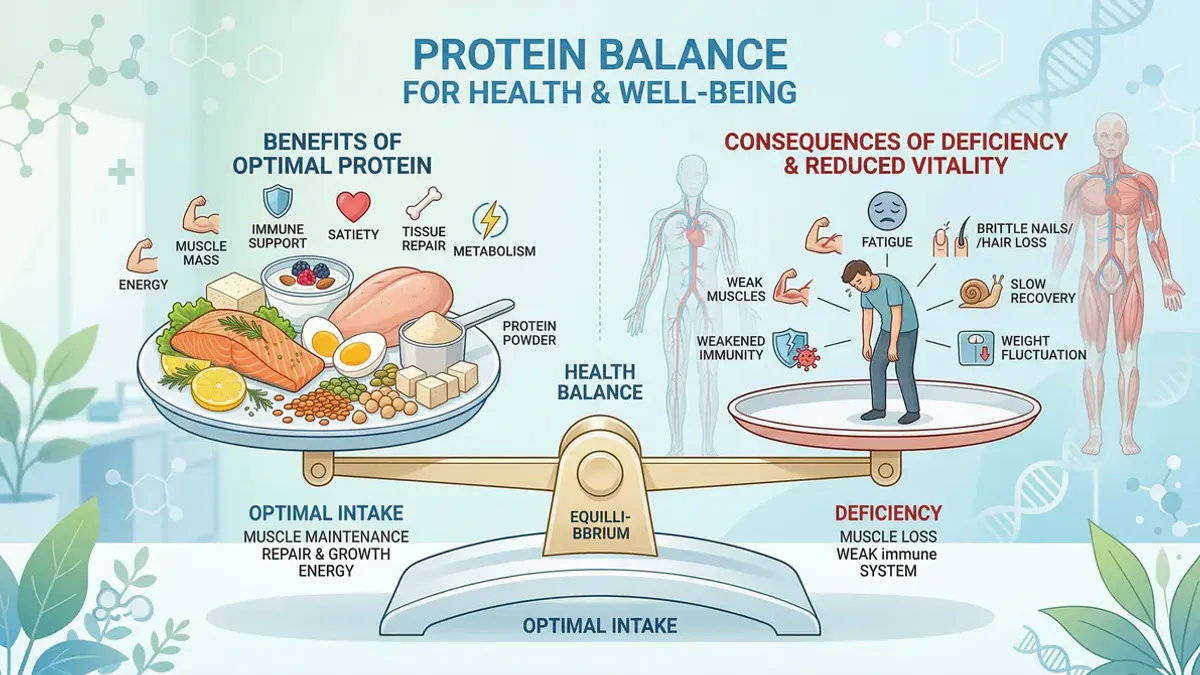
- For most people, the risk of too little protein is greater than too much
What are safe limits for protein intake?
The standard recommendation for adults is around 0.8 grams of protein per kilogram of body weight per day — the minimum to prevent deficiency. For people who exercise regularly or want to lose fat while preserving muscle, 1.6 to 2.2 grams per kilogram is a well-supported and safe target.
But how high can you go? A 2016 study published in the Journal of the International Society of Sports Nutrition found that an intake of 3.4 grams of protein per kilogram per day in resistance-trained athletes caused no measurable harm. Another study showed that even at 4.4 grams per kilogram per day — nearly twice the recommended "high" dose — no adverse health effects were observed in healthy adults over a shorter period.
That doesn't mean you should eat that much — there's no evidence that such extreme amounts provide additional benefits. But the idea that "too much protein ruins your kidneys" is not well supported by the available evidence for healthy people.
The kidney myth: what's true and what isn't?
The most common objection to high protein intake is that it's harmful to your kidneys. This idea originates from medical practice around patients with chronic kidney disease (CKD). For them, a protein-restricted diet is standard, because damaged kidneys struggle to process nitrogenous waste products — a byproduct of protein metabolism.
But the leap from "damaged kidneys can't handle high protein" to "high protein damages healthy kidneys" is not scientifically sound. A 2018 systematic review in the Journal of Nutrition and Metabolism concluded that high protein intake has no proven harmful effect on kidney function in healthy adults.
The nuance: if you already have kidney disease, type 2 diabetes with kidney complications, or take medications that stress the kidneys long-term — always consult your doctor about your protein intake. Different guidelines apply in those cases.
Other potential downsides of very high protein intake
Increased fluid requirements
Protein metabolism produces urea, a nitrogenous waste product that leaves the body through urine. That process consumes water. A very high protein intake means you need more fluid to process it efficiently. If you don't compensate, a chronically high protein diet may contribute to a mild fluid deficit. The fix is simple: drink enough water — at least 2 litres per day, more if you train intensely.
Macronutrient imbalance
If protein takes up a disproportionately large share of your calories, there's less room for carbohydrates and fats. Both are necessary for a well-functioning body. Carbohydrates are the primary energy source for your brain and during high-intensity exercise. Fats are essential for hormonal function and the absorption of fat-soluble vitamins (A, D, E, K).
A diet with 4+ grams of protein per kilogram per day is nearly impossible to combine with adequate carbohydrates and fats at a normal calorie level — unless your total calorie intake is very high. That imbalance is the real risk, not the protein itself.
Calcium excretion
Some studies suggest that high protein intake may increase urinary calcium excretion. The hypothesis is that this could potentially lead to bone loss over the long term. However, more recent research shows a nuanced picture: increased calcium excretion may be accompanied by improved calcium absorption in the intestines, which could offset the effect. This area is still actively being researched, and no definitive conclusions exist for healthy adults.
Digestive discomfort
A sudden large increase in protein intake — especially from supplements — can cause bloating, flatulence and gastrointestinal discomfort. This is generally temporary as the body adapts. Build your protein intake up gradually and ensure you're consuming enough fibre in your diet.
What are the symptoms of eating too much protein?
There's no specific medical syndrome for "too much protein in healthy people," but signs that may indicate an overly unbalanced diet include:
- Persistent thirst or dry mouth (fluid balance)
- Fatigue despite adequate sleep (possible carbohydrate deficit)
- Digestive issues (bloating, constipation)
- Strong-smelling urine (elevated urea)
- Unexpected weight gain if the extra protein also means extra calories
Most of these signals aren't proof of damage — they're indicators that your overall diet may be out of balance.
How much protein is too much for you?
It depends on your body weight, activity level and health status. As a general guideline:
- Sedentary adults: 0.8 to 1.2 grams per kilogram per day
- Active adults and recreational athletes: 1.6 to 2.2 grams per kilogram per day
- Serious strength training: 2.2 to 3.5 grams per kilogram per day (safe in studies)
- Above 3.5 grams per kilogram: no proven additional benefit, limited long-term research
Want to know exactly how much protein you're consuming each day? With Moveno, you photograph your meals and instantly see the nutritional values — including protein content. So you can tell at a glance whether you're in a healthy range.
For more on working out your personal protein needs, read our guide on how much protein per day. And for ideas to keep your intake consistent without overdoing it, take a look at our guides to high-protein snacks and high-protein recipes.
If you want to understand your total calorie needs alongside protein intake, read how to calculate your calorie deficit. Protein also plays a key role in your metabolism — read our article on boosting your metabolism for the full picture.
The bottom line: for the vast majority of healthy people, the risk of too little protein is greater than too much. Focus on consistent, varied intake and make sure you're also eating enough vegetables, fibre and healthy fats alongside your protein sources. That's the complete picture.