
Weight loss starts with awareness — and an app on your phone can dramatically increase that awareness. But does losing weight with an app really work, or is it another trend that ends up forgotten after two weeks?
The short answer: yes, it works — provided you choose the right app and use it consistently. Here is why apps are effective, which features make the real difference, and the best options available in 2026.
Key takeaways
- Research consistently links digital self-monitoring of food intake to greater weight loss compared to not tracking.
- The most effective apps combine calorie tracking, a personal goal, a reliable database, and a fast entry method.
- AI photo recognition is the fastest logging method — ideal when manual entry feels too time-consuming.
- A calorie deficit of 300-500 kcal per day may lead to 0.3-0.5 kg of loss per week: slow, but sustainable.
- Combining a walking app with a food tracker is particularly effective — you raise your burn while lowering your intake.
Why does tracking with an app help?
The logic behind a weight loss app is straightforward: what you measure, you can manage. Digital self-monitoring of food intake is consistently linked to greater weight loss across multiple scientific reviews. The reason: you become aware of habits you previously did not notice.
Real-time feedback. An app shows you in real time whether you are on track. That 200-calorie snack feels different when you see it as a number in your daily overview.
Consistency and structure. Apps create a daily routine — you log your meals, track your progress, and stay motivated. That structure is often the difference between "I am trying to lose weight" and actually making it happen.
No food is forbidden. Unlike strict diets, tracking apps do not ban any foods. You can eat pizza, as long as it fits within your calorie goal. That flexibility makes the approach easier to sustain.
What makes a good weight loss app?
Not all apps are equal. These are the features that matter most:
Essential
Calorie tracking. The core function. You need to be able to log what you eat quickly and easily. The less friction, the more likely you are to stick with it.
Personal calorie goal. The app calculates how many calories you can eat daily based on your weight, height, age, activity level, and goal.
Food database. A reliable database covering local products. If your usual yoghurt or bread is not in there, you will give up quickly.
Important
Barcode scanner. Scanning a product takes about five seconds — ten times faster than manual search. Essential for packaged foods.
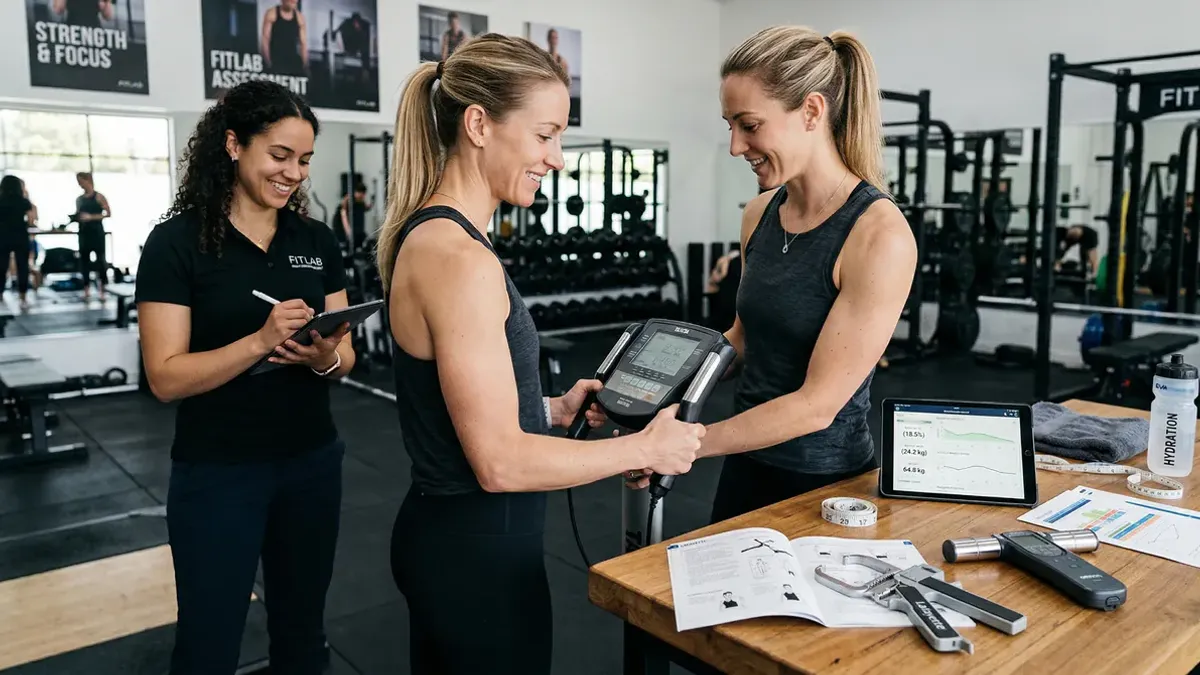
Weight tracker. Monitor your progress over weeks and months. A slowly declining trend line is the best motivator there is.
Macro overview. Not just calories, but also protein, carbohydrates, and fat. Important for preserving muscle during a calorie deficit.
Bonus
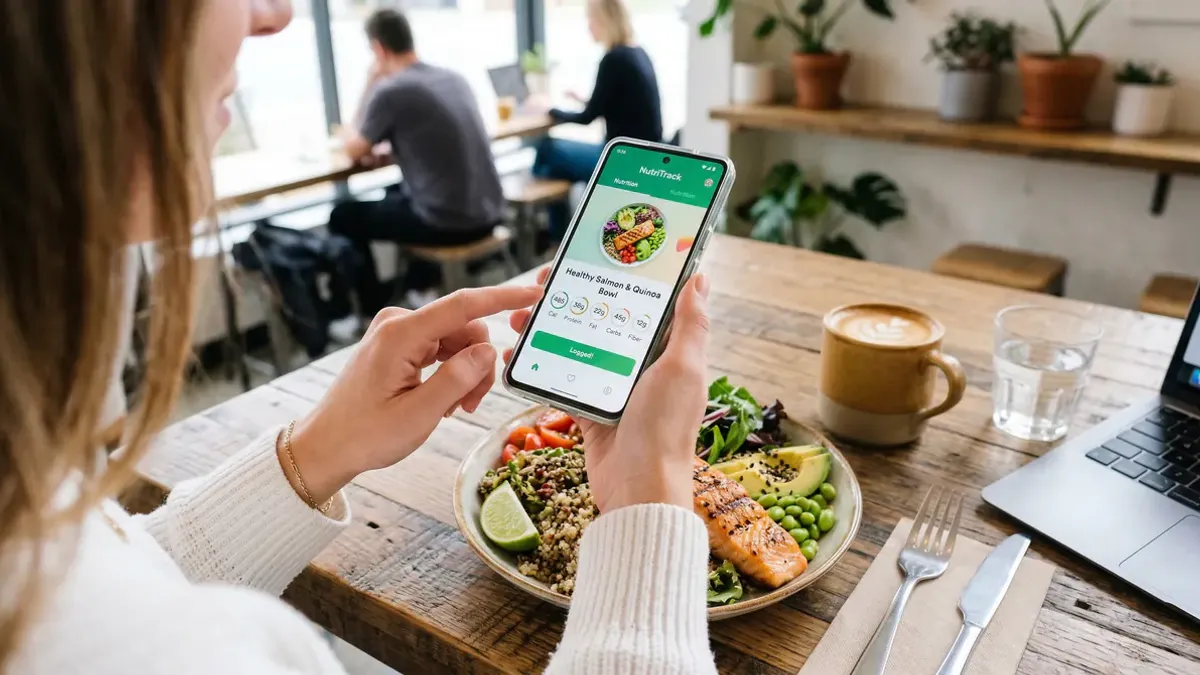
AI photo recognition. Take a photo of your meal and the app automatically identifies what you ate. The fastest possible entry method — ideal when manual logging proves unsustainable.
Recipe database. Pre-built meals with nutrition values, so you do not have to enter every ingredient separately.
Best weight loss apps in 2026
1. Moveno — fastest for Dutch and European products
Moveno combines AI photo recognition with the official NEVO database from the Dutch National Institute for Public Health. Photograph your meal and the app logs the nutrition values automatically. For anyone who finds calorie tracking "too much work," this is the lowest-friction option.
- AI photo recognition (seconds per meal)
- NEVO database (most accurate for the Dutch market)
- Personal calorie goal
- Dutch and English interface
- Free core features
2. MyFitnessPal — best for integrations
The largest calorie tracker in the world, with connections to hundreds of fitness apps and wearables. Ideal if you want to track your movement precisely via a smartwatch.
- Massive international database
- Integrations with Garmin, Fitbit, Apple Watch
- Barcode scanner
- Premium: €19.99/month
3. YAZIO — best for meal plans
A European app that offers complete meal plans alongside tracking. Useful if you want more than data — you want daily eating inspiration too.
- Meal plans and recipes
- Good for beginners
- Dutch-language interface
- Pro: €6.99/month
4. FatSecret — best fully free option
Completely free to use (with ads). No fancy AI or meal plans, but a solid calorie counter that does what it needs to do.
- Free without major restrictions
- Dutch interface
- Active community
Combining a walking app with food tracking
Walking is an underrated way to support weight loss — low barrier to entry, no gym membership needed, easy to sustain. Popular walking apps: Strava, Samsung Health / Apple Health, and Ommetje (from the Dutch Brain Foundation). Combining a walking app for movement tracking with a food app for calorie awareness is particularly effective: you raise your burn while reducing your intake simultaneously.
7 tips for successful weight loss with an app
1. Start by just logging. For the first week, log everything you eat without changing anything. You will start to see patterns: where do most of your calories come from?
2. Set a realistic goal. A deficit of 300-500 kcal per day is enough for 0.3-0.5 kg per week. More aggressive targets lead to abandonment.
3. Log ahead, not after. Plan your meals in the app in the morning. Then you know throughout the day how much room you have left for snacks or dinner.
4. Use the fastest entry method. Barcode scanning or taking a photo takes about five seconds. Manual searching takes 30-60 seconds. That difference determines whether you are still doing it a month from now.
5. Weigh yourself weekly. Not daily — your weight fluctuates due to fluid, digestion, and hormones. The weekly average tells the real story.
6. Be honest. The sweet, the drink, the bite from someone else's plate — it all counts. The app only works if you log it all.
7. Celebrate small wins. 0.5 kg in a week is 26 kg in a year. That is significant. Focus on the trend, not individual weigh-ins.
Common mistakes when using a weight loss app
Trying to do too much too fast. A deficit of 1,000 kcal per day sounds like faster results, but your body adapts: metabolism slows, you lose muscle mass, and hunger becomes unmanageable.
Not logging on weekends. Many people log carefully on weekdays but skip the weekend. Two unlogged days can cancel out an entire week of progress.
Eating back exercise calories. Your app says you burned 400 kcal running — but that estimate is often too high. Eat back at most half of them, or nothing at all.
Focusing only on the number. Calories matter, but 1,500 kcal from crisps is not the same as 1,500 kcal from balanced meals. Protein, fibre, and micronutrients count too.
Frequently asked questions
Does losing weight with an app actually work? Yes. Digitally tracking your food intake is consistently associated with greater weight loss in the scientific literature. The key is consistency: logging daily produces the best results.
What is the best free app for weight loss? FatSecret is the most complete free option. Moveno and MyFitnessPal also offer free core features sufficient for calorie tracking.
How fast can you lose weight with an app? With a calorie deficit of 400-500 kcal per day, you may lose 0.3-0.5 kg per week — about 1.5-2 kg per month, or 15-25 kg per year. Slow but sustainable.
Is a weight loss app better than a diet? An app is not a diet — it is a tool for more conscious eating. The advantage over restrictive diets: no food is forbidden, you learn your own patterns, and it is easier to maintain long-term.
Which app counts calories from a photo? Moveno uses AI photo recognition: photograph your meal and the app automatically shows the calories and nutrition values. It is the fastest way to track your food intake.
Ready to start? Download Moveno and discover how easy it is to track your nutrition. Take a photo, see your calories, and work towards your goal — based on official NEVO nutrition values. Also read our calorie tracking beginner's guide, calculate your calorie deficit, or combine the app with walking for weight loss.
Sources
- PubMed — Digital self-monitoring and weight loss meta-analysis — systematic review: digital self-monitoring is associated with greater weight loss
- PubMed — Consistent app-based self-monitoring and weight loss — consistent trackers achieve ≥5% weight loss at 3× the rate of inconsistent trackers
- Voedingscentrum — Afvallen — guidelines for responsible weight loss and calorie deficit