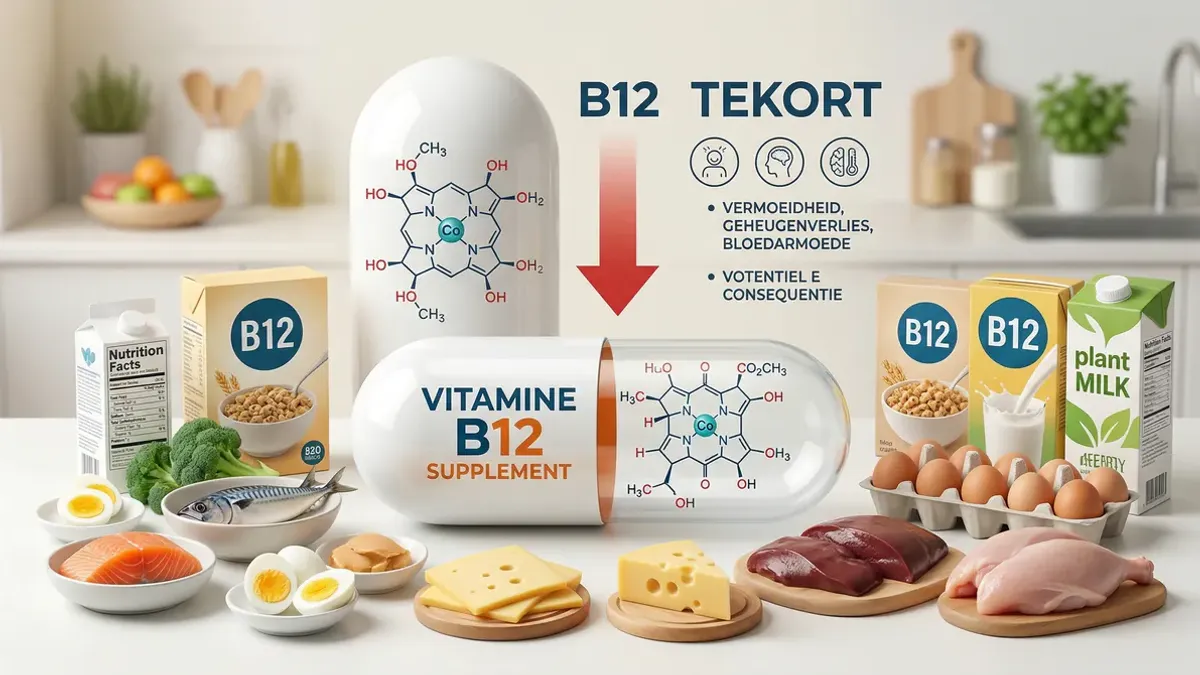
A vitamin B12 deficiency is insidious: it builds up over months before symptoms appear, and those symptoms often resemble many other conditions. Yet it is one of the most common vitamin deficiencies — particularly among vegans, older adults and people with certain gastrointestinal conditions.
Key takeaways
- B12 deficiency develops slowly; symptoms are non-specific and easy to overlook
- Most common symptoms: fatigue, tingling, memory problems, anaemia
- Risk groups: vegans, older adults, people with Crohn disease or coeliac disease, users of PPIs or metformin
- Diagnosis via blood test with your GP
- Treatment: supplements or injections depending on severity and cause
What is vitamin B12 and why is it so important?
Vitamin B12 (cobalamin) is a water-soluble vitamin involved in three crucial processes:
- Red blood cell production: B12 is needed for the normal maturation of red blood cells. Deficiency produces abnormally large, poorly functioning blood cells (megaloblastic anaemia).
- Nervous system protection: B12 is essential for the production and maintenance of myelin — the protective sheath around nerve fibres. Damage here can become irreversible.
- DNA synthesis: B12 works together with folate (B9) in DNA production, essential for cell division.
B12 is found exclusively in animal products. The liver can store a reserve for 3–5 years, which is why deficiency can go unnoticed for a long time.
Symptoms of vitamin B12 deficiency
The symptoms of B12 deficiency are diverse and can be grouped by the system affected.
Blood-related symptoms
- Fatigue and weakness: anaemia reduces oxygen transport
- Pallor: due to reduced haemoglobin
- Shortness of breath during exertion
- Heart palpitations
Neurological symptoms
- Tingling or numbness in hands, feet or legs (peripheral neuropathy)
- Muscle weakness and coordination problems
- Gait disturbance (in severe cases)
- Memory problems and difficulty concentrating
- Cognitive decline with prolonged deficiency
Mood and psychological symptoms
- Mood swings and irritability
- Depressive feelings
- In severe cases: confusion and dementia-like symptoms
Oral symptoms
- Smooth, glossy tongue (glossitis)
- Mouth ulcers and burning sensation in the mouth
Causes of vitamin B12 deficiency
A B12 deficiency arises from two mechanisms: insufficient intake or poor absorption.
Insufficient intake
- Vegans: B12 is found exclusively in animal products (meat, fish, eggs, dairy). Vegans who do not supplement will almost certainly develop a deficiency
- Strict vegetarians: dairy and eggs do contain B12, but in lower amounts than meat
Poor absorption
B12 absorption is a complex process that requires stomach acid, a protein called intrinsic factor and a healthy intestinal wall.
- Pernicious anaemia: autoimmune disease in which intrinsic factor is absent — the most classic cause of B12 malabsorption
- Atrophic gastritis: reduced stomach acid production in older adults impairs B12 absorption
- Gastrointestinal conditions (Crohn disease, coeliac disease): damaged intestinal wall reduces absorption
- Proton pump inhibitors (PPIs such as omeprazole): reduce stomach acid production, which may affect B12 absorption with long-term use
- Metformin (diabetes medication): interferes with B12 absorption in the intestine
- Gastric surgery: gastric bypass or removal of stomach sections eliminates intrinsic factor
Who is at risk?
| Risk group | Risk factor |
|---|---|
| Vegans | No B12 in plant-based diet |
| Vegetarians | Limited intake |
| Older adults (>60 years) | Reduced stomach acid production |
| PPI users | Reduced stomach acid production |
| Metformin users | Reduced intestinal absorption |
| Crohn / coeliac disease | Damaged intestinal wall |
| After bariatric surgery | Loss of intrinsic factor |
Read our article on the vitamin B complex for more context on how B12 works alongside other B vitamins.
How is a B12 deficiency diagnosed?
Diagnosis is made via a blood test with your GP. Tests include:
- Serum B12: total B12 level in the blood. Normal values vary by laboratory (generally >150–200 pmol/L)
- MMA (methylmalonic acid): more sensitive marker for functional B12 deficiency
- Homocysteine: elevated in B12 and/or folate deficiency
- Blood count: enlarged red blood cells (macrocytosis) indicate megaloblastic anaemia
Symptoms may be present even when values are technically still "normal". If in doubt, get tested.
Treatment of vitamin B12 deficiency
Treatment depends on the cause and severity:
Oral supplements
For mild deficiency caused by insufficient intake (e.g. in vegans), oral B12 supplements are effective. Daily doses of 250–1,000 µg cyanocobalamin or methylcobalamin are common. Even with poor absorption, high oral doses can work via passive diffusion.
Injections (intramuscular)
For pernicious anaemia, severe malabsorption or neurological symptoms, B12 injections are the standard treatment. Hydroxocobalamin injections are typically given every 2–3 months after an initial loading phase.
Fortified foods
Fortified plant milks, breakfast cereals and nutritional yeast can contribute, but are insufficient as the sole source for vegans — supplements remain essential.
Prevention: how to avoid a B12 deficiency
- As a vegan: take a daily B12 supplement (at least 10 µg/day or 2,000 µg/week)
- As a vegetarian: eat dairy and eggs regularly; consider a supplement if in doubt
- Over 60 years old: have B12 checked periodically by your GP
- With long-term PPI or metformin use: discuss with your doctor whether additional monitoring is needed
Track what you eat with Moveno — photograph your meal and instantly see all your nutrient values. Try Moveno for free.
Vitamin B12 is found mainly in animal protein sources — read our overview of high-protein foods for products that also deliver B12. Want to track your overall eating pattern? Our beginner's guide to calorie tracking will help.