
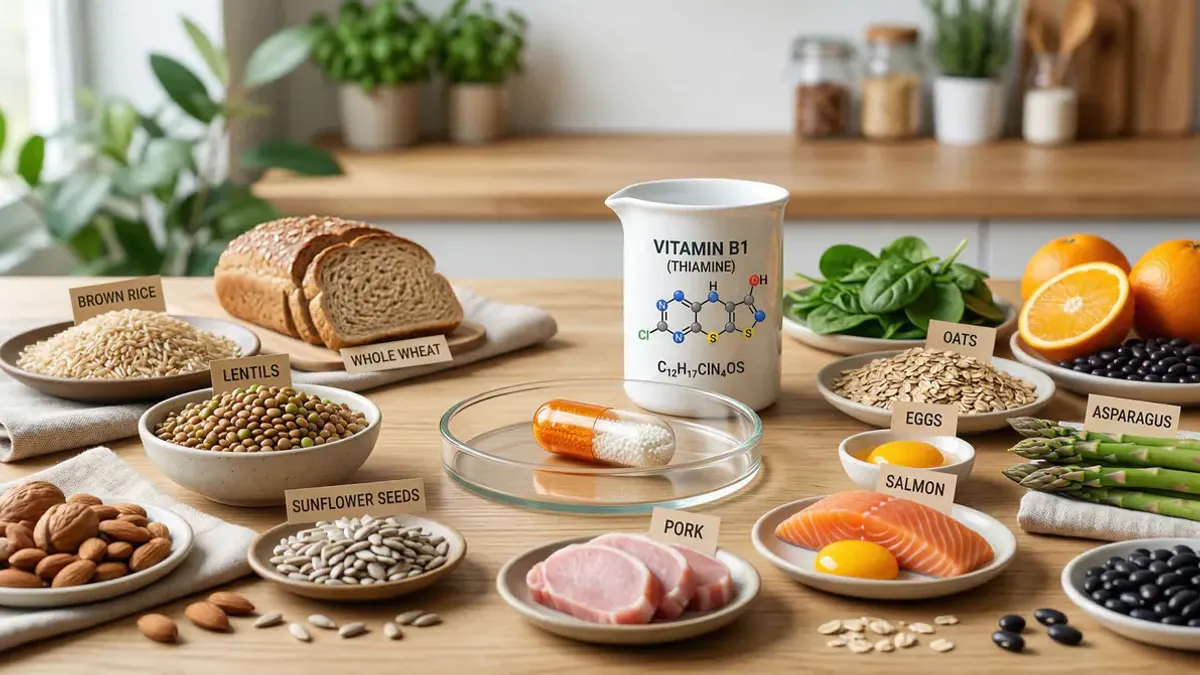
Vitamin B1, also known as thiamine, is a water-soluble B vitamin that plays a key role in the body energy metabolism. Without sufficient B1, cells cannot efficiently convert carbohydrates, fats and proteins into usable energy. It is also essential for a well-functioning nervous system and heart muscle.
Key takeaways
- Vitamin B1 is essential for energy production from carbohydrates
- RDA: 1.1 mg/day for women, 1.2 mg/day for men
- Best sources: whole grain products, pork, legumes, sunflower seeds
- Severe deficiency leads to beriberi or Wernicke encephalopathy
- Rare in the Netherlands, but risk is elevated in chronic alcohol users and people with poor diets
What does vitamin B1 do in the body?
Energy metabolism
The most well-known function of thiamine is its role as a coenzyme in the pyruvate dehydrogenase complex — an enzyme that converts glucose (from carbohydrates) into acetyl-CoA for use in the citric acid cycle. This process produces ATP, the energy currency of the cell. Organs with high energy demands — the brain, heart and muscles — are particularly dependent on thiamine.
Nervous system
Thiamine is essential for the production and maintenance of myelin — the protective sheath around nerve fibres. A deficiency damages this sheath, leading to neurological symptoms (neuropathy). Thiamine is also involved in the synthesis of acetylcholine, a neurotransmitter crucial for muscle coordination and memory.
Heart function
The heart consumes enormous amounts of energy and is therefore highly dependent on B1. In severe thiamine deficiency (wet beriberi), the heart muscle weakens, potentially leading to heart failure and fluid retention.
Brain glucose metabolism
The brain relies almost exclusively on glucose as fuel. In thiamine deficiency, the enzyme systems that process glucose are disrupted, which can cause brain cell damage — the basis of Wernicke encephalopathy in severe deficiency.
How much vitamin B1 do you need per day?
| Group | RDA |
|---|---|
| Women (adult) | 1.1 mg/day |
| Men (adult) | 1.2 mg/day |
| Pregnant women | 1.4 mg/day |
| Breastfeeding women | 1.5 mg/day |
Thiamine is barely stored in the body — reserves last only 2–3 weeks. Daily replenishment through diet is therefore essential.
Which foods are high in vitamin B1?
| Food | Portion | Vitamin B1 |
|---|---|---|
| Sunflower seeds | 30 g | ~0.45 mg |
| Pork (lean) | 100 g | ~0.90 mg |
| Whole grain bread | 2 slices (60 g) | ~0.25 mg |
| Lentils (cooked) | 100 g | ~0.17 mg |
| Edamame | 100 g | ~0.27 mg |
| Brown rice (cooked) | 100 g | ~0.14 mg |
| White beans (cooked) | 100 g | ~0.24 mg |
Note: thiamine is sensitive to heat. Boiling can destroy up to 50% of the thiamine content, especially in water. Steaming or brief stir-frying preserves more thiamine than prolonged boiling.
Want to know how B1 works alongside other B vitamins? Read our article on the vitamin B complex.
Vitamin B1 deficiency: symptoms and risk groups
A thiamine deficiency is rare in the Netherlands thanks to a varied diet and fortified grain products. Risk groups include:
- Chronic alcohol users: alcohol reduces thiamine absorption and increases excretion
- People with severe malnutrition or a monotonous diet (e.g. exclusively white rice)
- People after bariatric surgery (gastric bypass or sleeve)
- Patients with chronic diarrhoea or inflammatory bowel disease
- Older adults with poor nutritional intake
Mild deficiency symptoms
- Fatigue and weakness
- Difficulty concentrating
- Irritability
- Sleep problems
Severe deficiency: beriberi
Beriberi is the classic thiamine deficiency disease and occurs in two forms:
Dry beriberi affects the nervous system: muscle weakness, sensory disturbances in hands and feet (peripheral neuropathy), gait problems.
Wet beriberi affects the heart: heart failure, rapid heartbeat, fluid accumulation in the arms and legs.
Wernicke encephalopathy
In severe deficiency — almost always in the context of alcoholism — Wernicke encephalopathy may develop: an acute brain condition with confusion, abnormal eye movements and gait ataxia. This is a medical emergency requiring immediate thiamine injection.
Vitamin B1 and exercise
Athletes who burn large amounts of carbohydrates have a slightly higher B1 requirement. A balanced sports diet with whole grains, legumes and lean meat easily covers this need. Supplements are unnecessary for healthy athletes.
Tracking vitamin B1 in your diet
Want to know whether you are getting sufficient thiamine? With Moveno you can photograph your meal and instantly see all your nutrient values. Try Moveno free for 7 days.
Vitamin B1 and your overall nutrition
Thiamine supports energy metabolism, but optimal health starts with understanding your full diet. Read our beginner's guide to calorie tracking to learn how to monitor all your nutrients daily. If you also want to manage your weight, our calorie deficit calculator guide will help you find the right daily calorie target.