
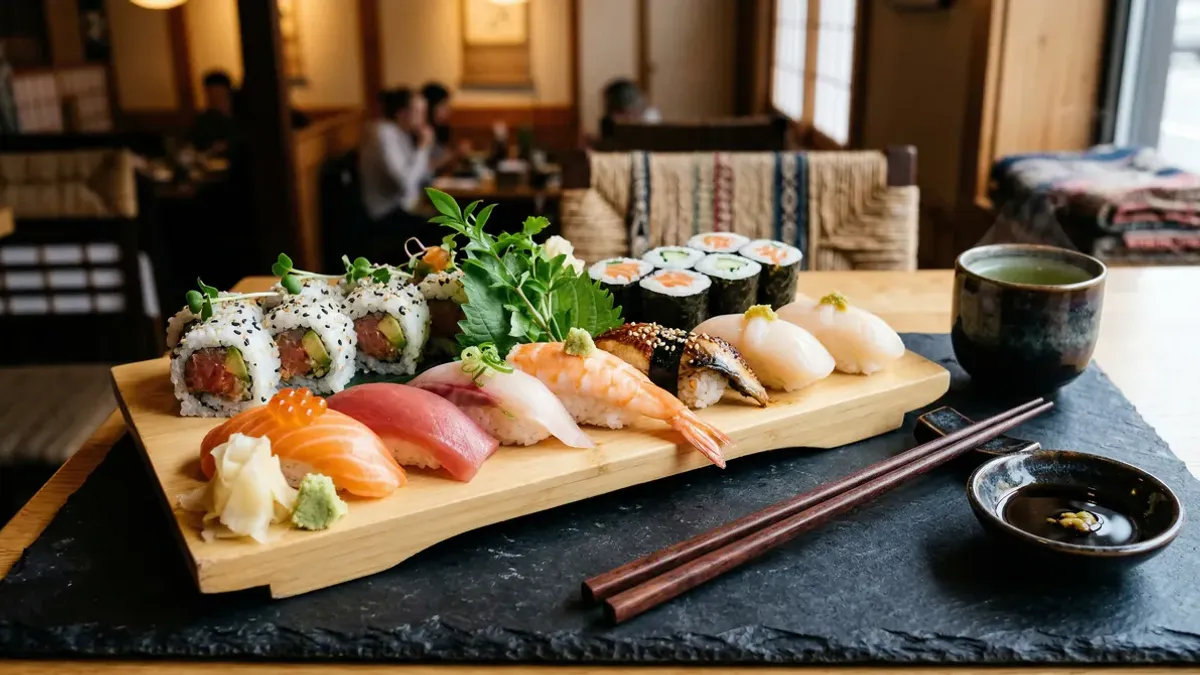
Ordering sushi feels like a healthy choice. Fish, rice, vegetables — what could go wrong? But a typical sushi dinner of 16 to 20 pieces can easily reach 800 to 1,200 kcal. The rice, the sauces, and especially the fried varieties make the difference. Each piece seems small, but it adds up fast.
Key takeaways
- Sashimi. The lightest option at 25 to 40 kcal per slice — pure fish, no rice.
- Nigiri. About 50 to 60 kcal per piece due to the combination of fish and a block of rice.
- Maki. 33 to 45 kcal per piece, depending on the filling.
- California roll. Around 270 kcal per 8 pieces because of the cream cheese and avocado.
- Tempura roll. 500 kcal or more per 8 pieces — the frying roughly doubles the calories.
- Soy sauce. Barely any calories (8 kcal per tablespoon), but loaded with sodium.
How many sushi calories are in each type?
The differences between sushi types are larger than most people expect. According to the Dutch Nutrition Centre, one piece of sushi (50g) averages 80 kcal, but that varies significantly by variant.
1. Sashimi
Sashimi is pure fish, no rice. A slice of salmon sashimi (about 25 to 30g) contains around 35 to 40 kcal. Six slices of salmon sashimi add up to roughly 210 to 240 kcal — and you get substantial protein in return. Sashimi is by far the lightest choice on any sushi menu.
2. Nigiri
Nigiri consists of a slice of fish on a small block of sushi rice. One piece of salmon nigiri contains about 56 kcal. The rice adds roughly 30 kcal per piece. Six pieces of nigiri come to about 330 to 360 kcal.
3. Maki
Maki are the familiar rolls wrapped in seaweed. One piece of salmon-cucumber maki contains about 33 kcal per piece (25g), according to the Dutch Nutrition Centre. Eight pieces of maki come to roughly 260 to 360 kcal, depending on the filling.
4. California roll
California rolls contain cream cheese, avocado, and surimi (crab stick), making them more calorie-dense than regular maki. Expect around 270 to 320 kcal per 8 pieces. The cream cheese and avocado make the difference.
5. Tempura roll
This is where it gets heavy. Tempura rolls contain deep-fried fish or shrimp, often with mayo-based sauces. A serving of 8 pieces easily reaches 500 kcal or more. The frying process adds significant fat and therefore calories.
Why does sushi seem lighter than it actually is?
The misconception that sushi is always light comes down to a few factors.
Small portions, big total. At 50 to 60 kcal per piece, each one seems harmless. But with a typical order of 16 to 20 pieces, you are already at 800 to 1,200 kcal. Because you eat piece by piece, you do not notice how quickly it accumulates.
The rice counts. Sushi rice is prepared with sugar and rice vinegar. Each piece of nigiri contains about 30 kcal of rice. With 12 pieces, that is 360 kcal from rice alone. For comparison, that equals a serving of cooked white rice.
Sauces and toppings. Spicy mayo, unagi sauce, and teriyaki contain 40 to 80 kcal per tablespoon. Many restaurants drizzle them generously over rolls.
Soy sauce: low in calories, high in sodium
Soy sauce contains just 8 kcal per tablespoon — not a calorie concern. But the sodium content is high: about 900 mg per tablespoon. That is nearly half the recommended daily intake of 2,000 mg.
Choose low-sodium soy sauce to cut the salt in half. Or dip the fish side into the soy sauce, not the rice — you will absorb less that way.
Sushi vs. other takeaway meals: how does it compare?
How do sushi calories stack up against other popular dishes?
- 12 pieces of maki. 400 to 540 kcal — less than a shawarma wrap (424 kcal plus sauce).
- Mixed sushi set (16 pieces). 700 to 900 kcal — comparable to two slices of bread with cheese plus a warm dinner.
- All-you-can-eat sushi. Easily 1,200 to 1,800 kcal — approaching a loaded kapsalon.
- Sashimi set (12 pieces). 300 to 450 kcal — the lightest takeaway option.
So sushi is not automatically the healthy choice it is made out to be. It depends entirely on what you order.
How do you choose smarter at the sushi bar?
You do not need to skip sushi when you are tracking your intake. A few adjustments let you enjoy just as much, with fewer calories.
1. Start with sashimi
Begin your order with sashimi. You get the flavor of fresh fish without the rice calories. A serving of six slices is just 210 to 240 kcal.
2. Choose maki over tempura rolls
Regular maki contains 33 to 45 kcal per piece. Tempura rolls contain double that or more. Over 8 pieces, the difference adds up to 200 kcal.
3. Limit sauces and toppings
Spicy mayo and teriyaki add 40 to 80 kcal per tablespoon. Ask for sauces on the side and use them sparingly.
4. Watch the rice quantity
Some restaurants make inside-out rolls with extra rice on the outside. That adds 10 to 15 kcal per piece. Regular maki with seaweed on the outside is lighter.
5. Be mindful at all-you-can-eat restaurants
It is tempting to keep ordering at an all-you-can-eat spot. Set a mental limit — 16 pieces is a reasonable amount — and alternate between sashimi and maki.
Start understanding what your sushi dinner really costs
Sushi can absolutely fit into a balanced eating pattern — when you know what you are ordering. Sashimi and regular maki are solid choices. Tempura rolls and heavy sauces are what turn a light meal into a heavy one.
Want to know where you stand with every meal? With Moveno, you take a photo of your sushi and instantly see the nutritional values per piece. So you can enjoy with full awareness, whether it is delivered to your door or eaten at the conveyor belt.