
Key takeaways
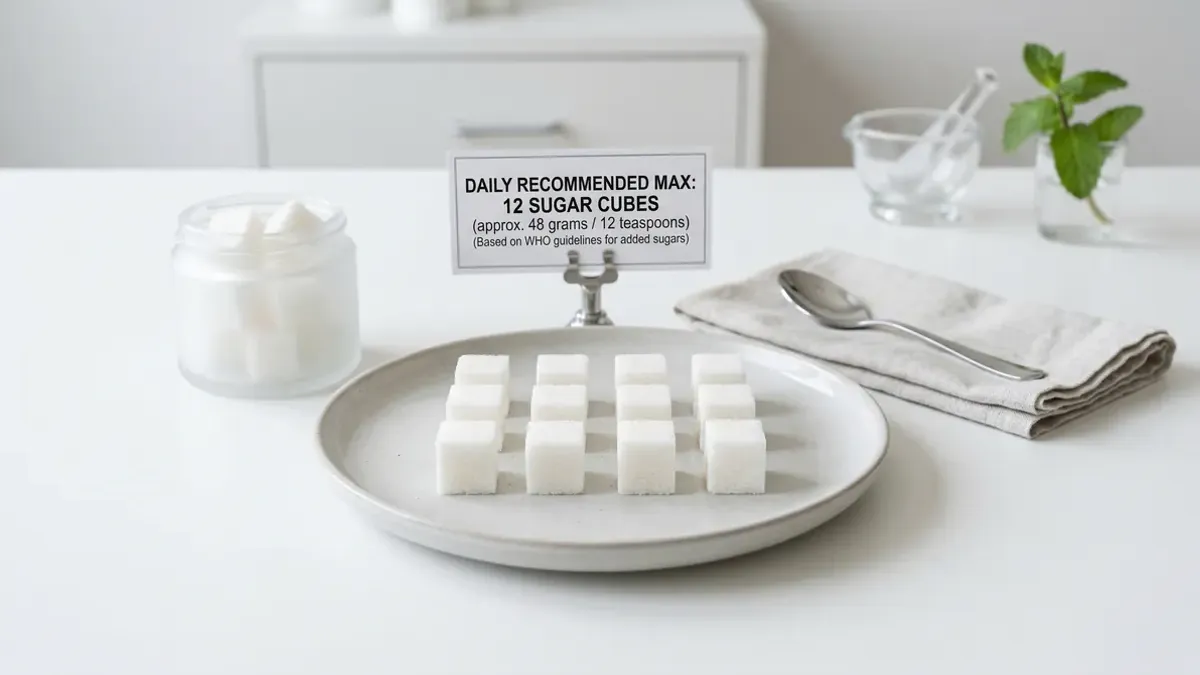
- The WHO recommends a maximum of 25 g of free sugars per day (roughly 6 teaspoons).
- Free sugars include all added sugars in food and drinks, plus sugars in honey, syrups, and fruit juice.
- Sugars naturally present in whole fruit, vegetables, and dairy do not count as free sugars.
- The average Dutch person consumes around 115 g of sugar per day — more than four times the recommendation.
- Swapping sugary drinks, flavoured yoghurts, and bottled sauces for lower-sugar alternatives has the biggest impact.
Sugar has been firmly in the spotlight in recent years — sometimes fairly, sometimes not. The fact is that many people consume considerably more sugar than they realise, not because they pour spoonfuls over their food, but because sugar hides in products that seem healthy: soups, sauces, yoghurt variants, bread, sports drinks.
What are free sugars?
The WHO's daily guideline refers specifically to free sugars. These include:
- All sugars added by manufacturers or consumers to food and drinks
- Sugars naturally present in honey, syrups, and fruit juices (including 100% juice)
Not included are sugars that occur naturally in whole fruit, vegetables, or dairy. An apple contains fructose, but it is bound to fibre, which slows absorption. A glass of apple juice contains similar sugars without the fibre — and that counts as a free sugar.
What does 25 g look like in practice?
25 grams of free sugars sounds like a lot. It is easier to reach than you might think:
| Product | Free sugars |
|---|---|
| 1 glass orange juice (200 ml) | ~20 g |
| 1 fruit yoghurt (125 g) | ~12 g |
| 1 tbsp ketchup | ~4 g |
| 1 slice wholemeal bread with jam | ~8 g |
| 1 can soft drink (330 ml) | ~33 g |
A glass of juice at breakfast plus one flavoured yoghurt puts you at roughly 32 g — above the entire daily WHO recommendation — before you have even reached lunch.
Why is there no official Dutch limit?
Voedingscentrum, the Dutch national nutrition authority, does not specify a maximum daily sugar intake in grams. The Health Council of the Netherlands advises limiting foods and drinks with added sugars, but without attaching a specific figure. The WHO's 25 g guideline is widely used as a reference point, but is not a legal standard.
What does too much sugar do to your body?
A chronically high sugar intake — sustained over time — is associated with:
- Weight gain: sugar provides energy with limited satiety, promoting overeating
- Tooth decay: sugar feeds oral bacteria that break down tooth enamel
- Increased risk of type 2 diabetes: not directly from sugar, but via the pathway of weight gain and insulin resistance
- Cardiovascular risk: elevated blood triglycerides from excess fructose consumption
Sugar is not toxic and has no direct threshold dose. The concern is long-term overconsumption combined with a sedentary lifestyle.
How to read a nutrition label
On a nutrition facts panel, look for the line "carbohydrates, of which sugars". This figure covers both added sugars and sugars naturally present in the product. Plain yoghurt contains lactose, which is not a free sugar. Sweetened yoghurt contains added sugars, which are.
Also check the ingredient list. Sugar hides under dozens of names: glucose (fructose) syrup, dextrose, maltose, sucrose, cane sugar, agave syrup, corn syrup, invert sugar. If several sugar variants appear in the list, the total content is often higher than it appears.
Practical steps to eat less sugar
Replace soft drinks and fruit juice with water or unsweetened tea. Drinks are the single largest source of free sugars for the average Dutch person.
Choose plain yoghurt and add your own fruit. Flavoured yoghurt variants consistently contain more sugar than their names suggest.
Make your own sauces. Ketchup, barbecue sauce, and ready-made soups all contain added sugars. A homemade tomato sauce takes 20 minutes and contains none.
Eat fruit whole, not as juice. The fibre slows sugar absorption and improves satiety.
Want to understand your full nutritional picture, not just sugar? Our beginner's guide to calorie tracking is the right starting point. And learn how to spot sugar on labels in our article on reading nutrition labels.
For more context on what high blood sugar does to the body, see our article on high blood sugar symptoms.
Sugar is not the enemy — but awareness is the key. 25 grams of free sugars per day is the WHO guideline; the average Dutch person consumes four times that. Small adjustments — fewer sugary drinks, less sweetened dairy, more whole fruit — already make a significant difference.
Sources: WHO – Guideline free sugars intake (2015), Voedingscentrum – Suiker, Diabetesfonds – Hoeveel suiker per dag