The banana is arguably the most popular fruit in the Netherlands — and for good reason. It is portable, affordable, naturally sweet, and packed with an impressive range of nutrients. But do the health claims hold up? Is a banana genuinely as nutritious as people say, and when is the best time to eat one?
Key takeaways
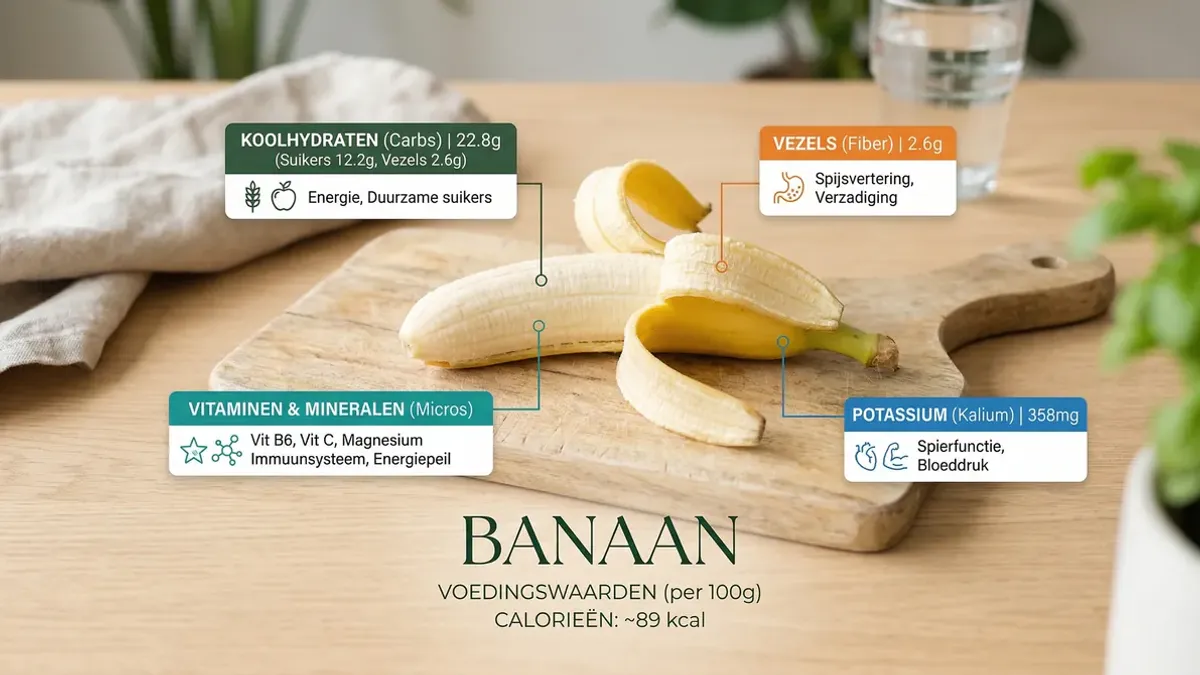
An average banana (120g) contains 105 kcal, 27g carbohydrates (of which 14g sugars and 3g fibre), 1.3g protein, and 0.4g fat. It is an excellent source of potassium (12% RDI) and vitamin B6 (25% RDI), and also contains vitamin C, magnesium, and manganese.
Macronutrients per banana
An average banana weighs about 120g (without the skin):
| Nutrient | Amount | % RDI |
|---|---|---|
| Energy | 105 kcal | — |
| Carbohydrates | 27g | 10% |
| Of which sugars | 14g | — |
| Of which fibre | 3g | 11% |
| Protein | 1.3g | 3% |
| Fat | 0.4g | 1% |
Carbohydrates and ripeness
The ratio of starch to sugars changes as a banana ripens. A green banana consists of approximately 70% resistant starch — a type of carbohydrate that is not absorbed in the small intestine and instead acts as prebiotic fibre in the large intestine. As the banana ripens, this starch converts to free sugars (glucose, fructose, sucrose), raising the glycaemic load.
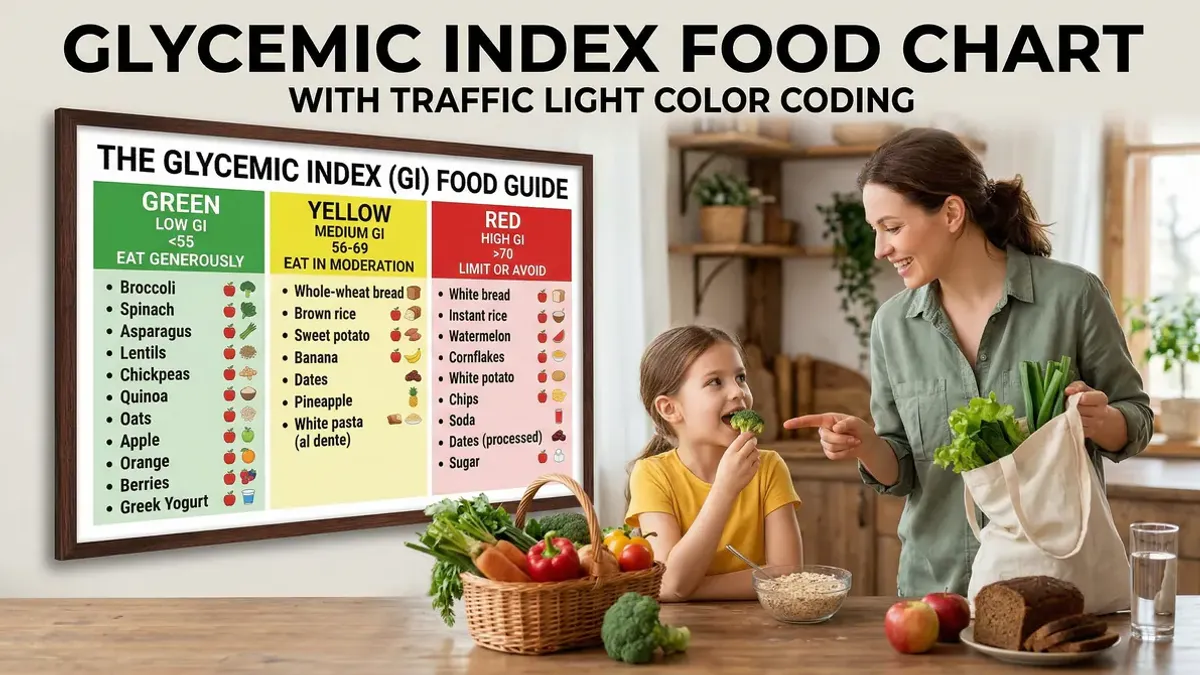
The glycaemic index (GI) of a green banana is approximately 30, while a ripe banana is around 60. This makes a less ripe banana a better choice for people who want to keep blood sugar stable, while a ripe banana provides faster energy — useful just before athletic performance.
Micronutrients: the real strength of the banana
Potassium: 422mg per banana (12% RDI)
Potassium is essential for blood pressure regulation, heart function, and muscle contraction. Adequate potassium intake — at least 3,500mg per day according to the Dutch Health Council — may help lower elevated blood pressure. Most Dutch people fall short of this; bananas are an easy way to increase intake.
Vitamin B6: 0.4mg per banana (25% RDI)
Vitamin B6 is involved in more than a hundred enzymatic reactions in the body, including the production of neurotransmitters (serotonin, dopamine, GABA) and the metabolism of proteins and carbohydrates. Getting a quarter of your daily requirement from a single banana is remarkably efficient.
Vitamin C: 10mg per banana (12% RDI)
Vitamin C is a powerful antioxidant that supports immunity and collagen synthesis. While citrus fruits are better-known C sources, a banana makes a meaningful contribution.
Magnesium: 32mg per banana (8% RDI)
Magnesium is involved in more than 300 enzymatic processes, including muscle function, nerve conduction, and energy metabolism.
Manganese: 0.3mg per banana (16% RDI)
Manganese is involved in protecting cells against oxidative stress and in bone formation.
Resistant starch and gut health
Green bananas are one of the richest sources of resistant starch in mainstream western diets. Resistant starch acts as prebiotic food for beneficial gut bacteria (particularly Bifidobacterium and Lactobacillus), supports the production of short-chain fatty acids (SCFAs), and may help regulate blood sugar levels.
If you want to improve gut health, green or slightly unripe bananas can be a valuable addition. A slightly underripe banana contains 2-4 times more resistant starch than a fully ripe one.
Bananas and sport
Bananas are popular as pre- and post-workout snacks:
Before exercise: the combination of readily available sugars and potassium makes a ripe banana ideal as a quick energy source 30-45 minutes before intense exercise. Read more about what to eat before a workout for a complete pre-training guide. Studies in cyclists and tennis players show that banana consumption delivers comparable performance to sports drinks during moderate exercise lasting 1-2 hours.
After exercise: carbohydrates for glycogen resynthesis + potassium for muscle recovery + B6 for protein metabolism — the combination makes the banana relevant post-workout too.
See our article on carbohydrates in banana if you are specifically interested in the carbohydrate composition, and explore healthy carbohydrates for more context.
Does a banana fit into a calorie-conscious diet?
At 105 kcal per banana, the calorie content is moderate. The combination of fibre and resistant starch creates a more sustained feeling of fullness than many other sweet snacks. Research suggests bananas suppress hunger more effectively than sweets with comparable calories.
In a calorie-conscious eating pattern, a banana fits well as a snack — as long as you count it in your total intake. Use a calorie tracker to stay on top of your daily totals. With Moveno you photograph your snack and instantly see the nutritional values.
Sources
- RIVM/NEVO (2023). Dutch Food Composition Database. rivm.nl
- Birt DF et al. (2013). Resistant starch: promise for improving human health. Advances in Nutrition, 4(6):587-601. doi.org/10.3945/an.113.004325
- Nieman DC et al. (2012). Bananas as an energy source during exercise: a metabolomics approach. PLOS ONE, 7(5):e37479. doi.org/10.1371/journal.pone.0037479
- Dutch Health Council (2015). Dietary recommendation for potassium. gezondheidsraad.nl