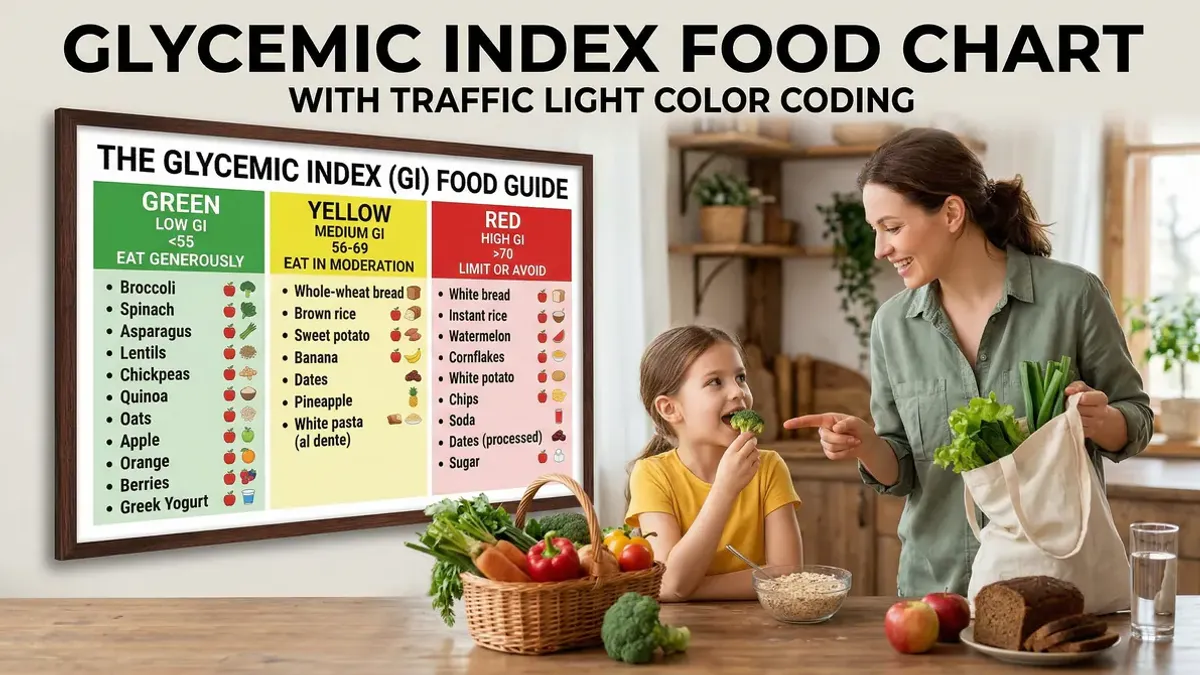
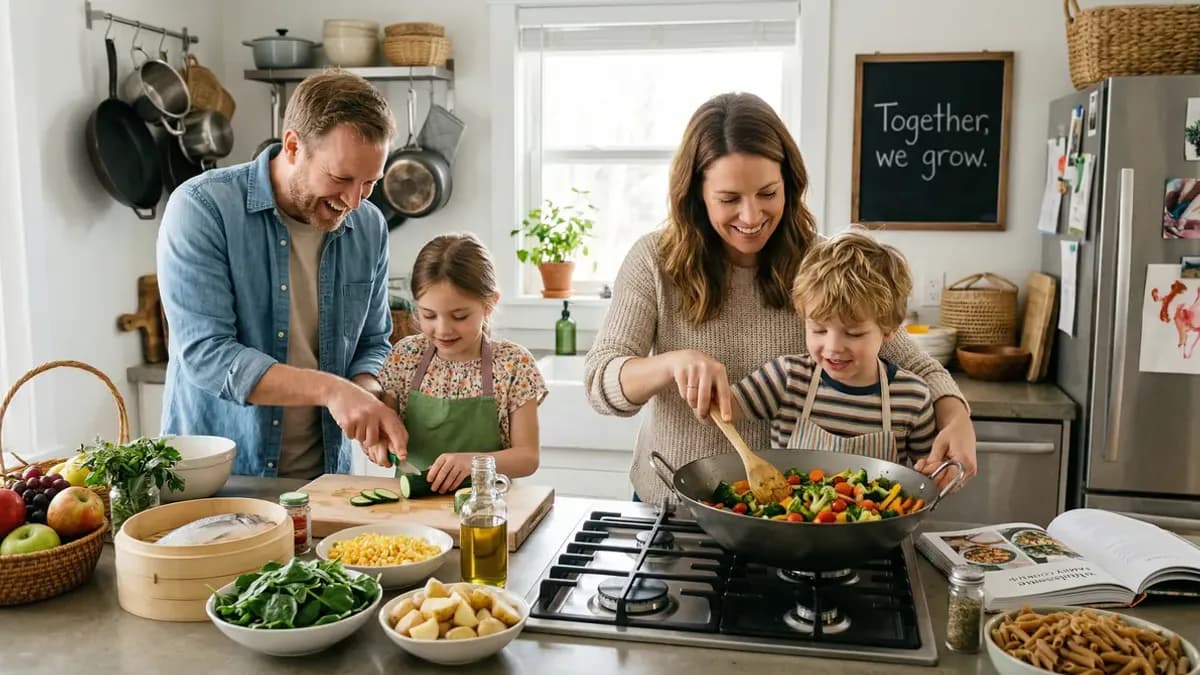
Children who learn to eat well early in life carry those habits with them for decades. But how do you achieve that without endless battles at the dinner table? The good news: every meal does not need to be perfect. Patterns matter — and the example you set matters most.
Key takeaways
- Modelling healthy eating is the most powerful tool. Children eat what parents eat — make sure your plate looks good too.
- Pressure and force backfire. Forcing a child to eat creates negative associations with food — the opposite of what you want.
- Repetition is the key. Children may need to try a new food eight to ten times before accepting it — do not give up too soon.
- Regular mealtimes provide structure and prevent all-day grazing.
- Sugary drinks are the biggest pitfall — water and milk are the best choices for children.
- Involve children in cooking. Kids who help prepare food are more willing to eat it.
Why do eating habits matter so much in childhood?
The eating patterns children develop early in life influence their food choices for decades. Children accustomed to varied, nutritious meals have a lower risk of weight problems and diet-related conditions later on.
That does not mean every bite needs to be perfect. The foundation is what matters: a varied diet with vegetables, fruit, wholegrains, dairy and protein-rich foods. Within that, there is room for a treat.
How do you teach children to eat well?
1. Lead by example
Children imitate adults. If you eat fruit as a snack and drink water with meals, they will be far more likely to do the same. Eat together at the table and show that food is enjoyable and normal.
2. Offer variety without pressure
Put vegetables on the table every day — even when your child does not like them. The Voedingscentrum recommends repeatedly offering new flavours without pressure. On average, children need eight to ten exposures before accepting a new food. Patience pays off.
3. Make vegetables appealing
Raw vegetables with a little hummus or yoghurt dip often work better than cooked versions. Let children choose which vegetable they want — a sense of control helps. Give vegetables exciting names: "super trees" for broccoli, "orange rockets" for carrots.
4. Stick to regular mealtimes
Set times for breakfast, lunch, dinner and two snacks provide structure. Children learn to eat when food is offered — not continuously throughout the day. This supports a healthy sense of hunger and fullness.
5. Get children involved in food
Let children watch and help in the kitchen. Kids who help wash vegetables or set the table are more willing to eat what is served. Give older children the occasional opportunity to choose what is for dinner — with some guidance.
What should children eat every day?
A healthy eating pattern for children includes:
- Vegetables and fruit. At least two pieces of fruit and 100-150 grams of vegetables per day, depending on age. Younger children need smaller portions.
- Wholegrain products. Wholegrain bread, pasta or brown rice provide fibre and sustained energy.
- Dairy. Milk, yoghurt or cheese deliver calcium for strong bones and teeth.
- Protein-rich food. Meat, fish, egg, legumes or nuts — a portion every day.
- Healthy fats. From fish, nuts and olive or sunflower oil in cooking.
The biggest pitfall: sugary drinks
Soft drinks, fruit juice, sports drinks and sweetened milk drinks are the largest source of added sugars in children's diets. They deliver calories without nutritional value and train children to prefer very sweet flavours.
The best choices:
- Water. The best thirst-quencher for children.
- Full-fat or semi-skimmed milk. Provides calcium and protein.
- Unsweetened herbal tea. A good alternative for older children.
Limit fruit juice to a maximum of one small glass per day — it lacks the fibre of whole fruit.
How do you handle picky eaters?
Almost every child goes through a picky eating phase. That is normal. Strategies that help:
- Serve familiar and new foods together. Always include something your child likes alongside something new — so there is always something to eat.
- Do not make it a big deal. Say once that you enjoy the food yourself. Do not cook separate meals.
- Let your child help choose. Which vegetable today — broccoli or carrots?
With Moveno, parents can track what the family eats and spot which nutrients could feature more often — without complex calculations.
Start today: make eating enjoyable
Building healthy eating habits in children is about patience, repetition and leading by example. Not a perfect plate at every meal — but consistent attention to a varied diet. Small adjustments compound: water instead of juice, vegetables at every meal, cooking together.
For more on the foundations of a healthy diet for the whole family, read our guide on healthy eating: the complete beginner's guide. Want to track calories for yourself alongside your children? Our beginner's guide to calorie tracking makes it straightforward, and you can use the calorie deficit calculator to find your personal daily target.
Sources
- Voedingscentrum — 11 tips to teach your child to eat healthily — evidence-backed strategies for healthy food parenting
- Voedingscentrum — What are healthy eating habits for my child? — practical tips for raising good eaters
- Voedingscentrum — All about food and drink for children aged 4-13 — dietary guidelines by age group