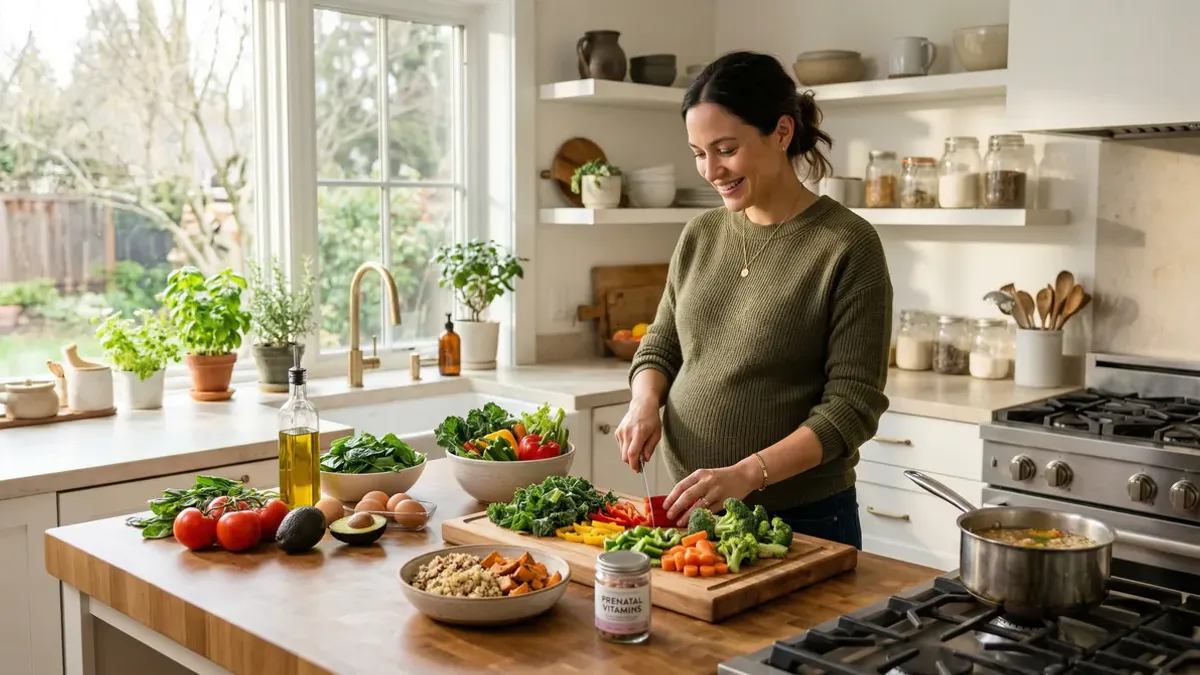
Pregnancy is a period when what you eat directly affects both your own health and your baby's development. The good news: it does not have to be complicated. A varied diet with a few targeted additions and two essential supplements covers most of what you need.
Key takeaways
- Folic acid is non-negotiable: 400 micrograms per day, starting before conception and continuing through week ten of pregnancy.
- Vitamin D (10 micrograms daily) supports your baby's bone development throughout the entire pregnancy.
- Some foods carry genuine risks: raw meat, raw fish, soft cheeses, liver pâté and alcohol should be avoided.
- Caffeine in moderation: the recommendation is a maximum of 200 milligrams per day — roughly two cups of coffee.
- Iron, calcium and omega-3 become especially important in the second half of pregnancy.
- You do not need dramatically more calories — quality matters far more than quantity.
How do nutritional needs change during pregnancy?
Pregnancy does change your nutritional needs, but you are not eating for two. Only in the third trimester does calorie intake need to increase slightly — by roughly 200-300 kilocalories per day. What matters much more is the quality of what you eat. Certain nutrients are needed in greater amounts to support your baby's development.
A varied diet following the Dutch Schijf van Vijf (or an equivalent whole-foods approach) provides the foundation. But for folic acid and vitamin D, diet alone is not sufficient — supplements are necessary.
Which supplements are essential?
The Voedingscentrum (Dutch Nutrition Centre) is clear on two supplements every pregnant woman needs:
1. Folic acid (400 micrograms per day)
Start as early as possible — ideally four weeks before conception — and continue through week ten of pregnancy. Folic acid may significantly reduce the risk of neural tube defects (spina bifida) in the baby. There is also evidence suggesting it may lower the risk of preterm birth and cleft lip/palate.
Note: many pregnancies are unplanned. Start folic acid as soon as you are planning to conceive or know you are pregnant.
2. Vitamin D (10 micrograms per day)
Vitamin D is needed throughout the entire pregnancy to support your baby's bone development. Food sources alone are insufficient. Research also suggests vitamin D supplementation may reduce the risk of gestational diabetes and low birth weight.
What should you prioritise eating?
A varied diet is the starting point. But certain nutrients deserve particular attention:
- Iron. Needed for red blood cell production for both you and your baby. Good sources: lean red meat (in moderation), legumes, dark leafy vegetables and wholegrain bread. Pair with vitamin C-rich foods for better absorption.
- Calcium. Essential for your baby's bone development. Ensure sufficient dairy (milk, yoghurt, cheese) or calcium-enriched plant-based alternatives such as fortified soy milk.
- Omega-3 (DHA). Important for your baby's brain development. Eating oily fish twice per week — salmon, herring or mackerel — is the most direct way to meet this need.
- Iodine. Found in iodised bread, dairy and seafood. Important for thyroid function and brain development.
What should you absolutely avoid?
Some foods pose genuine risks during pregnancy due to bacteria such as listeria, salmonella or toxoplasma — all of which can be harmful to an unborn baby.
Avoid these:
- Raw meat and raw fish. Including sushi, carpaccio, tartare and smoked fish (unless served in a cooked dish).
- Soft and mould-ripened cheeses. Brie, camembert, roquefort and similar soft cheeses may contain listeria.
- Liver pâté and liver. Very high in retinol (preformed vitamin A), which can be harmful to the developing baby at high doses.
- Raw eggs. Avoid dishes with raw or undercooked eggs such as homemade mayonnaise or tiramisu.
- Alcohol. No safe level has been established. The advice is to avoid alcohol throughout the entire pregnancy.
- More than 200 mg of caffeine per day. Roughly two cups of filter coffee. Black tea, cola and energy drinks also count.
Nausea and eating difficulties: what helps?
Nausea in the first trimester is very common and often has little to do with what you eat. A few practical strategies:
- Eat small amounts more frequently throughout the day
- Start the morning with a few crackers or rice cakes before getting up
- Avoid fatty, heavily spiced or very sweet foods if these trigger nausea
- Stay hydrated — water, herbal tea or diluted fruit juice work well
With Moveno, you can easily track what you eat each day — useful for checking whether you are getting enough iron, calcium or folic acid from food alongside your supplements.
Build the right foundation
Nutrition during pregnancy does not need to be perfect. Start with the two essential supplements (folic acid and vitamin D), eat a varied diet, avoid the risky foods, and listen to your body. For personalised advice — especially if you have specific conditions or follow a vegetarian or vegan diet — consulting your midwife or GP is always worthwhile.
To learn more about healthy eating fundamentals, read our guide on healthy eating: the complete beginner's guide. Want to understand how many calories you need during and after pregnancy? Our beginner's guide to calorie tracking explains the basics, and after giving birth you can use the calorie deficit calculator to work towards a healthy post-pregnancy weight.
Sources
- Voedingscentrum — Which supplements should I take during pregnancy? — folic acid (400 mcg) and vitamin D (10 mcg) recommendations
- Voedingscentrum — Healthy pregnancy nutrition — dietary advice around conception and pregnancy
- Gezondheidsraad — Nutritional recommendations for pregnant women (2021) — scientific basis for supplement and nutrient recommendations