Building a healthy eating pattern is easier with structure. But a meal plan isn't a rigid diet — it's a tool that helps you eat more deliberately without having to think from scratch every day.
Key takeaways
- Women looking to lose weight typically need around 1,500 to 1,700 kcal per day, depending on height, weight, and activity level.
- Losing half a kilogram per week is a healthy, sustainable pace — the standard recommended by dietitians.
- Aim for 90 to 100 grams of protein per day for satiety and muscle preservation during a calorie deficit.
- Target at least 30 grams of fibre per day to stay full and support digestion.
- Consistency over several weeks matters more than a perfect single day.
Why a meal plan works
A meal plan brings structure to your eating. It helps you plan meals in advance, shop more intentionally, and reduce impulsive eating. You don't have to eat perfectly — staying close to the plan on most days is enough to see progress.
To understand how many calories you personally need, calculating your calorie deficit is the right starting point.
Calorie needs for women trying to lose weight
Calorie needs vary between individuals. According to Voedingscentrum (the Dutch Nutrition Centre), women with a healthy weight need approximately 1,900 kcal per day on average. When losing weight, around 1,500 kcal per day is a reasonable lower limit — going below this increases the risk of nutrient deficiencies and can slow your metabolism.
A daily deficit of 300 to 500 kcal typically leads to around half a kilogram of weight loss per week — a pace most people can sustain without intense hunger.
For a more detailed breakdown, see our guide on how many calories women need per day.
Protein and fibre: the two nutrients to prioritise
Two nutrients deserve special attention when losing weight:
- Protein. Protein keeps you fuller for longer than carbohydrates or fat, helps preserve muscle mass during a calorie deficit, and has a higher thermic effect (your body burns more calories digesting it). Aim for 90 to 100 grams per day — achievable through normal food. Read more about high-protein foods and daily protein needs.
- Fibre. Voedingscentrum recommends 30 to 40 grams of fibre per day. Fibre promotes lasting fullness and supports digestive health. Key sources: vegetables, legumes, whole grains, and fruit.
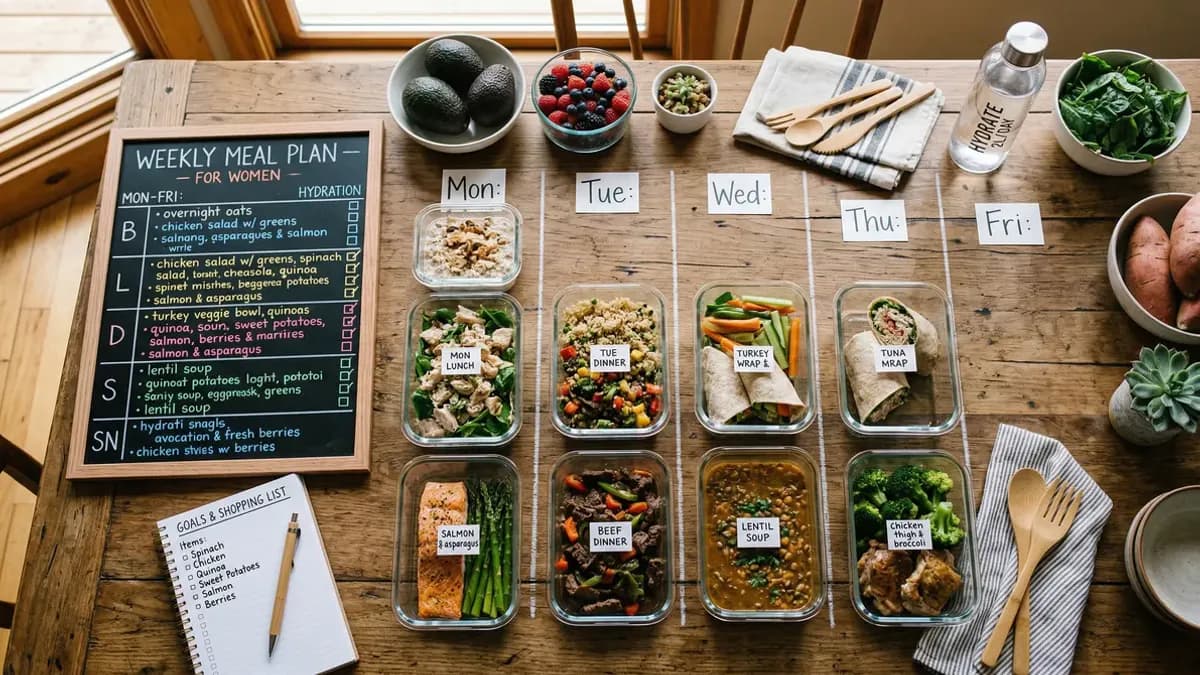
Example weekly menu (approx. 1,600 kcal)
This menu is a starting point — adapt it to your own tastes, allergies, and schedule.
Breakfast (approx. 350 kcal)
- Option A: Greek yoghurt (200 g) with mixed fruit and a handful of nuts
- Option B: Oatmeal with semi-skimmed milk, banana, and cinnamon
- Option C: Two slices of wholegrain bread with egg and cucumber
Lunch (approx. 450 kcal)
- Option A: Wholegrain bread with chicken breast, lettuce, and tomato
- Option B: Vegetable soup with a wholegrain roll and boiled egg
- Option C: Salad with chickpeas, feta, cucumber, and olive oil
Dinner (approx. 550 kcal)
- Option A: Salmon with steamed broccoli and brown rice
- Option B: Chicken breast with sweet potato and stir-fried vegetables
- Option C: Lentil soup with wholegrain bread and a mixed salad
Snacks (approx. 250 kcal)
- An apple + 20 grams of nuts
- Quark (150 g) with a teaspoon of honey
- Wholegrain rice cakes with hummus
Practical tips for staying consistent
- Meal prep on Sundays. Prepare basic ingredients in advance — boiled eggs, chopped vegetables, cooked grains. This saves time during the week and reduces the temptation of less healthy options.
- Shop with a list. Don't shop hungry, and stick to your list. What doesn't enter the house won't tempt you.
- Vary regularly. A plan works better if you can sustain it. Rotate your favourite healthy meals — you don't need to eat something different every day.
- Eat slowly. Chew well and take your time. Satiety signals take 15 to 20 minutes to reach the brain.
- Don't skip meals. Skipping breakfast in particular leads many women to feel hungrier later in the day, which can result in eating more overall.
How to keep going
A meal plan isn't a straitjacket. The most sustainable approach is to be flexible: follow the broad framework and be forgiving when a day goes less well. One off-day is not a reason to stop.
If you find that despite following the plan you're barely losing weight, a slow metabolism may be a factor. Read about how to speed up your metabolism for additional strategies.
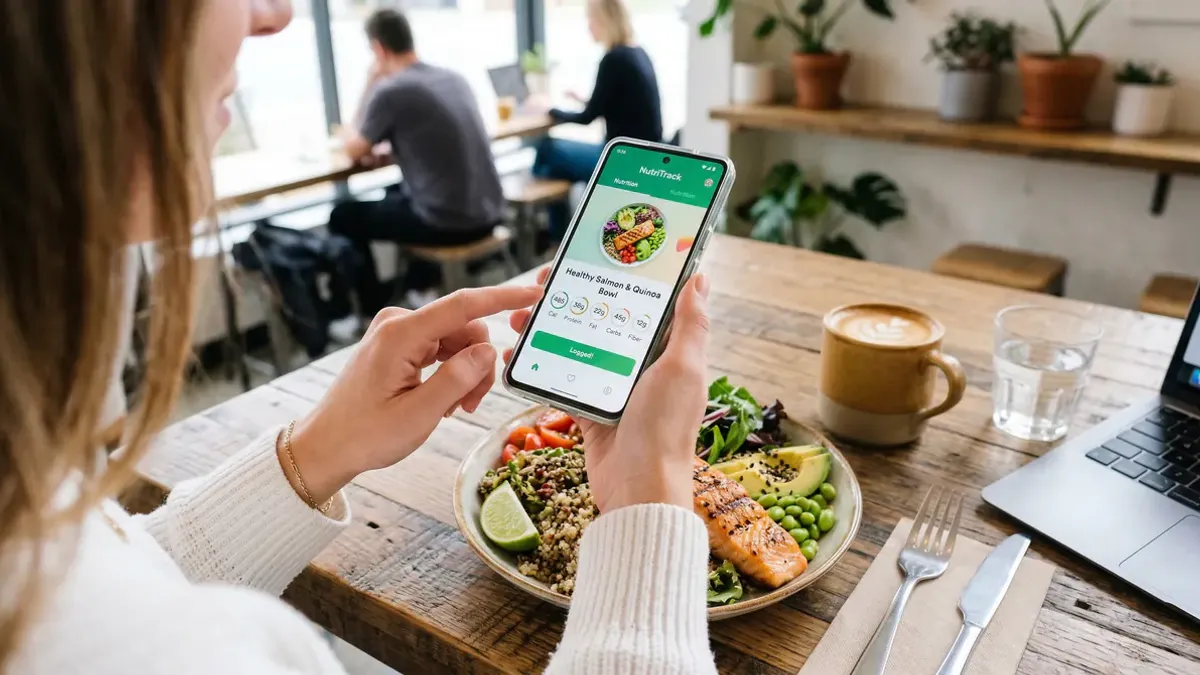
Need help tracking what you eat? With Moveno, you photograph your meals and instantly see the nutritional breakdown. No manual entry, no hassle — just genuine insight into your eating patterns so you can make more deliberate choices.
Start with structure today
A good meal plan doesn't start with perfection — it starts with one step. Pick one meal option from above for tomorrow and prepare it in advance. Building small habits consistently works better than launching a completely new diet on Monday. New to tracking your intake? Our beginner's guide to calorie tracking will help you build the habit alongside this meal plan.
Sources
- Voedingscentrum — Sample menus for weight loss — example daily menus for healthy weight loss in women
- Voedingscentrum — Weight loss with healthy food — guidelines for sustainable weight loss using the Dutch food guidelines
- Voedingscentrum — Protein — role of protein in preserving muscle mass during weight loss
- Voedingscentrum — Dietary reference values — recommended daily intakes for fibre and other nutrients