Why a meal plan helps
Healthy eating sounds simple, but in practice most people stumble over the same obstacles: no idea what to cook, too little time, and too many temptations along the way. A meal plan provides structure. It removes daily decision fatigue and makes healthy choices easier to follow through on.
Research shows that people who plan their meals in advance eat more vegetables on average, consume fewer calories from processed products, and spend less money on groceries. A plan is more than a diet trick — it is an efficiency tool.
What does a good meal plan contain?
A solid basic meal plan follows several principles:
- 3 main meals + 1–2 snacks per day for stable blood sugar
- At least 200 g vegetables per day (Dutch health guidelines recommend 250 g)
- 2 pieces of fruit per day
- 1.2–1.6 g protein per day per kg body weight for muscle retention and satiety
- 25–30 g fibre for healthy digestion
- Adequate fluids: at least 1.5–2 litres of water per day
The goal is not perfection but a pattern you can sustain.
Free weekly menu: a practical example
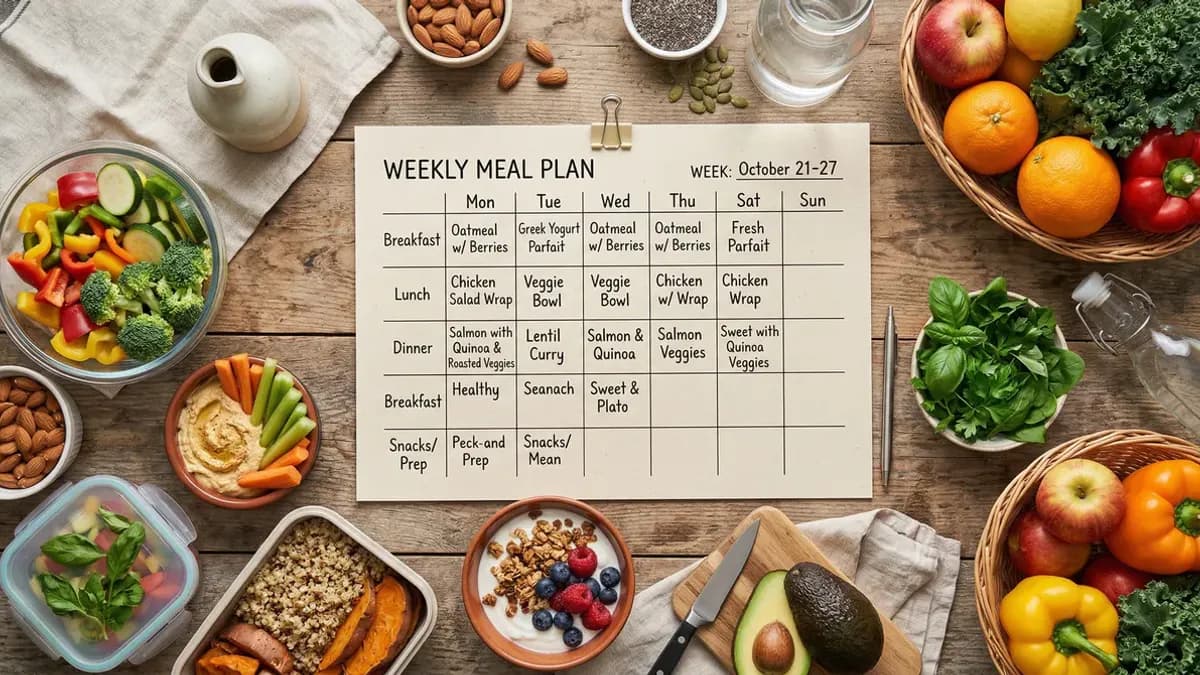
Below is a concrete weekly menu for an average adult at approximately 2,000 kcal. Adjust portions based on your goal (lose weight, maintain, or gain).
Monday
- Breakfast: Oats (60 g) with semi-skimmed milk, half a banana, 10 g walnuts
- Lunch: 2 slices wholemeal bread with chicken breast and cucumber
- Dinner: Pasta with tomato sauce, minced beef and courgette
- Snack: 150 g Greek yoghurt with a handful of berries
Tuesday
- Breakfast: 2 scrambled eggs with wholemeal toast and tomato
- Lunch: Large salad with canned tuna, chickpeas and olive oil
- Dinner: Grilled salmon with potatoes and broccoli
- Snack: Apple with a tablespoon of peanut butter
Wednesday
- Breakfast: Cottage cheese (200 g) with granola and fresh fruit
- Lunch: Lentil soup with wholemeal bread
- Dinner: Oven-baked chicken breast with sweet potato and green beans
- Snack: Handful of unsalted nuts and a small tangerine
Thursday
- Breakfast: Oats with cinnamon, apple and flaxseeds
- Lunch: Wrap with hummus, grilled vegetables and feta
- Dinner: Stir-fry with chicken breast, bell pepper, mangetout and rice
- Snack: Cucumber with tzatziki
Friday
- Breakfast: Wholemeal bread with avocado and egg
- Lunch: Tomato soup with wholemeal bread
- Dinner: Salmon burger on a wholemeal bun with salad
- Snack: 150 g cottage cheese with honey
Saturday
- Breakfast: Wholemeal pancakes with fresh fruit — intentionally more indulgent
- Lunch: Buddha bowl with rice, chickpeas, avocado and dressing
- Dinner: Pasta aglio e olio with prawns and parsley
- Snack: A piece of dark chocolate and tea
Sunday
- Breakfast: Smoothie with spinach, banana, semi-skimmed yoghurt and oats
- Lunch: Grilled chicken with wholemeal pitta and vegetable salad
- Dinner: Pea soup (split peas, pork, celeriac) — classic and nutritious
- Snack: Pear or apple
Shopping list for the week
Based on this weekly menu, the staple items you need are:
Fresh:
- Chicken breast (±600 g), salmon (2 fillets), minced beef (250 g)
- Eggs (6), Greek yoghurt, cottage cheese, semi-skimmed milk
- Various vegetables: broccoli, courgette, bell pepper, cucumber, green beans, spinach
- Fruit: bananas, apples, berries, pear
Dry/storecupboard:
- Oats, wholemeal pasta, rice, split peas
- Wholemeal bread, wholemeal wraps
- Chickpeas (canned), lentils (canned or dried)
- Olive oil, mixed nuts, peanut butter, flaxseeds
Tips for sticking to your meal plan
Drawing up a plan is one thing — actually following through is another. This helps:
Sunday meal prep
Cook a large batch of grains (rice, pasta) for 3–4 days. Chop vegetables in advance. Bake a batch of eggs or chicken fillets. This saves you at least 20–30 minutes every day.
Build in flexibility
Plan one day a week as a "free day" — or leave room for a restaurant or takeaway meal. A meal plan is a guideline, not a straitjacket. People who are too rigid tend to give up sooner.
Vary by season
Use seasonal vegetables for the best flavour and value. In winter: carrots, leek, celeriac, red cabbage. In summer: tomatoes, courgette, bell pepper, cucumber. Variety keeps your plan interesting and your micronutrient intake diverse.
Consciously track portion size
It is easier than you think to unintentionally eat too much — even of healthy foods. Start by estimating and tracking your portions. After 2–3 weeks you will have a good feel for what a portion looks like without measuring every time.
Adjusting the meal plan to your goal
This base plan is calorie-neutral. Adapt it to your goal:
- Lose weight: reduce carbohydrate portions by 20–25%, add more vegetables, choose lean protein sources
- Build muscle: increase portions by 200–400 kcal, add extra protein sources (see also our muscle-building meal plan)
- Maintain weight: use this plan as a base and let your energy level guide you
Key takeaways
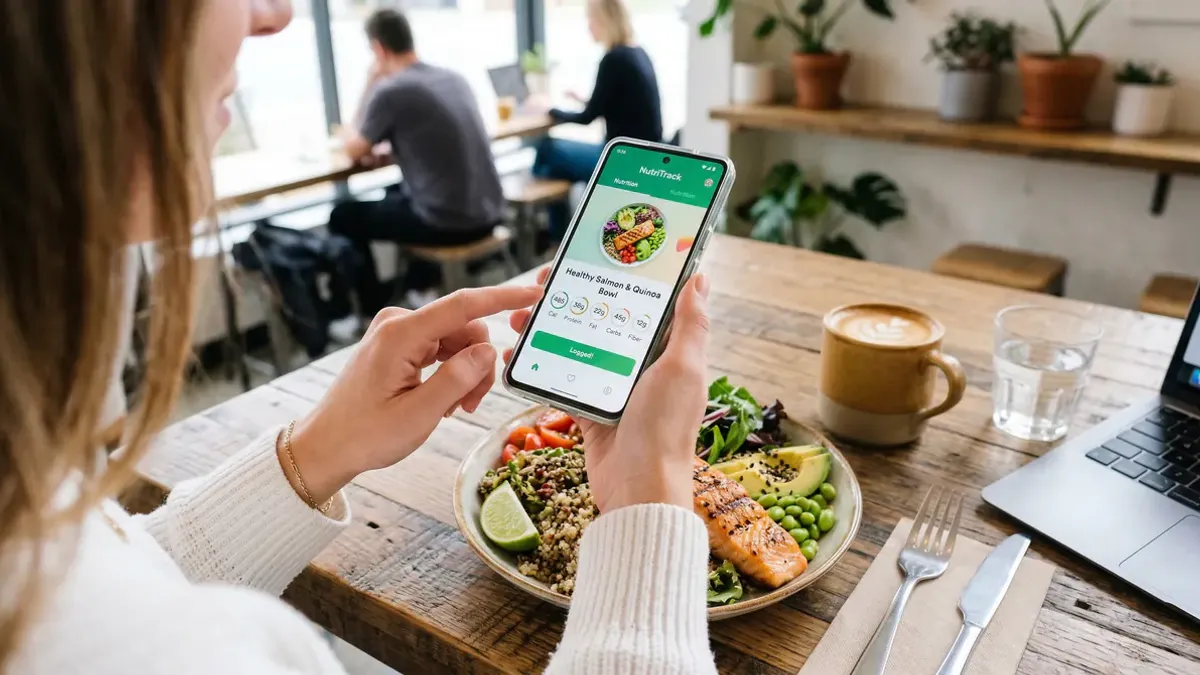
A free meal plan does not need to be complicated. The key is structure: 3 main meals, plenty of vegetables and fruit, adequate protein and fibre. This weekly menu gives you a concrete starting point — adapt it to your preferences, goals and the season. Sunday meal prep makes the rest of the week considerably easier. Want to track whether you are actually hitting your macros and calories? Use a nutrition tracker to make it visible — our calorie tracking beginner's guide shows you how, and our calorie deficit calculator gives you your target.
Sources
- Gezondheidsraad (2015). Dietary guidelines 2015. https://www.gezondheidsraad.nl/documenten/adviezen/2015/11/04/richtlijnen-goede-voeding-2015
- Ducrot P et al. (2017). Meal planning is associated with food variety, diet quality and body weight status in a large sample of French adults. International Journal of Behavioral Nutrition and Physical Activity. https://ijbnpa.biomedcentral.com/articles/10.1186/s12966-017-0461-7
- Dutch Nutrition Centre (Voedingscentrum). The Wheel of Five. https://www.voedingscentrum.nl/nl/schijf-van-vijf.aspx