Intermittent fasting is popular among women — but so is the concern that it might disrupt hormones, affect fertility, or interfere with the menstrual cycle. How much of that is evidence-based, and how much is noise? Here is what the research actually shows.
Key takeaways
- Research shows IF does not significantly affect oestrogen levels, fertility or menstruation in most women.
- Starting conservatively with a 14/10 window (rather than 16/8) reduces the risk of hormonal disruption.
- Stop IF immediately if your menstrual cycle becomes irregular — this is a clear signal from your body.
- Women with PCOS may benefit from IF, with multiple clinical studies showing improved hormonal markers.
- IF is not suitable during pregnancy, breastfeeding, or for anyone with a current or past eating disorder.
Does IF work differently for women?
This question comes up often — and the answer is more nuanced than popular articles suggest. Some older animal studies suggested that strict fasting might disrupt hormones in female subjects. Human evidence tells a different story.
A review published on PubMed (2022) concluded that IF had no significant effect on oestrogen, gonadotropins or prolactin in women. A separate review on the safety of IF in women found it to be a safe weight-loss intervention that does not significantly affect reproductive health, bone health or sleep.
That said, the studies are relatively small and short in duration. As with any eating pattern, paying attention to how your own body responds is essential.
Who might benefit most?
Women with polycystic ovary syndrome (PCOS) appear to be a distinct group. Multiple studies suggest IF may help reduce hyperandrogenaemia, improve insulin resistance and support more regular menstrual cycles in women with PCOS. IF is even being studied as a non-pharmacological intervention for the condition.
For most women, IF works similarly to how it works for men: it may help with weight loss if it leads to a reduction in total calorie intake. See our comparison of intermittent fasting schedules for a breakdown of which protocol might suit you.
Practical guidance for women starting IF
If you want to try IF, these are the key considerations:
Step 1: Start conservatively
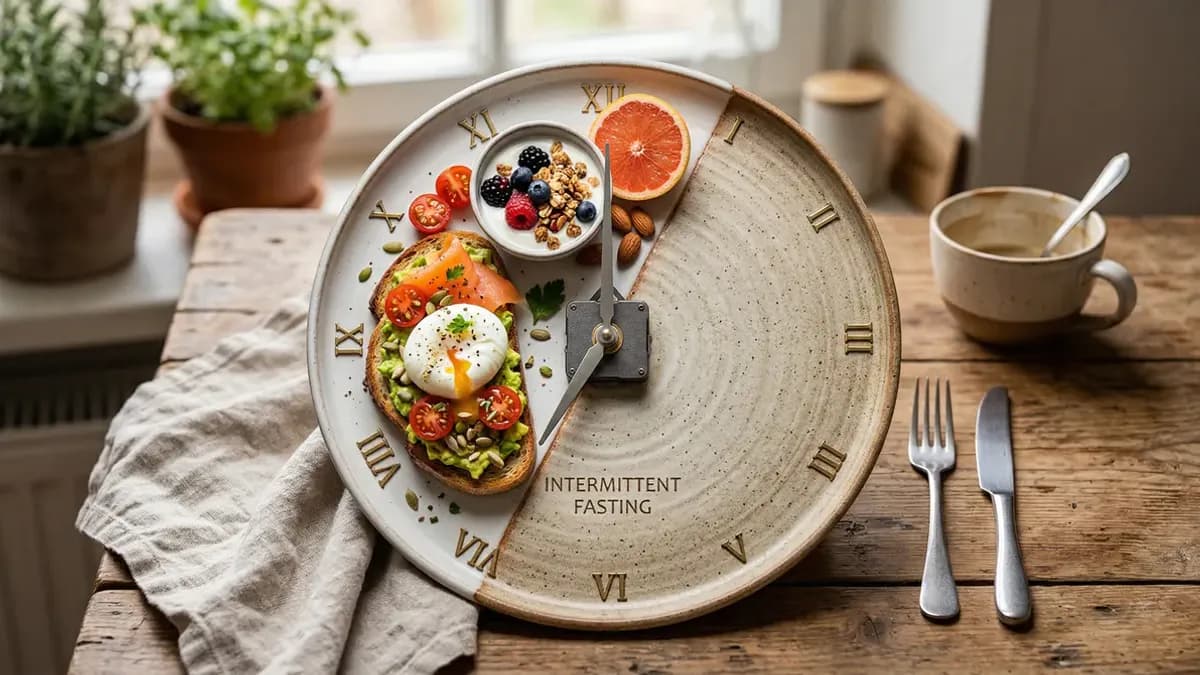
Begin with 14/10 (14 hours fasting, 10 hours eating) rather than jumping straight to 16/8. Give your body two to four weeks to adjust before narrowing the window further.
Step 2: Watch for signals from your body
Stop IF immediately if you notice:
- Irregular or absent periods.
- Extreme fatigue or difficulty concentrating.
- Increased anxiety or stress beyond what feels normal.
These are signs that the fasting window is too long or that IF is not right for you at this time.
Step 3: Make your eating window count nutritionally
A shorter eating window does not reduce your nutritional needs. Make sure you are getting sufficient iron, calcium and folate — nutrients that are particularly important for women. A nutrition app can help you track these. Want to know if you are hitting your fibre targets too? See our complete guide to daily fibre intake.
Step 4: Adapt to your cycle
Many women notice increased hunger during the luteal phase (the week before menstruation). Widening your eating window slightly during this phase is completely reasonable. IF is not a rigid system — adapting it is not failure.
Who should definitely avoid IF?
Regardless of gender, some situations make IF unsuitable. For women in particular:
- Pregnancy and breastfeeding. Nutritional needs are elevated; fasting is not advisable.
- Current or past eating disorder. Time windows and deliberate eating delays can disrupt recovery.
- Being underweight. Further calorie restriction is not appropriate.
- Adolescence. Growing bodies need regular nourishment.
When in doubt, always consult your doctor or registered dietitian before starting any fasting protocol.
Begin gently, not strictly
IF does not have to be rigid. Start slowly, listen to your body and adapt the schedule to your life — not the other way around. Want to understand the nutritional value of your meals during your eating window? With Moveno you can photograph your food and see the full breakdown immediately.
Sources
- PubMed — Effect of Intermittent Fasting on Reproductive Hormone Levels in Females and Males (2022) — review of hormonal effects in women
- PubMed — Effects of Intermittent Fasting on Female Reproductive Function (2024) — animal and human studies on fertility
- PubMed — The impact of intermittent fasting on fertility: PCOS systematic review (2025) — IF and reproductive health in PCOS
- Voedingscentrum — Intermittent fasting — Dutch national nutrition guidelines on IF