
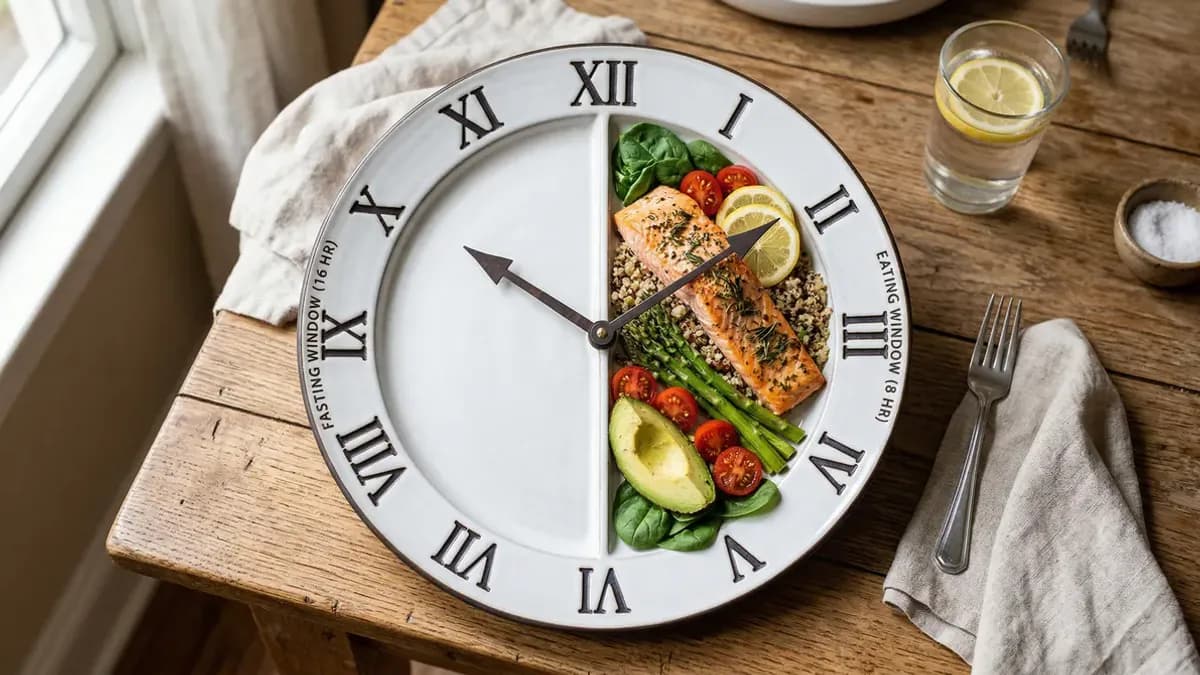
Of all intermittent fasting protocols, 16/8 is by far the most popular — and for good reason. It fits into almost any daily schedule without major disruption. But how does it actually work, what can you drink during the fasting window, and what should you expect in the first few weeks?
Key takeaways
- With 16/8, you fast for 16 hours and eat within an 8-hour window — typically noon to 8pm.
- During the fasting window, water, black coffee and plain tea are allowed.
- Research shows 16/8 may contribute to weight loss and improved insulin sensitivity in people with overweight.
- Most people find morning hunger subsides after two to three weeks of consistent practice.
- 16/8 is not suitable for pregnant women, people with type 1 diabetes, or those with a current or past eating disorder.
How does 16/8 work?
The 16/8 method divides the day into two blocks: a 16-hour fasting window and an 8-hour eating window. The most common pattern looks like this:
- Last meal: 8pm
- Fasting window: 8pm to noon (16 hours, mostly during sleep)
- First meal: noon
- Eating window closes: 8pm
Because you sleep through a large part of the fast, the adjustment is mainly about skipping breakfast — not about going hungry all day.
The timing is also flexible. Some people prefer eating from 10am to 6pm or from 8am to 4pm. The specific hours do not matter; what matters is maintaining the 8-hour eating window consistently.
What can you drink during the fast?
The rule of thumb: anything with zero calories is permitted.
- Water. As much as you want — staying hydrated during the fast is important.
- Black coffee. Fine, but without milk, sugar or flavoured syrups.
- Plain tea. Fine, as long as it is unsweetened and without milk.
- Coffee with milk or sugar. Breaks the fast — avoid.
- Diet fizzy drinks. Technically calorie-free, but artificial sweeteners may trigger an insulin response in some people; best avoided if you want maximum fasting benefits.
What to expect in the first weeks
The first week tends to be the most challenging. Your body is conditioned to eat at regular intervals and will signal hunger at the usual times. That is completely normal.
What most people experience:
- Week 1: Morning hunger, possibly mild headaches or reduced concentration as your body adjusts.
- Weeks 2–3: Hunger diminishes as your body adapts. Energy levels stabilise.
- After that: Many people report no morning hunger at all and good concentration until their first meal.
Research on PubMed shows that time-restricted eating can reduce ghrelin (the hunger hormone) with consistent practice, making the eating pattern easier to sustain over time.
What do you eat in the eating window?
16/8 does not prescribe what you eat — that is part of its appeal. There are no forbidden foods. That said, if you consistently overeat during the 8-hour window, the benefits are limited.
Practical tips:
- Prioritise adequate protein — it may help you feel full for longer. Read more about how much protein you need per day.
- Include plenty of vegetables and fibre — easy to neglect in a shorter eating window.
- Avoid the trap of overeating immediately after the fast — take time for your first meal.
What does the research say?
Multiple randomised trials show that 16/8 time-restricted eating may contribute to weight loss and improved metabolic markers in people with overweight or obesity. A 2024 study on PubMed comparing 16/8 with 14/10 in patients with type 2 diabetes found significant improvements in weight and blood glucose in the 16/8 group.
As with other IF protocols, the benefits are partly explained by the lower total calorie intake the schedule tends to produce — not necessarily a unique metabolic effect separate from standard calorie restriction. For a broader view of how IF compares across schedules, see our guide to intermittent fasting protocols.
Start your 16/8 practice today
Want to begin? Choose an eating window that fits your daily rhythm, set a fixed close time for your last meal, and stick to it. The first two weeks are the hardest — after that it becomes routine. Want to track what you eat during your eating window? With Moveno you can photograph your meals and see the full nutritional breakdown, even when you only eat for 8 hours a day.
Sources
- Voedingscentrum — Intermittent fasting — Dutch national nutrition guidelines on IF
- PubMed — Effect of intermittent fasting 16:8 and 14:10 on weight and metabolic outcomes (2024) — comparison of 16/8 and 14/10 in type 2 diabetes
- PubMed — Effects of eight weeks of time-restricted feeding (16/8) on metabolism and body composition — effect on basal metabolism and body composition
- PubMed — Early Time-Restricted Feeding Reduces Appetite — effect on hunger hormones