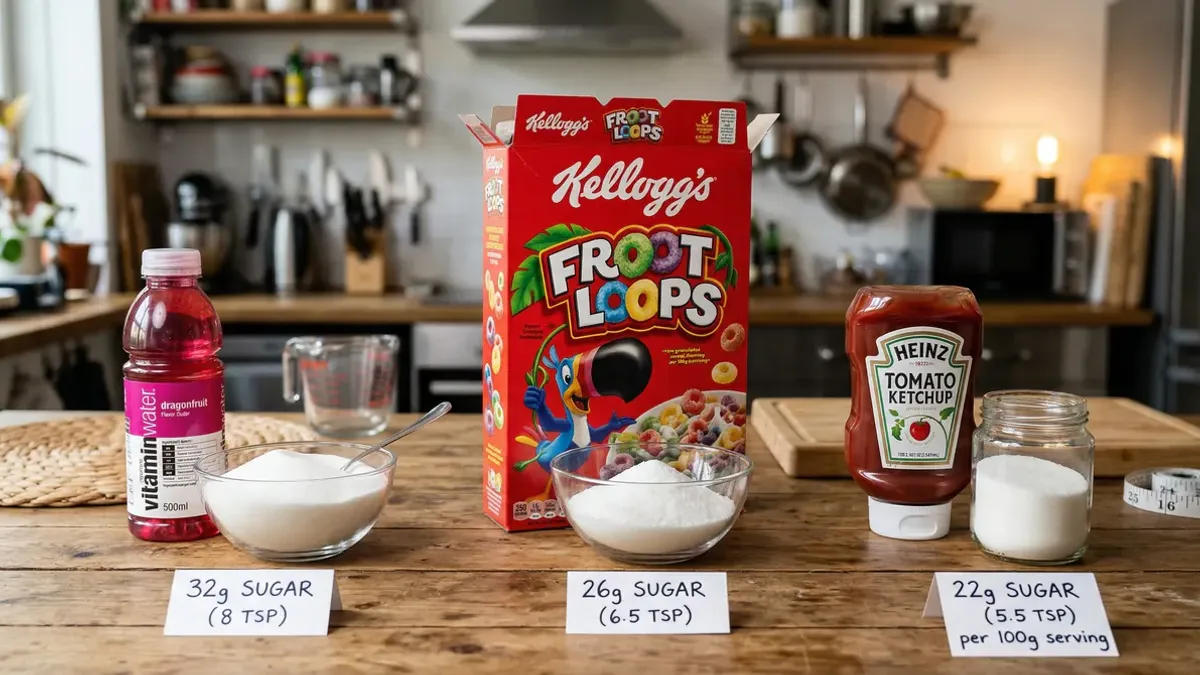
You are eating well — or so it seems. Yoghurt for breakfast, a sandwich for lunch, a bowl of muesli as a snack, jarred pasta sauce for dinner. Reasonable choices on the surface. But add up the sugar in those four items alone and you can easily hit 60 to 80 grams of free sugar — well above the WHO's recommended maximum of 50 grams per day. That is the problem with hidden sugars: they do not look like sugar.
Key takeaways
- Hidden sugars appear in products most people would not consider sweet: yoghurt, muesli, pasta sauce, bread, and ketchup.
- Fruit yoghurt can contain up to 20 grams of sugar per serving — comparable to a small candy bar.
- Muesli and granola often contain 10 to 15 grams of sugar per 50-gram serving.
- The food industry uses more than 50 different names for sugar on ingredient lists.
- The WHO recommends no more than 50 grams of free sugar per day for adults — many people exceed this without realising it.
- Reading nutrition labels is the most effective way to identify hidden sugars.
Why do manufacturers add sugar to so many products?
Sugar does more than sweeten. It improves texture, masks bitter flavours, extends shelf life, and triggers reward centres in the brain that make products feel more appealing — and drive repeat consumption. For food manufacturers, it is a cheap and highly effective ingredient. For you, it is a reason to pay closer attention to labels.
8 products with surprisingly high hidden sugar content
1. Fruit yoghurt
One of the biggest surprises in the supermarket. A standard tub of fruit yoghurt (150g) can contain 15 to 20 grams of sugar. By comparison, plain unsweetened Greek yoghurt contains around 4 grams of naturally occurring lactose — and zero added sugar. The "fruit" in fruit yoghurt is almost always a sugar-rich fruit preparation, not fresh fruit.
2. Muesli and granola
Muesli can be a genuinely healthy choice — but only when unsweetened. Many commercial muesli and granola products contain 10 to 15 grams of sugar per 50-gram serving, sometimes more. Granola is typically toasted with honey or syrup. Check the label and look for variants with the lowest added sugar.
3. Jarred pasta sauce
A serving of pasta sauce (around 125g) can contain 6 to 10 grams of sugar. Tomatoes contain natural sugar, but manufacturers add more to offset the acidity. A homemade tomato sauce with fresh tomatoes, garlic, and olive oil contains considerably less.
4. Bread
A standard slice of white or wholemeal bread contains 1.5 to 3 grams of sugar per slice. That sounds small, but four slices per day adds up to 6 to 12 grams from bread alone. Wholemeal bread contains less added sugar than white, but not zero.
5. Ketchup
Two tablespoons of ketchup contain approximately 6 to 8 grams of sugar — nearly two teaspoons. Ketchup is essentially tomato concentrate and sugar. A more considered alternative is Dijon mustard or low-sugar ketchup variants.
6. Sports drinks and fruit juice
A 500ml bottle of sports drink contains an average of 25 to 35 grams of sugar. Fruit juice — however "100% pure" the label claims — contains as much sugar as a soft drink, just without the fibre you would get from eating the whole fruit.
7. Children's breakfast cereals
Popular children's cereals can contain 30 to 40 percent sugar by weight — more than a biscuit per serving. The colourful packaging and "vitamins and minerals" claims mask the fact that sugar is often the first or second ingredient.
8. Ready-made soups and sauces
Even savoury products like stock cubes, tinned soups, and vinegar-based sauces contain added sugar. A tin of tomato soup can contain 10 grams of sugar per serving.
How to spot hidden sugars on a label
The food industry uses more than 50 names for sugar. Recognise these and you will know sugar is present:
- Sucrose, glucose, fructose, dextrose, maltose, lactose
- Glucose-fructose syrup, corn syrup, rice syrup
- Honey, agave syrup, maple syrup, molasses
- Maltodextrin, maltitol, sorbitol (partially)
The simplest rule: if any form of sugar appears as the first or second ingredient, the product is high in sugar. Also check the "of which sugars" line in the carbohydrates section of the nutrition panel — this shows all sugars combined, both added and naturally occurring. For context on what these numbers mean for your blood sugar, see our guide to normal blood sugar levels.
What is the alternative?
The goal is not to avoid every product that contains sugar — that is neither practical nor necessary. The goal is to make more deliberate choices:
- Yoghurt: choose plain unsweetened and add fresh fruit yourself.
- Muesli: choose unsweetened rolled oats and add your own nuts and fruit.
- Sauces: make them from scratch or choose variants with less than 5 grams of sugar per 100 grams.
- Drinks: water, coffee, or unsweetened tea as the default.
Moveno lets you scan a barcode or photograph your food to instantly see the sugar content — no label-reading required. You quickly learn which products are driving the most sugar in your daily intake.
Calorie tracking and sugar awareness
Sugar awareness starts with food knowledge. Our beginner's guide to calorie tracking shows you how to quickly gain insight into what you eat. And learn how to decipher labels step by step in our article on reading nutrition labels.
Small awareness shift, big difference
Hidden sugars are not inherently dangerous in small amounts — the issue is the cumulative total. Once you know where sugar hides, you can make targeted choices without giving up the foods you enjoy. Learn to read labels, choose unprocessed options more often, and build awareness gradually.
Sources
- Voedingscentrum — WHO guidelines on free sugars — recommended maximum daily intake of free sugars
- BNNVARA Kassa — Hidden sugars in supermarket products — investigation into sugar content in common supermarket products
- Voedingscentrum — Sugar — background on sugar in food and reading nutrition labels