Most people underestimate how much they eat. Studies consistently show that people eat around 20 to 30 percent more than they think — unplanned snacks, a handful of nuts while cooking, a glass of juice that doesn't feel like it counts. A food diary brings that invisible intake into view.
It's not about obsessing over numbers. It's about building awareness.
Key takeaways
- Keeping a food diary builds awareness of unconscious eating habits.
- Digital apps outperform pen and paper for speed, accuracy and completeness.
- Recording when, where and why you eat matters as much as what you eat.
- Consistency beats perfection — tracking three days a week already reveals meaningful patterns.
- The Voedingscentrum (Dutch Nutrition Center) recommends food diaries as a tool for changing eating habits.
- Link your diary to clear goals to get the most useful insights. Our calorie tracking beginner's guide is a good starting point.
Why does a food diary work?
A food diary is simply a record of everything you eat and drink. The concept is straightforward, but the psychological impact is significant. When you know you're tracking something, you pay more attention to it. That attention alone changes behavior.
The Voedingscentrum recommends food diaries as a practical tool for gaining insight into eating habits — not just the quantity of food, but also the quality: are you getting enough vegetables, enough fiber, or too much saturated fat?
Research published in the American Journal of Preventive Medicine found that people who track their food intake are consistently more successful at reaching their weight goals than those who don't. Pairing your diary with a calorie deficit calculation makes your goal concrete. The mechanism is simple: awareness leads to different choices.
Digital vs. pen and paper: which works better?
Step 1: Choose the right tool
A physical notebook has a certain appeal, but digital apps are more effective in practice. Here's why:
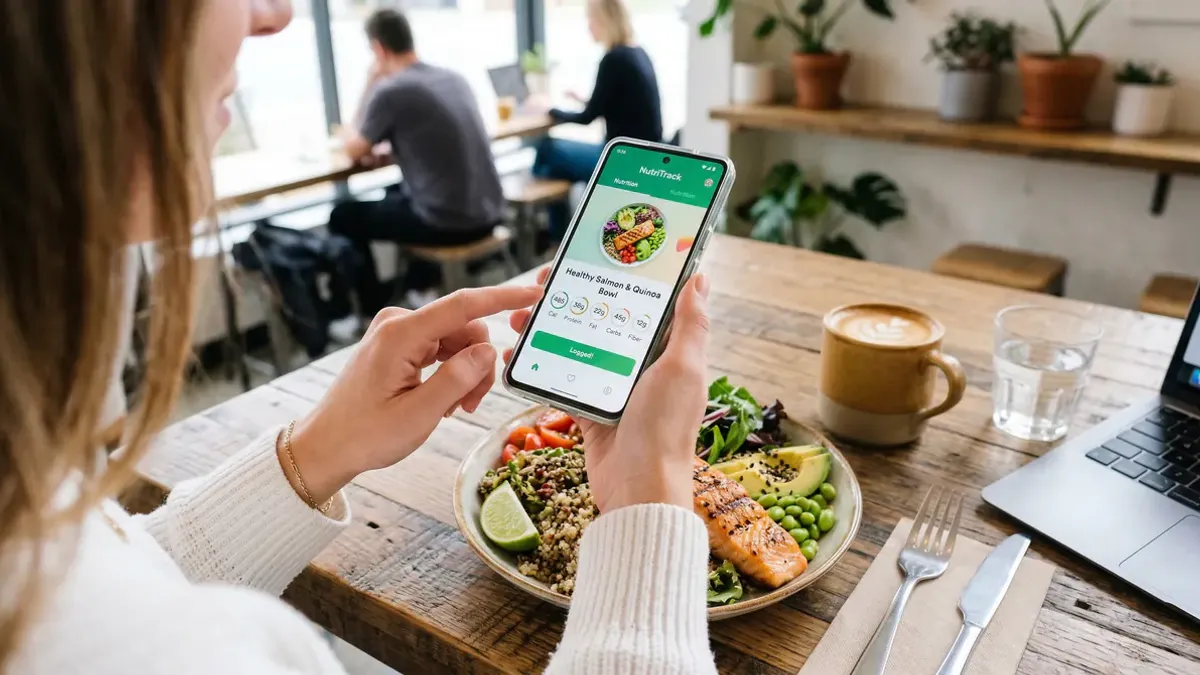
- Speed. Take a photo of your meal and the nutritional values are recognized automatically.
- Completeness. Databases with hundreds of thousands of products mean you can find almost anything.
- Insights. Graphs and summaries reveal trends that you'd miss in a notebook.
- Accessibility. Your phone is always with you; a notebook rarely is.
The Voedingscentrum offers its free Eetmeter app — a reliable tool for anyone wanting insight into their eating patterns. For those who also want to track calories and see nutritional values via a photo, apps like Moveno use AI to recognize food without manual entry.
Step 2: Record more than just calories
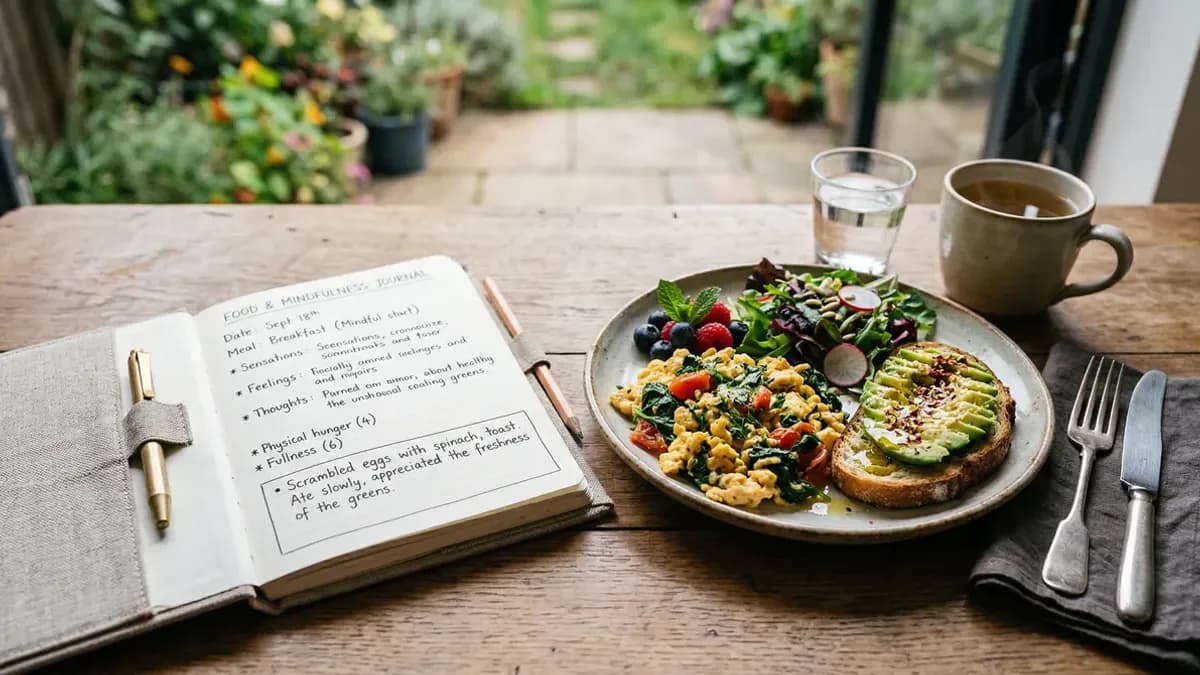
The real power of a food diary goes beyond numbers. Note:
- Time of day. Do you eat more in the evening? Do you skip breakfast regularly?
- Context. Do you eat more when working from home, or while on the go?
- Feeling. Are you eating out of hunger, or out of boredom, stress or habit?
This contextual layer is what separates a generic food log from a genuinely useful tool.
How to start a food diary
Step 3: Start small and build up
You don't need to weigh every bite from day one. A sensible approach for beginners:
- Track three days a week — two weekdays and one weekend day. That's enough to identify a reliable pattern.
- Practice completeness before worrying about precision. Note everything, even rough estimates.
- Pick a consistent moment — right after each meal, or at the end of the day.
Growing gradually into daily tracking works far better than trying to track everything immediately and burning out within two weeks.
Common mistakes when keeping a food diary
1. Only noting the "healthy" meals
It only works if you're honest. A diary with gaps gives a distorted picture and doesn't move you forward.
2. Forgetting drinks
Juice, soft drinks, milk, alcohol — they all add up. A glass of orange juice contains around 90 calories. Two glasses a day is more than 700 extra calories per week.
3. Stopping when things are going well
Many people stop tracking once they're in a good rhythm. But that rhythm can quietly slip. Regular check-ins help you stay honest.
Connecting your diary to real change
Tracking food intake is most effective when it's tied to a specific goal: losing a certain amount of weight, eating more protein, reducing evening snacking. Without a goal, the data is interesting but not actionable.
If you want to go deeper on the broader topic of tracking your nutrition, check out our guide on tracking your food intake: why it works and how to start.
Start your food diary today
You don't need to be a nutritionist to keep a food diary. Start with one day, record everything honestly, and see what you notice. Most people are surprised by what they find — not because they eat badly, but because they simply didn't know what they were actually eating.
With Moveno, you take a photo of your meal and see the nutritional values immediately. No manual entry, no guesswork — just insight.
Sources
- Voedingscentrum — Food diary and exercise diary for weight loss — Dutch national guidelines on using a food diary for weight management
- Voedingscentrum — Mijn Eetmeter app — official Dutch digital food diary tool